All posts by admin

International Energy Studies from GTEP

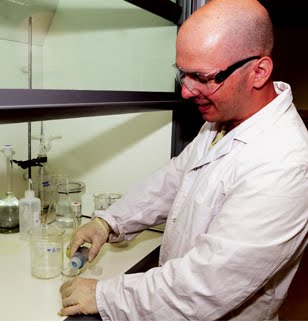
MSc. Student Davyd Wing came to Technion from Caltech to pursue the creation of polymer or organic solar cells – using a polymer-metal oxide. The advantage over conventional solar cells made of silicon is that they are easier and a lot cheaper to produce. His ambition is to create Hybrid Polymer Metal Oxide Photovoltaic Cells whose higher conductivity means they can harness the energy of the sun far more efficiently. With hands on work integrating nano-insights into potential future energy technology,Wing says research in Israel has for him an added importance.

Technion is empowering future generations of students through the GTEP graduate program in energy studies. Multidisciplinary skills and a flair for integration and cooperation makes the education of students in energy science and engineering a national priority.


The Interdisciplinary GTEP Graduate Study Program


The potential effects of new energy technologies are revolutionary, but as knowledge accumulates, challenges multiply even faster. Solutions depend upon unprecedented integration of tools and concepts originating from a wide range of science and engineering fields.

In order to train the next generation of researchers and engineers, the Technion has established an interdisciplinary graduate study program under the auspices of GTEP. This program provides the wide-ranging education necessary to discover the next generation of energy solutions. GTEP provides an environment conducive to interdisciplinary research, the resources necessary to recruit and retain the best minds, which together will generate unparalleled cross-fertilization in a stimulating environment.
The Technion is uniquely suited to carry out this initiative because it has all the individual components required for success: strong engineering and basic science faculties – including aerospace, chemical, biotechnology and food, civil and environmental, architecture and town planning, electrical, materials and mechanical engineering, as well as chemistry, biology and physics.

GTEP is looking to cooperate with leading international universities on student exchange programs in the field of energy. The idea is to enable students to benefit from the developments and advances in other countries.

Managed by an interdisciplinary committee for graduate studies in energy, the GTEP Graduate Study Program is designed to attract highly motivated graduates in science and engineering who are eager to develop expertise, and provide them with the necessary infrastructure and research framework. The students are required to carry out a research project under the guidance of professors from different disciplines.

Tomorrow’s energy researchers and engineers will need to be educated in all classical science and engineering subjects, as well as know-how in economics and policy. Thus, the study program will produce scientists, engineers and researchers with a better understanding of all energy-related issues.
For detailed information on the GTEP graduate studies program click here.

Solar Flexi Power

“Tessler’s peptides could lead to flexible solar cells that spread flat and roll up like a blanket.”

An Israeli research team has manufactured new organic semiconductors using proteins designed from scratch in the lab and linking them together in precise chains to create electronic-grade material. The new semiconductors, called electronic peptides, could lead to lighter, cheaper and more flexible electronic devices within the next two years, the researchers say.

The electronic peptides created by Professor Nir Tessler and colleagues at GTEP of theTechnion-Israel Institute of Technology could be used in full color, foldable LED displays with a sharper resolution than today’s computer screens, and large, flexible solar cells that spread flat and roll up like a blanket. The peptides could also be used in sensor devices that detect tiny amounts of disease molecules in the body or toxins in the environment.

Researchers can construct the electronic peptides one building block at a time, which gives them precise control over the semiconductor’s properties, such as its ability to produce a particular color on a flat screen monitor. The block-by-block approach allows the peptide researcher “to prepare the material in the same way that electrical engineers at Intel or IBM prepare a circuit,” Tessler says. “We want 100 percent control that will lead to close to zero errors.”

To build the electronic peptides, the Technion researchers began by imitating nature. In human cells and the rest of the biological world, peptides are created by linking together amino acids, the basic building blocks of proteins. In the lab, Tessler and others used an automatic peptide synthesizer – a computerized machine – to link together artificial combinations of amino acids and create new peptides with semiconductor properties.

“Choosing the right building blocks will give you roughly the properties you are after, and choosing the right sequence [for the blocks] will give you exactly what you need,” Tessler explains.

“The nice thing about peptides is that the complexity of attaching one building block to any other is the same complexity you find in LEGO bricks,” Tessler adds. “You use only one method to connect them all and you know very well how to connect them, with no need to invent a new chemical process every time you want a different sequence.”

The precision manufacturing process creates “electronic grade” material, which means that the material will not lose its response to electrical signals over time like some other organic semiconductors, according to Tessler.

Tessler says the peptides could be integrated into existing electronic devices, and are not intended as a replacement for the silicon-based circuitry in today’s computers. The most popular application for semiconductors like the peptides is in flat screen displays, since these semiconductors use less energy than the materials in current computer monitors. Laptop computers with peptide-powered flat screen displays, for instance, would need to have their batteries recharged less frequently.

Professors Tessler, of the Technion Faculty of Electrical Engineering, Yoav Eichen of the Faculty of Chemistry and Gadi Schuster of the Faculty of Biology have received a patent on the electronic peptides, and a new Israeli company called Peptronics Ltd. will develop the technology for commercial purposes.

“What we have to do now is invest a lot of hard work to fully realize the potential of this new technology. There is no doubt that we will run into problems sooner or later but so far, it’s working like magic,” Tessler says.

Masters of Energy ~ graduates alert


“There is a real and urgent need to challenge young scientists to enter the energy field in order to develop innovative technologies for producing energy and more efficient use of existing energy sources…”


Reprinted from Technion FOCUS 10/10

Technion GTEP has opened a new graduate study program in energy – the first such program approved by Israel’s Council for Higher Education. This interdepartmental program includes the Faculties of Civil and Environmental Engineering, Mechanical Engineering, Chemical Engineering, Materials Engineering, Electrical Engineering, Biotechnology and Food Engineering, Aerospace Engineering, Biology, Chemistry, and Architecture and Town Planning.

“In the Technion, and in the various departments, there is a broad range of activities in energy research and engineering,” said Prof. Yair Ein-Eli, who heads the study program. “The new interdepartmental program is intended to provide an organized framework for these activities and train outstanding master’s and doctoral students to work and do research in the field of energy and engineering.” The goal is to embrace 100 graduate students.

Prof. Gideon Grader, who heads the campuswide Grand Technion Energy Program, stated that the new study program is expected to produce engineering and scientific manpower capable of advancing the field of energy in the future, both in Israel and abroad. “There is a real and urgent need to challenge young scientists to enter the energy field in order to develop innovative technologies for producing energy and more efficient use of existing energy sources,” Grader said.

You can read more about GTEP’s international graduate program here.

A Grand Investment in our Future


“In order to have an impact on global energy issues, we need to invest in the brightest minds and provide them with the best facilities and equipment for their research…”

Technion FOCUS Magazine, October 2010

A $20 million gift to name The Nancy and Stephen Grand Technion Energy Program (GTEP), a campuswide effort to consolidate Technion’s position as a global leader in energy innovation, was announced during the annual International Board of Governors meeting in June 2010, when Stephen Grand received an honorary doctorate. The Grands’ gift also served to bring the American Technion Society’s $1 billion, 13-year, “Shaping Israel’s Future” campaign to a successful completion.

“In order to have an impact on global energy issues, we need to invest in the brightest minds and provide them with the best facilities and equipment for their research. The Technion is ideally positioned for this program because of the outstanding quality of its researchers, and its well-developed ties with industry. We are proud to be with the GTEP at the forefront of this crucial area,” said Stephen Grand of San Francisco.

The primary goal of GTEP is to provide the resources for energy research projects with the potential to lead to new technologies that can lessen the world’s dependence on fossil fuels. GTEP Director Prof. Gideon Grader said, “The infrastructure is set up for interdisciplinary research that brings together researchers from various faculties and supports breakthrough research programs. To date, a carbon-free fuel development lab has been set up and a center for building and characterization of solar cells is being set up. In the near future, there are plans for the establishment of a center for energy accumulation, a center for the development of biological fuels and more. In addition, over the next five years, the program will fund five new faculty members at the Technion in the field of energy.”


For more information, visit the GTEP website.