The Amnion membrane constitutes a part of the inner layer of the amniotic sac or “bag of waters” , which protects the fetus throughout the pregnancy period. Typically, upon being ruptured during the birth, and/or directly after birth, both the placenta and membranes come out of the body.
Amnion membrane cells develop at the very early stages of the life of the fetus (on the eighth day after fertilization) and are known to maintain the plasticity of embryonic cells prior to cellular differentiation. These cells have the potential of joining any one of the cell groups that later develop into different tissues in the body. To date, the capability of Amnion membrane cells to differentiate into germ cells with specific gene markers that develop into human eggs, has never been documented.
The research work was undertaken in collaboration with Dr. Shlomit Goldman at the research laboratory of Women’s Division of Gynecology and Obstetrics in the Emek Medical Center (in Afula). It uncovered for the first time that when growing hamnion membrane cells on growth medium also used in IVF (in vitro fertilization), these cells display specific signs of gene expression like those of germ cells, which develop into human eggs, at both the gene and protein levels, as well as in appearance (resembling large round cells that resemble eggs). Later, the cells express markers that mimic the characteristic of markers in human egg development, which enable division reduction upon entry (division that is essential in human egg development), and remain in this state.
Researchers still face a major challenge – for these cells to be used in substitute of human eggs, they need to properly complete the reduction process upon entry. Only after finding a solution to this problem it will be possible to check whether or not Amnion membrane cells may be used as a new source for human eggs that would be suitable for women who cannot produce them on their own.
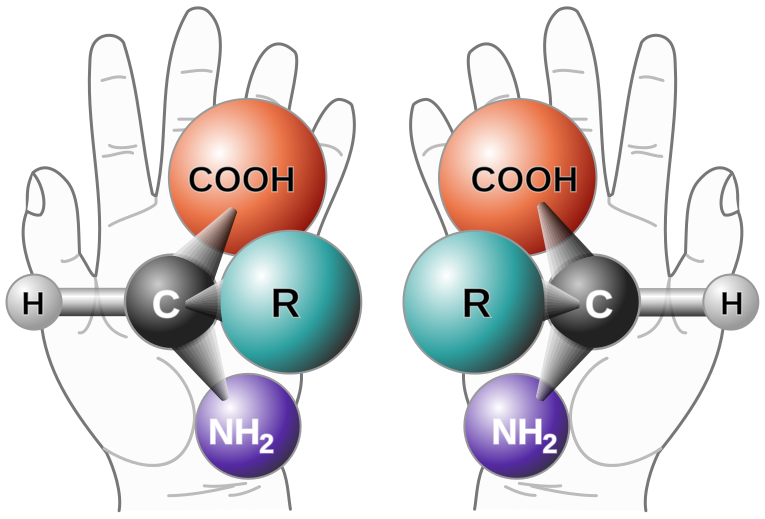
A “chiral” molecule is one that is not superimposable with its mirror image. Like left and right hands that have a thumb, fingers in the same order, but are mirror images and not the same, chiral molecules have the same things attached in the same order, but are mirror images and not the same.
Nature Reveals: Technion Researchers uncovered a novel approach to molecular architecture. The significant scientific breakthrough represents an effective solution to a major problem in organic synthesis, and could speed up processes in the pharmaceutical industry.
The launch of a new $5 million program with MIT (Massachusetts Institute of Technology) enables six Technion PhDs to take up postdoctoral fellowships at MIT, with full funding for their first year. The 10-year program is funded to a sum of $500,000 per annum. Among the five Technion PhDs who accepted the fellowship this inaugural year are two women: Gili Bisker (Nanoscience and Nanotechnology) and Lina Perelman (Civil and Environmental Engineering).
The launch of a new $5 million program with MIT (Massachusetts Institute of Technology) enables six Technion PhDs to take up postdoctoral fellowships at MIT, with full funding for their first year. The 10-year program is funded to a sum of $500,000 per annum. Among the five Technion PhDs who accepted the fellowship this inaugural year are two women: Gili Bisker (Nanoscience and Nanotechnology) and Lina Perelman (Civil and Environmental Engineering).
Scientists from Technion -Israel Institute of Technology and the University of Colorado, Boulder have taken a closer look at how star systems and their planets grow old together.
Israel’s Iron Dome system, a relatively new umbrella to stop the Gaza rockets that have been raining down over southern Israel, has achieved a claimed success rate of roughly 90 percent in its most rigorous test yet.
On September 27, 2012, Israel Prime Minister Benjamin (Bibi) Netanyahu addressed the General Assembly of the United Nations. In his address, Netanyahu showcased Technion as an institute producing many of the life saving innovations that are making the world a better place.
On September 27, 2012, Israel Prime Minister Benjamin (Bibi) Netanyahu addressed the General Assembly of the United Nations. In his address, Netanyahu showcased Technion as an institute producing many of the life saving innovations that are making the world a better place.
Shaping the global future: Eric Schmidt (left), Irwin Jacobs, Michael Bloomberg.
Mayor Michael R. Bloomberg, Qualcomm Founder Irwin Jacobs and Google Executive Chairman Eric Schmidt to Guide Growth of Cornell NYC Tech. Three of world’s leading tech entrepreneurs will provide guidance to university leadership, helping to shape the vision for the new campus, including the Technion-Cornell Innovation Institute (TCII).
Cornell NYC Tech has announced that New York City Mayor Michael R. Bloomberg, Qualcomm Founder Irwin Jacobs, and Google Executive Chairman Eric Schmidt will provide ongoing guidance on the programmatic and physical development of the new world-class tech campus in New York City, including the Technion-Cornell Innovation Institute – the premier academic partnership at Cornell NYC Tech. This senior group brings together three of the world’s leading tech entrepreneurs to lend unparalleled expertise to the campus in this critical early stage.“This is a dream team of three of the best entrepreneurs in the world. Their guidance will ensure that the Roosevelt Island campus will become a world leader in technology innovation with a global impact. I cannot think of a better guiding team.” Technion President Peretz Lavie.
Mayor Bloomberg, who is serving ex-officio in his official capacity as mayor, Dr. Jacobs and Dr. Schmidt – will provide advice to tech campus leadership on the educational, research, economic development and community engagement functions of the campus, helping to promote new national and international models connecting academia and industry. The group’s focus will include critical elements that will shape the campus and its programs, including topics such as the interface between the campus and New York City, the role of the local and global tech community, the approaches to intellectual property and commercialization of technology, and the creation of partnership strategies.
“New York City’s growing tech industry is about to be infused with new talent, thanks to the historic investments made by the City and Cornell for the new campus on Roosevelt Island,” said Mayor Bloomberg. “Ensuring that the new campus is connected in the right way to the thriving entrepreneurial sector is important to delivering on the promise of economic growth that is at the center of this project. I look forward to advising the university leadership on how we can achieve these goals.”
“Both Cornell, where I received an excellent undergraduate engineering education, and Technion, which has trained many of the engineers working at Qualcomm Israel in Haifa, have the energy and experience to surpass our great expectations.” Qualcomm Founder Irwin Jacobs.
“Throughout my career as an educator and as founder of two companies based on innovation, I have experienced great satisfaction in developing unique products and growing large markets by exploiting rapid advances in applied science and engineering,” said Irwin Jacobs. “I am excited by this opportunity to work with Mayor Bloomberg and Eric Schmidt in guiding Cornell NYC Tech and the Technion-Cornell Innovation Institute through a rapid transition from startup to major player in applied science education and the formation of impactful new companies. Both Cornell, where I received an excellent undergraduate engineering education, and Technion, which has trained many of the engineers working at Qualcomm Israel in Haifa, have the energy and experience to surpass our great expectations.”
“I am pleased to join the steering committee for Cornell NYC Tech as they build their presence in New York City,” said Google Executive Chairman Eric Schmidt. “This campus is an important step forward for the development of the city’s tech sector and its continued economic growth.”
“Cornell University is honored to have the wisdom and guidance of three legends in tech entrepreneurship as we develop and shape this groundbreaking new campus,” said Cornell President David J. Skorton. “Our vision for Cornell NYC Tech is already bold, and Mayor Bloomberg, Dr. Schmidt and Dr. Jacobs are leaders who will raise the bar even higher. We are committed to harnessing this extraordinary brainpower as we establish a center of technology leadership in the heart of New York City.”
“This is a dream team of three of the best entrepreneurs in the world,” said Technion President Peretz Lavie. “Their guidance will ensure that the Roosevelt Island campus will become a world leader in technology innovation with a global impact. I cannot think of a better guiding team.”
The new campus is offering a distinctive model of graduate tech education that fuses educational excellence with real-world commercial applications and entrepreneurship, rooted in the latest academic research. Students, faculty and industry experts will learn and work together to launch ideas and create new ventures that have global impact. The campus will attract the best and brightest in technology, immerse them in an entrepreneurial culture with deep ties to the local business community, and spur the creation of new companies and new industries in New York City.
The addition of this senior-level guidance is another major milestone for the campus. Cornell NYC Tech is now accepting applications for a “beta” class of computer science master of engineering students, which will begin classes in January in temporary space donated by Google in its New York City headquarters in Chelsea. The campus soon will be launching additional academic programs including interdisciplinary Technion-Cornell dual degrees, is actively recruiting star faculty, developing a distinctive new model of tech entrepreneurship, and designing its permanent campus on Roosevelt Island.
The City’s groundbreaking Applied Sciences NYC initiative was designed to capitalize on the considerable growth presently occurring within the science, technology and research fields in New York, and builds on the Bloomberg Administration’s record of creating a more diversified and competitive economy for the future. In July of 2011, New York City Economic Development Corporation issued the Request for Proposals seeking a university, institution or consortium to develop and operate a new or expanded campus in the City in exchange for City capital, access to City-owned land – at the Navy Hospital Campus at the Brooklyn Navy Yard, the Goldwater Hospital Campus on Roosevelt Island, or on Governors Island – and the full support and partnership of the Bloomberg Administration. In October, the City received seven responses from 17 world-class institutions from around the globe. In December of 2011, the Cornell and Technion partnership was selected by the City as the first winner of the competition and was provided with land on Roosevelt Island and $100 million in City capital to build the $2 billion, 2 million square foot tech campus. When completed, the new Roosevelt Island campus will house approximately 2,000 full-time, graduate students.
Technion President Prof. Peretz Lavie hosted a panel on “From Academy to Industry Leadership – Technion Alumni CEOs Session”, with Shmuel (Mooly) Eden, President of Intel Israel, Eyal Waldman, CEO of Mellanox, and Zohar Zisapel, President of RAD Data Communications. The panel was held as part of Israel’s main high tech conference hosted by IATI (Israel Advanced Technology Industries), and discussed, among others, the quality of the Israeli engineers compared to their counterparts worldwide, Technion alumni’s leading the Israeli high tech industry, and the establishment of the applied science and engineering campus in New York City together with Cornell University. Continue reading From Academy to Industry Leadership→

 PRESIDENT’S REPORT 2015


 Amnion membrane cells develop at the very early stages of the life of the fetus (on the eighth day after fertilization) and are known to maintain the plasticity of embryonic cells prior to cellular differentiation. These cells have the potential of joining any one of the cell groups that later develop into different tissues in the body. To date, the capability of Amnion membrane cells to differentiate into germ cells with specific gene markers that develop into human eggs, has never been documented.