Category Archives: News

Outsmarting HIV with X-Ray Crystallography

Dr, Alian Akram, Lorry I. Lokey Center for Life Science & Engineering, Technion.

Outsmarting HIV


It sound like modern warfare, and indeed, even when aiming to outsmart a killer virus on a scale of about 100 nanometers, the latest technology makes all the difference. One of the deep passions behind Dr. Alian Akram’s pioneering crystallographic work in the Technion is a desire to advance treatments for HIV, the causative agent of AIDS.


Scientists in Akram’s lab investigate the general principles of how aggressive virus lock into the genetic resources of a patient – and how to prevent them from doing this. “It is a MUST to learn about the critical interactions and the mechanisms of resistance,” says Akram. The team is taking a sharp look at pathogen-host interaction and how the HIV virus literally hijacks the machinery of the host cell in order to replicate itself, and how it escapes the immune system. “We are hoping to determine the structures of key interacting molecules and develop new intervening strategies and drugs that prevent their interaction. We also want to understand the mechanism of emergent resistance in the proteins of this virus.”


Current drugs for HIV bind viral proteins – and yet it continues to mutate and regenerate. Akram’s team is working on a protein discovered in 2004 – intrinsic immunity APOBEC3G. This protein attacks the genome of HIV and causes hypermutation that leads to an abortive replication cycle for HIV. However, HIV expresses a protein that destroys APOBEC, so the Akram’s group wants to understand this process better so that it can be blocked.
Crystal structure of Pseudouridine synthase in complex with RNA solved by  Akram Alian. The structure reveals base-pair rearrangement as the key mechanism to rRNA substrate selectivity  (http://rnajournal.cshlp.org/content/16/6.cover-expansion)”

Outsmarting HIV with X-Ray Crystallography

Dr, Alian Akram, Lorry I. Lokey Center for Life Science & Engineering, Technion.

Outsmarting HIV


It sound like modern warfare, and indeed, even when aiming to outsmart a killer virus on a scale of about 100 nanometers, the latest technology makes all the difference. One of the deep passions behind Dr. Alian Akram’s pioneering crystallographic work in the Technion is a desire to advance treatments for HIV, the causative agent of AIDS.


Scientists in Akram’s lab investigate the general principles of how aggressive virus lock into the genetic resources of a patient – and how to prevent them from doing this. “It is a MUST to learn about the critical interactions and the mechanisms of resistance,” says Akram. The team is taking a sharp look at pathogen-host interaction and how the HIV virus literally hijacks the machinery of the host cell in order to replicate itself, and how it escapes the immune system. “We are hoping to determine the structures of key interacting molecules and develop new intervening strategies and drugs that prevent their interaction. We also want to understand the mechanism of emergent resistance in the proteins of this virus.”


Current drugs for HIV bind viral proteins – and yet it continues to mutate and regenerate. Akram’s team is working on a protein discovered in 2004 – intrinsic immunity APOBEC3G. This protein attacks the genome of HIV and causes hypermutation that leads to an abortive replication cycle for HIV. However, HIV expresses a protein that destroys APOBEC, so the Akram’s group wants to understand this process better so that it can be blocked.
Crystal structure of Pseudouridine synthase in complex with RNA solved by  Akram Alian. The structure reveals base-pair rearrangement as the key mechanism to rRNA substrate selectivity  (http://rnajournal.cshlp.org/content/16/6.cover-expansion)”

Global Volleyball 1st at Technion, Israel

An International Beach Volleyball Tournament at Technion, Haifa

The first beach volleyball tournament of its kind will be held as part of the Technion cornerstone centennial celebrations: the event will take place between April 1st and 4th, 2012 in the Technion Sports Center on an artificial beach to be built especially for this occasion. The tournament is recognized by the Fédération Internationale de Volleyball (FIVB), and will be attended by some of the leading players in the world; the prizes will amount to $50,000

 
The players Pablo Herrera and Adrian Gavira from Spain. Credit: FIVB

The first beach volleyball tournament of its kind will be held as part of the Technion cornerstone centennial celebrations: the event will take place between April 1st and 4th, 2012 in the Technion Sports Center on an artificial beach to be built especially for this occasion. The tournament is recognized by the Fédération Internationale de Volleyball (FIVB), and will be attended by some of the leading players in the world; the prizes will amount to $50,000.

The tournament will be divided into two parts: an Israel State Cup and the international tournament. The competitors in the Israel State Cup will be students from various academic institutions in Israel, among them the Technion, Tel Aviv University and Ben Gurion University, and the winning  pair will participate in the international tournament.

Fourteen pairs of men and women from abroad will take part in the international tournament. Among the pairs who confirmed their participation are top ranking players from all over the world: the Brazilian pair Benjamin-Harley, who won first place in the 2011 World Championship as well as 12 gold medals over the years, and Pablo Herrera from Spain, who won a silver medal in the Athens Olympics together with his partner Adrian Gavira, who finished fifth in the two last world championships and who won a bronze medal in the European championship. The women’s tournament will be attended by Hana Klapalova and Lenka Hájec(ková from the Czech Republic, who finished fourth in the last world championship, one place before the Americans Lauren Fendrick and Brooke Hanson, who will also participate in the tournament.

The event opened on April 1st with a festive ceremony,  Israel State Cup was held on this day. The international tournament will be held between April 2nd and 4th. The grand final is scheduled to take place on April 4th, and the event will be concluded with a festive closing ceremony.

During the tournament days, the Technion students will enjoy a performance by the Technion Salsa and Dance Group, a pool party and an earphone party. In addition, players from abroad will enjoy tours to Nazareth and Caesarea.

Beach volleyball is usually played by two players in each group, and most of the game rules resemble regular volleyball rules. The first beach volleyball game was played in 1920 in California. It was introduced in the Olympic Games in 1996 and today there are the beach volleyball leagues in most countries.

The tournament is held in collaboration with the Israel Volleyball Association and the Municipality of Haifa.

Global Volleyball 1st at Technion, Israel

An International Beach Volleyball Tournament at Technion, Haifa

The first beach volleyball tournament of its kind will be held as part of the Technion cornerstone centennial celebrations: the event will take place between April 1st and 4th, 2012 in the Technion Sports Center on an artificial beach to be built especially for this occasion. The tournament is recognized by the Fédération Internationale de Volleyball (FIVB), and will be attended by some of the leading players in the world; the prizes will amount to $50,000

 
The players Pablo Herrera and Adrian Gavira from Spain. Credit: FIVB

The first beach volleyball tournament of its kind will be held as part of the Technion cornerstone centennial celebrations: the event will take place between April 1st and 4th, 2012 in the Technion Sports Center on an artificial beach to be built especially for this occasion. The tournament is recognized by the Fédération Internationale de Volleyball (FIVB), and will be attended by some of the leading players in the world; the prizes will amount to $50,000.

The tournament will be divided into two parts: an Israel State Cup and the international tournament. The competitors in the Israel State Cup will be students from various academic institutions in Israel, among them the Technion, Tel Aviv University and Ben Gurion University, and the winning  pair will participate in the international tournament.

Fourteen pairs of men and women from abroad will take part in the international tournament. Among the pairs who confirmed their participation are top ranking players from all over the world: the Brazilian pair Benjamin-Harley, who won first place in the 2011 World Championship as well as 12 gold medals over the years, and Pablo Herrera from Spain, who won a silver medal in the Athens Olympics together with his partner Adrian Gavira, who finished fifth in the two last world championships and who won a bronze medal in the European championship. The women’s tournament will be attended by Hana Klapalova and Lenka Hájec(ková from the Czech Republic, who finished fourth in the last world championship, one place before the Americans Lauren Fendrick and Brooke Hanson, who will also participate in the tournament.

The event opened on April 1st with a festive ceremony,  Israel State Cup was held on this day. The international tournament will be held between April 2nd and 4th. The grand final is scheduled to take place on April 4th, and the event will be concluded with a festive closing ceremony.

During the tournament days, the Technion students will enjoy a performance by the Technion Salsa and Dance Group, a pool party and an earphone party. In addition, players from abroad will enjoy tours to Nazareth and Caesarea.

Beach volleyball is usually played by two players in each group, and most of the game rules resemble regular volleyball rules. The first beach volleyball game was played in 1920 in California. It was introduced in the Olympic Games in 1996 and today there are the beach volleyball leagues in most countries.

The tournament is held in collaboration with the Israel Volleyball Association and the Municipality of Haifa.

Science of the 10 Plagues

See also:
Outsmarting HIV with X-Ray Crystallography 
Passover 2012 Message from Technion President Prof. Peretz Lavie.

A tradition of the Jewish holiday of Passover is to examine where we are enslaved in our lives and to open the possibility of freedom. As humanity, disease remains one of the limitations of our freedom – the modern plagues where we as yet have no cure such as cancer and AIDS. 


With the opening of the most advanced center in the region of X-Ray crystallography at the Technion’s Lokey Center for Life Science and Engineering, scientists will now be able to observe and unravel the precise mechanisms of disease, parting the waters for future cures and treatments.

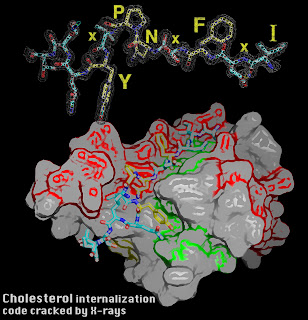
Crystal structure of the interface between the LDL-Receptor
and autosomal recessive hypercholesterolemia.
Recently solved by Dr. Dvir. (see Dvir et al, PNAS in press)

“Seeing is Believing”

In its centennial year, 21st century milestone in science will be applied at the Technion with the opening of the new Technion Center for Structural Biology (TCSB) within the Lorry I. Lokey Center for Life Sciences and Engineering. The center, headed by Dr. Hay Dvir, will offer world-class facility for macromolecular crystallography unrivalled anywhere in the Middle East – making Technion a magnet for life sciences worldwide. “You can understand molecules better when you know what they look like…” says Dvir, and this facility will allow Technion scientists to visualize molecules.

Structural Biology is a branch in Biology that focuses on the relationship between the 3D structures of biological macromolecules, such as proteins and DNA, and their biochemical or physiological function. “Since biological macromolecules are too small to diffract visible light they are ‘invisible’ even by the largest light microscope, and thus other indirect techniques to ‘see’ them are required. X-ray crystallography is the most powerful methodology for resolving objects at atomic resolution. The chemical properties of biological molecules, as revealed by their x-ray structure, help us learn about their interaction with other biological partners and/or with drugs,” says Dvir.

This is the methodology used by Nobel Laureate Ada Yonath to elucidate the structure of the Ribosome. Now Technion scientists will have 21st century equipment to support their research in-house rather than remotely as done before. When it comes to revolutionizing life sciences through the latest tools of X-ray crystallography, “Seeing is believing”, says Dvir.

The job done by a new state-of-the-art X-ray diffractometer to be housed in the Emerson Family Building for Life Sciences once would have needed a Synchrotron – a giant facility that would demand half the space of Technion City to fulfill its job. “Nowadays, a revolution in brightness allow home-source beams to provide quality comparable to 2nd generation synchrotrons,” says Dr. Alian Akram,  “This is a huge advancement in what we can do and in the quality of data we can obtain. With the investment of Mr. Lokey, Technion is now taking life sciences in Israel to a whole new league.”

“Structural Biology has not existed as a discipline at the Technion. Thanks to Mr. Lokey we are now laying its foundation.”

Dr. Hay Dvir.

The power behind the new center originates with two new recruits at the Lorry I. Lokey Center for Life Science and Engineering (LSE): Dr. Akram Alian and Dr. Hay Dvir.

Alian began his career in Agricultural Engineering in the University of Jordan. Driven by a vocation to unveil the mysteries of living cells, his career moved through prize winning medical research at the Medical School of the Hebrew University and groundbreaking research into protein chemistry and biophysics at the University of California in San Francisco, CA. It was the existence of the multidisciplinary LSE institute and the promising new TCSB which tempted him back to the Technion, he says.


Dvir –  a senior crystallographer, began his career as a ‘Summa cum laude’ student of the Hebrew University. From his groundbreaking structural studies on two important enzymes for the treatment of Alzheimer’s and Gaucher disease, as Weizmann PhD student, he moved to the Salk Institute (California) for his postdoctoral studies on integral membrane proteins. Later on as a La Jolla Institute for Allergy and Immunology Research Scientist his research focused on molecular dysfunctions leading to elevated levels of cholesterol in the blood; a hallmark of cardiovascular diseases, which he continues to investigate here. It was the opportunity of promoting and establishing rigorous Structural Biology research which attracted him to head the TCSB. “Being part of the viable life sciences environment at the Technion, conducting cutting-edge structural research, educating Technion students with Structural Biology and doing all of this in Israel is about all that I could have wished for career wise” says Hay.

“We know we are part of something really big. We are at the front line of science thanks to Mr. Lokey.”

Dr. Alian Akram.


TCSB Mission

• To conduct basic biological research using X-ray Crystallography and complementary biophysical and biochemical tools.
• To educate and provide biomedical scientists with state-of-the-art infrastructure to study biological macromolecules at high resolution.
• To partner with investigators at the Technion with complementary research efforts to promote broader interdisciplinary scientific programs.

Science of the 10 Plagues

See also:
Outsmarting HIV with X-Ray Crystallography 
Passover 2012 Message from Technion President Prof. Peretz Lavie.

A tradition of the Jewish holiday of Passover is to examine where we are enslaved in our lives and to open the possibility of freedom. As humanity, disease remains one of the limitations of our freedom – the modern plagues where we as yet have no cure such as cancer and AIDS. 


With the opening of the most advanced center in the region of X-Ray crystallography at the Technion’s Lokey Center for Life Science and Engineering, scientists will now be able to observe and unravel the precise mechanisms of disease, parting the waters for future cures and treatments.

Crystal structure of the interface between the LDL-Receptor
and autosomal recessive hypercholesterolemia.
Recently solved by Dr. Dvir. (see Dvir et al, PNAS in press)

“Seeing is Believing”

In its centennial year, 21st century milestone in science will be applied at the Technion with the opening of the new Technion Center for Structural Biology (TCSB) within the Lorry I. Lokey Center for Life Sciences and Engineering. The center, headed by Dr. Hay Dvir, will offer world-class facility for macromolecular crystallography unrivalled anywhere in the Middle East – making Technion a magnet for life sciences worldwide. “You can understand molecules better when you know what they look like…” says Dvir, and this facility will allow Technion scientists to visualize molecules.

Structural Biology is a branch in Biology that focuses on the relationship between the 3D structures of biological macromolecules, such as proteins and DNA, and their biochemical or physiological function. “Since biological macromolecules are too small to diffract visible light they are ‘invisible’ even by the largest light microscope, and thus other indirect techniques to ‘see’ them are required. X-ray crystallography is the most powerful methodology for resolving objects at atomic resolution. The chemical properties of biological molecules, as revealed by their x-ray structure, help us learn about their interaction with other biological partners and/or with drugs,” says Dvir.

This is the methodology used by Nobel Laureate Ada Yonath to elucidate the structure of the Ribosome. Now Technion scientists will have 21st century equipment to support their research in-house rather than remotely as done before. When it comes to revolutionizing life sciences through the latest tools of X-ray crystallography, “Seeing is believing”, says Dvir.

The job done by a new state-of-the-art X-ray diffractometer to be housed in the Emerson Family Building for Life Sciences once would have needed a Synchrotron – a giant facility that would demand half the space of Technion City to fulfill its job. “Nowadays, a revolution in brightness allow home-source beams to provide quality comparable to 2nd generation synchrotrons,” says Dr. Alian Akram,  “This is a huge advancement in what we can do and in the quality of data we can obtain. With the investment of Mr. Lokey, Technion is now taking life sciences in Israel to a whole new league.”

“Structural Biology has not existed as a discipline at the Technion. Thanks to Mr. Lokey we are now laying its foundation.”

Dr. Hay Dvir.

The power behind the new center originates with two new recruits at the Lorry I. Lokey Center for Life Science and Engineering (LSE): Dr. Akram Alian and Dr. Hay Dvir.

Alian began his career in Agricultural Engineering in the University of Jordan. Driven by a vocation to unveil the mysteries of living cells, his career moved through prize winning medical research at the Medical School of the Hebrew University and groundbreaking research into protein chemistry and biophysics at the University of California in San Francisco, CA. It was the existence of the multidisciplinary LSE institute and the promising new TCSB which tempted him back to the Technion, he says.


Dvir –  a senior crystallographer, began his career as a ‘Summa cum laude’ student of the Hebrew University. From his groundbreaking structural studies on two important enzymes for the treatment of Alzheimer’s and Gaucher disease, as Weizmann PhD student, he moved to the Salk Institute (California) for his postdoctoral studies on integral membrane proteins. Later on as a La Jolla Institute for Allergy and Immunology Research Scientist his research focused on molecular dysfunctions leading to elevated levels of cholesterol in the blood; a hallmark of cardiovascular diseases, which he continues to investigate here. It was the opportunity of promoting and establishing rigorous Structural Biology research which attracted him to head the TCSB. “Being part of the viable life sciences environment at the Technion, conducting cutting-edge structural research, educating Technion students with Structural Biology and doing all of this in Israel is about all that I could have wished for career wise” says Hay.

“We know we are part of something really big. We are at the front line of science thanks to Mr. Lokey.”

Dr. Alian Akram.


TCSB Mission

• To conduct basic biological research using X-ray Crystallography and complementary biophysical and biochemical tools.
• To educate and provide biomedical scientists with state-of-the-art infrastructure to study biological macromolecules at high resolution.
• To partner with investigators at the Technion with complementary research efforts to promote broader interdisciplinary scientific programs.

How One Stone Changed the World

Join the Technion family on April 11th, 2012, in a shared contemplation on human unity for the sake of the development and advancement of people everywhere through knowledge, discovery and innovation.


The Rock. April 11th, 1912

File:Advocating Hebrew (Technion).jpg
A flyer courageously advocates the use of revived Hebrew as a language of instruction for the Technion.

In October 1909, Prussian architect Alexander Baerwald was asked to come up with a first plan for the new building. This architect – who used to play cello in a string quarter with Albert Einstein – was inspired by the idea of blending European form with Eastern elements. His oustanding design was approved by the Kuratorium, and in August 1910, Baerwald was awarded the assignment to draw up the detailed plans and supervise the execution. Aside from the stone, most of the other building material came from abroad. The lime was from France, the cement from Germany. Plumbing installations and various fixtures also came from Europe and to this day, visitors at the historic building can read the German manufacturers’ inscriptions on floor plates and elsewhere in the building. Digging of the well also created problems. First attempts could only reach 40 meters, at which point work was suspended due to a lack of skilled labor. A special permit to import the required dynamite was acquired, but it was only when a foreign expert was brought in that work on the well could finally be resumed and water was finally struck at 93 meters. The well was deepened to a 100 meters. The existence of a water source on the upper slopes of Mount Carmel would transform Haifa, becoming an elemental center for the sustenance of life for the following decades and for three invading armies. The well and its water would also become a vital source of income for the young, impoverished Technikum.

In the year of the sinking of the Titanic, and a rare, total solar eclipse, the cornerstone of the new Technikum was finally laid. On April 11, 1912, 36 years before Israel declared independence, under the auspices of the occupying Ottoman Empire the local Jewish community turned out in full to witness the first physical implementation of a dream that lasted for decades.


The Tale of the Century

The extent to which technology determines history and the creation and destiny of nations is a question of historical scholarship, with the Technion – Israel Institute of Technology cited as a striking example. Initiated with the help of increasing Jewish unity made possible by the new communication technologies of the Second Industrial Revolution, the Technion was born 36 years before Israel declared independence. In that time it educated the engineers and brought the expertise to literally lay the infrastructure for a modern state. This included the fundamental infrastructure of electricity, water supplies and roads.

Throughout the century – since the laying of the first cornerstone in 1912 – Technion has had a historic task in anticipating future needs in order to ensure the survival and growth of the State of Israel. According to a leading British journalist, the Technion story is exemplary for other groups caught in the seemingly impossible task of creating an independent nation: “For more than two decades before the state was created, Technion (Israel Institute of Technology) helped to lay the foundations of the modern state of Israel. The identity of the country as a player in the field of science and technology can be traced to the vision of Technion.”
Technion would grow rapidly, becoming a global pioneer in biotechnology, satellite research, computer science, nanotechnology and energy. In 2004, Technion professors won Israel’s first Nobel Prizes in science. In 2011, Distinguished Prof. Dan Shechtman became Technion’s third Nobel Laureate in Chemistry, for his discovery of quasicrystals, or Shechtmanite. As it celebrates its cornerstone centennial in 2012, Technion City is a thriving world center of research and teaching, with 12,850 students and 80 graduate programs. In 2011, Technion partnered with Cornell University to submit a winning proposal to New York City to set up the Technion Cornell Institute of Innovation (TCII) on Roosevelt Island.

A Moment in history: Nobel Laureate 2011 Dan Shechtman
notates his observation of Quasicrystals in 1983.

 First Plans

From the outset, The Zionist movement had a vision of the creation of a Jewish University in the historic land of Israel. Jews were often barred from technical or scientific training, and without these skills and a grounded education in engineering, the Zionist vision of creating a nation would remain just a dream.
In 1902, Theodor Herzl envisioned Haifa as “a great park….with an overhead electrical train…. a city of magnificent homes and public institutions all made possible by applied science, engineering and technology.” (Altneuland) Herzl infused political Zionism with a new and practical urgency. By the fifth Zionist congress in 1901, the pressure was on to found a number of cultural institutions and a resolution was adopted for a “fundamental survey of the question of founding a Jewish university.”

A group of three young men in their twenties: Martin Buber of Vienna, student of philosophy and Zionist; Berthold Feiwel of Berlin – political writer and editor and Chaim Weizmann – formed a caucus emphasizing the need for a Jewish university with a first objective of education in technology. They produced a document pointing out the difficulties of Jewish youth who sought admission to universities where they lived. The lack of opportunities for technical studies, they wrote, was much more serious for Jewish students than in other studies. The problem was “eminiently economic and social”. It meant that in Russia, the Jews were practically excluded from technical professions with the result that they were pushed into commercial occupations.

The plan was to set up a preparatory Technikum, in part to train students for the university and in part to serve as an independent institution for the training of young people in technical, agricultural and similar professions. Graduates would be the basis for establishing and maintaining a Jewish industry.
In 1903, 60,000 Jews of Palestine had just held elections for the first national democratic assembly, the grandfather of the present Knesset (Israel’s parliament). It was called the Knessiah Rishonah (1st assembly). This gathering was special as a first grass-roots attempt to set up the structures of Jewish self government. Zionist leader Dr. Menahem Ussishkin used the occasion to deliver a keynote address in which he expressed the urgency for an institution of higher education in Palestine. The convention supported a resolution for the establishment of a polytechnical institute in Palestine and the Technion – Israel Institute of Technology (at least on paper) was born.

Paul Nathan of the Hilfsverein der Deutschen Juden (“Relief Organization of German Jews”), played a central role in bringing together diverse Jewish groups under the Technikum umbrella, and in raising resources.
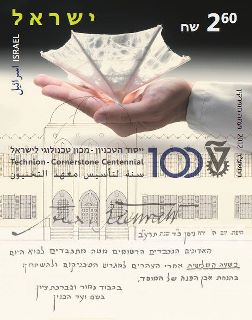
Technion Centennial Stamp… already circling the world.

First Funds

Founder Jacob Schiff was determined to ensure that the Technion would maintain its independence.
The late Russian tea merchant Kalonymous Zeev Wissotzky had left a large fund in his will from which allocations were to be made to public institutions twice a decade. Among the executors was Ahad Ha-Am, the distinguished Zionist philosopher. Ahad Ha-Am was able to recruit Wissotsky’s son David to the Technikum plan, and a first contribution of 100,000 rubles was made. In 1908, the American philanthropist Jacob Schiff was visiting the “holy land”. Schiff was affected by the poverty and destitution he found among many of the Jews of Palestine and was inspired by the idea of an institution that would provide technical training.

Back in Europe, interest in the new Technikum was kept high. In 1909 Dr. Chaim Weizmann, who would later become President of the State of Israel, reported to a Zionist conference in Manchester that things were going well with the “National Polytecnikum”. Wealthy Jews from many lands were already promising generous support.

Choice of Haifa

A campaign was mounted by the Jewish community in Jerusalem to host the Technikum, and a special committee was set up to put forward a strong, Jerusalem case. The case for Haifa proved stronger, and in the end won the day:

Haifa was destined to be the city of the future… a great port center of industry and shipping. With the building of the Hedjaz railroad, it would be linked to Damascus and Baghdad and would become an important crossroads for land transport as well.

The local Jewish community was not yet rigid in its organization and character, unlike Jerusalem, the center of Orthodoxy; or Jaffa, which was a hotbed of Jewish nationalism. The neutrality of Haifa would minimalize conflicts, they argued.

The local Jewish community was small, and its influence hardly felt in the city. The Technikum would give impetus to the expansion and growth of the Jewish population in the North.


Source: Wikipedia.

How One Stone Changed the World

Join the Technion family on April 11th, 2012, in a shared contemplation on human unity for the sake of the development and advancement of people everywhere through knowledge, discovery and innovation.


The Rock. April 11th, 1912

File:Advocating Hebrew (Technion).jpg
A flyer courageously advocates the use of revived Hebrew as a language of instruction for the Technion.

In October 1909, Prussian architect Alexander Baerwald was asked to come up with a first plan for the new building. This architect – who used to play cello in a string quarter with Albert Einstein – was inspired by the idea of blending European form with Eastern elements. His oustanding design was approved by the Kuratorium, and in August 1910, Baerwald was awarded the assignment to draw up the detailed plans and supervise the execution. Aside from the stone, most of the other building material came from abroad. The lime was from France, the cement from Germany. Plumbing installations and various fixtures also came from Europe and to this day, visitors at the historic building can read the German manufacturers’ inscriptions on floor plates and elsewhere in the building. Digging of the well also created problems. First attempts could only reach 40 meters, at which point work was suspended due to a lack of skilled labor. A special permit to import the required dynamite was acquired, but it was only when a foreign expert was brought in that work on the well could finally be resumed and water was finally struck at 93 meters. The well was deepened to a 100 meters. The existence of a water source on the upper slopes of Mount Carmel would transform Haifa, becoming an elemental center for the sustenance of life for the following decades and for three invading armies. The well and its water would also become a vital source of income for the young, impoverished Technikum.

In the year of the sinking of the Titanic, and a rare, total solar eclipse, the cornerstone of the new Technikum was finally laid. On April 11, 1912, 36 years before Israel declared independence, under the auspices of the occupying Ottoman Empire the local Jewish community turned out in full to witness the first physical implementation of a dream that lasted for decades.


The Tale of the Century

The extent to which technology determines history and the creation and destiny of nations is a question of historical scholarship, with the Technion – Israel Institute of Technology cited as a striking example. Initiated with the help of increasing Jewish unity made possible by the new communication technologies of the Second Industrial Revolution, the Technion was born 36 years before Israel declared independence. In that time it educated the engineers and brought the expertise to literally lay the infrastructure for a modern state. This included the fundamental infrastructure of electricity, water supplies and roads.

Throughout the century – since the laying of the first cornerstone in 1912 – Technion has had a historic task in anticipating future needs in order to ensure the survival and growth of the State of Israel. According to a leading British journalist, the Technion story is exemplary for other groups caught in the seemingly impossible task of creating an independent nation: “For more than two decades before the state was created, Technion (Israel Institute of Technology) helped to lay the foundations of the modern state of Israel. The identity of the country as a player in the field of science and technology can be traced to the vision of Technion.”
Technion would grow rapidly, becoming a global pioneer in biotechnology, satellite research, computer science, nanotechnology and energy. In 2004, Technion professors won Israel’s first Nobel Prizes in science. In 2011, Distinguished Prof. Dan Shechtman became Technion’s third Nobel Laureate in Chemistry, for his discovery of quasicrystals, or Shechtmanite. As it celebrates its cornerstone centennial in 2012, Technion City is a thriving world center of research and teaching, with 12,850 students and 80 graduate programs. In 2011, Technion partnered with Cornell University to submit a winning proposal to New York City to set up the Technion Cornell Institute of Innovation (TCII) on Roosevelt Island.

A Moment in history: Nobel Laureate 2011 Dan Shechtman
notates his observation of Quasicrystals in 1983.

 First Plans

From the outset, The Zionist movement had a vision of the creation of a Jewish University in the historic land of Israel. Jews were often barred from technical or scientific training, and without these skills and a grounded education in engineering, the Zionist vision of creating a nation would remain just a dream.
In 1902, Theodor Herzl envisioned Haifa as “a great park….with an overhead electrical train…. a city of magnificent homes and public institutions all made possible by applied science, engineering and technology.” (Altneuland) Herzl infused political Zionism with a new and practical urgency. By the fifth Zionist congress in 1901, the pressure was on to found a number of cultural institutions and a resolution was adopted for a “fundamental survey of the question of founding a Jewish university.”

A group of three young men in their twenties: Martin Buber of Vienna, student of philosophy and Zionist; Berthold Feiwel of Berlin – political writer and editor and Chaim Weizmann – formed a caucus emphasizing the need for a Jewish university with a first objective of education in technology. They produced a document pointing out the difficulties of Jewish youth who sought admission to universities where they lived. The lack of opportunities for technical studies, they wrote, was much more serious for Jewish students than in other studies. The problem was “eminiently economic and social”. It meant that in Russia, the Jews were practically excluded from technical professions with the result that they were pushed into commercial occupations.

The plan was to set up a preparatory Technikum, in part to train students for the university and in part to serve as an independent institution for the training of young people in technical, agricultural and similar professions. Graduates would be the basis for establishing and maintaining a Jewish industry.
In 1903, 60,000 Jews of Palestine had just held elections for the first national democratic assembly, the grandfather of the present Knesset (Israel’s parliament). It was called the Knessiah Rishonah (1st assembly). This gathering was special as a first grass-roots attempt to set up the structures of Jewish self government. Zionist leader Dr. Menahem Ussishkin used the occasion to deliver a keynote address in which he expressed the urgency for an institution of higher education in Palestine. The convention supported a resolution for the establishment of a polytechnical institute in Palestine and the Technion – Israel Institute of Technology (at least on paper) was born.

Paul Nathan of the Hilfsverein der Deutschen Juden (“Relief Organization of German Jews”), played a central role in bringing together diverse Jewish groups under the Technikum umbrella, and in raising resources.

Technion Centennial Stamp… already circling the world.

First Funds

Founder Jacob Schiff was determined to ensure that the Technion would maintain its independence.
The late Russian tea merchant Kalonymous Zeev Wissotzky had left a large fund in his will from which allocations were to be made to public institutions twice a decade. Among the executors was Ahad Ha-Am, the distinguished Zionist philosopher. Ahad Ha-Am was able to recruit Wissotsky’s son David to the Technikum plan, and a first contribution of 100,000 rubles was made. In 1908, the American philanthropist Jacob Schiff was visiting the “holy land”. Schiff was affected by the poverty and destitution he found among many of the Jews of Palestine and was inspired by the idea of an institution that would provide technical training.

Back in Europe, interest in the new Technikum was kept high. In 1909 Dr. Chaim Weizmann, who would later become President of the State of Israel, reported to a Zionist conference in Manchester that things were going well with the “National Polytecnikum”. Wealthy Jews from many lands were already promising generous support.

Choice of Haifa

A campaign was mounted by the Jewish community in Jerusalem to host the Technikum, and a special committee was set up to put forward a strong, Jerusalem case. The case for Haifa proved stronger, and in the end won the day:

Haifa was destined to be the city of the future… a great port center of industry and shipping. With the building of the Hedjaz railroad, it would be linked to Damascus and Baghdad and would become an important crossroads for land transport as well.

The local Jewish community was not yet rigid in its organization and character, unlike Jerusalem, the center of Orthodoxy; or Jaffa, which was a hotbed of Jewish nationalism. The neutrality of Haifa would minimalize conflicts, they argued.

The local Jewish community was small, and its influence hardly felt in the city. The Technikum would give impetus to the expansion and growth of the Jewish population in the North.


Source: Wikipedia.

Technion Harvey Prize Laureates

See also: Prof. Judea Pearl wins “Nobel Prize” of Computing.

Prof. Sir Richard Friend
of the University of Cambridge, UK, and Prof. Judea Pearl from the
University of California, Los Angeles, are the winners of the Technion’s 2011 Harvey Prize in Science and Technology. The prize ceremony took place at Technion, on March 29, 2012.

Sir Richard Friend, Cavendish Professor of Physics at the University of Cambridge, pioneered the physics, materials science and engineering of semiconductor devices made with carbon-based polymers and demonstrated their successful operation in field-effect transistors, in both light-emitting and photovoltaic diodes as well as in lasers. In pursuing the burgeoning development of this exciting technology, he founded two successful spin-off companies – Cambridge Display Technology Ltd. and Plastic Logic Ltd. The Harvey Prize was awarded to Prof. Sir Richard Friend in recognition of his outstanding contributions to science and technology, which are already making an impact on the semi-conductor industry and our lives. You can enjoy a lecture of Sir. Friend given at Technion below.

Sir Richard also holds the appointment of Distinguished Visiting Professor at Technion, in the Faculty of Electrical Engineering. He was knighted by the Queen in 2003 for services to physics.

Judea Pearl, Professor of Computer Science at the University of California, Los Angeles, through his wide-ranging and keen research, laid the theoretical foundations for knowledge representation and reasoning in computer science. His theories for inference under uncertainty, and most notably the Bayesian network approach, have profoundly influenced diverse fields such as artificial intelligence, statistics, philosophy, health, economics, social sciences, and cognitive sciences. The Harvey Prize was awarded to Prof. Pearl in recognition of his foundational work that has touched a multitude of spheres of modern life.

Judea Pearl completed his bachelor’s degree at Technion in 1960, in electrical engineering.

First awarded in 1972, Technion’s prestigious Harvey Prize was created as a bridge of goodwill between Israel and the nations of the world. It is considered a good predictor of the Nobel Prize.


Technion Harvey Prize Laureates

See also: Prof. Judea Pearl wins “Nobel Prize” of Computing.

Prof. Sir Richard Friend
of the University of Cambridge, UK, and Prof. Judea Pearl from the
University of California, Los Angeles, are the winners of the Technion’s 2011 Harvey Prize in Science and Technology. The prize ceremony took place at Technion, on March 29, 2012.

Sir Richard Friend, Cavendish Professor of Physics at the University of Cambridge, pioneered the physics, materials science and engineering of semiconductor devices made with carbon-based polymers and demonstrated their successful operation in field-effect transistors, in both light-emitting and photovoltaic diodes as well as in lasers. In pursuing the burgeoning development of this exciting technology, he founded two successful spin-off companies – Cambridge Display Technology Ltd. and Plastic Logic Ltd. The Harvey Prize was awarded to Prof. Sir Richard Friend in recognition of his outstanding contributions to science and technology, which are already making an impact on the semi-conductor industry and our lives. You can enjoy a lecture of Sir. Friend given at Technion below.

Sir Richard also holds the appointment of Distinguished Visiting Professor at Technion, in the Faculty of Electrical Engineering. He was knighted by the Queen in 2003 for services to physics.

Judea Pearl, Professor of Computer Science at the University of California, Los Angeles, through his wide-ranging and keen research, laid the theoretical foundations for knowledge representation and reasoning in computer science. His theories for inference under uncertainty, and most notably the Bayesian network approach, have profoundly influenced diverse fields such as artificial intelligence, statistics, philosophy, health, economics, social sciences, and cognitive sciences. The Harvey Prize was awarded to Prof. Pearl in recognition of his foundational work that has touched a multitude of spheres of modern life.

Judea Pearl completed his bachelor’s degree at Technion in 1960, in electrical engineering.

First awarded in 1972, Technion’s prestigious Harvey Prize was created as a bridge of goodwill between Israel and the nations of the world. It is considered a good predictor of the Nobel Prize.