Tag Archives: biomedical

Stem Cells & Fertility

New research reveals that certain embryonic stem cells may substitute human eggs in conception,

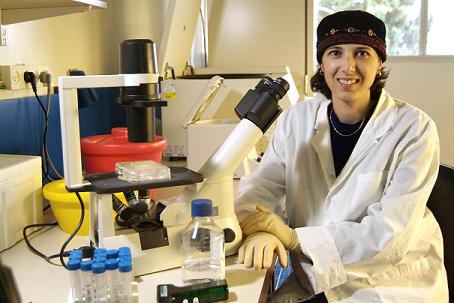
Technion researchers from the Bruce and Ruth Rappaport Faculty of Medicine found that cells in the fetal Amnion membrane may be a source of human eggs, according to dissertation of doctoral student Ayelet Evron mentored by the Dean of the Faculty, Professor Eliezer Shalev.

The Amnion membrane constitutes a part of the inner layer of the amniotic sac or “bag of waters” , which protects the fetus throughout the pregnancy period. Typically, upon being ruptured during the birth, and/or directly after birth, both the placenta and membranes come out of the body.

Amnion membrane cells develop at the very early stages of the life of the fetus (on the eighth day after fertilization) and are known to maintain the plasticity of embryonic cells prior to cellular differentiation. These cells have the potential of joining any one of the cell groups that later develop into different tissues in the body. To date, the capability of Amnion membrane cells to differentiate into germ cells with specific gene markers that develop into human eggs, has never been documented.

The research work was undertaken in collaboration with Dr. Shlomit Goldman at the research laboratory of Women’s Division of Gynecology and Obstetrics in the Emek Medical Center (in Afula). It uncovered for the first time that when growing hamnion membrane cells on growth medium also used in IVF (in vitro fertilization), these cells display specific signs of gene expression like those of germ cells, which develop into human eggs, at both the gene and protein levels, as well as in appearance (resembling large round cells that resemble eggs). Later, the cells express markers that mimic the characteristic of markers in human egg development, which enable division reduction upon entry (division that is essential in human egg development), and remain in this state.

Researchers still face a major challenge – for these cells to be used in substitute of human eggs, they need to properly complete the reduction process upon entry. Only after finding a solution to this problem it will be possible to check whether or not Amnion membrane cells may be used as a new source for human eggs that would be suitable for women who cannot produce them on their own.
Fast track to building molecules – Nature

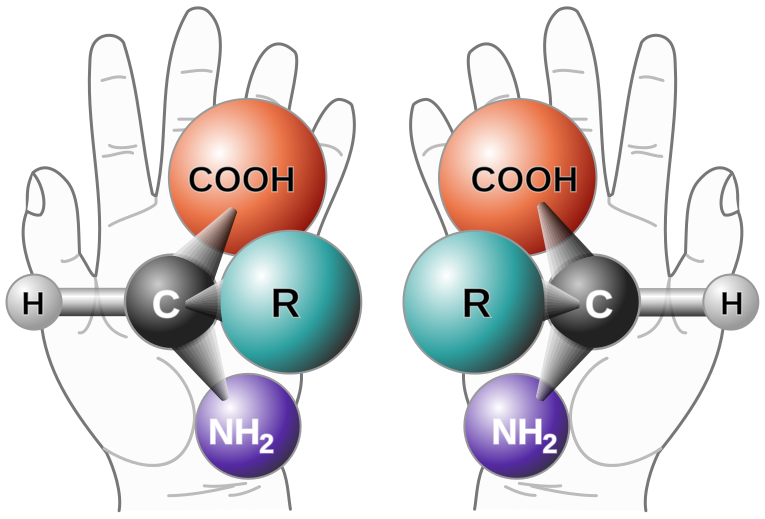
File:Chirality with hands.svg
A “chiral” molecule is one that is not superimposable with its mirror image. Like left and right hands that have a thumb, fingers in the same order, but are mirror images and not the same, chiral molecules have the same things attached in the same order, but are mirror images and not the same.

Nature Reveals: Technion Researchers uncovered a novel approach to molecular architecture. The significant scientific breakthrough represents an effective solution to a major problem in organic synthesis, and could speed up processes in the pharmaceutical industry.

Prof. Ilan Marek, Technion.

Continue reading Fast track to building molecules – Nature

Gili Bisker, Nano students, Technion, MIT & Pure Gold

The launch of a new $5 million program with MIT (Massachusetts Institute of Technology) enables six Technion PhDs to take up postdoctoral fellowships at MIT, with full funding for their first year. The 10-year program is funded to a sum of $500,000 per annum.  Among the five Technion PhDs who accepted the fellowship this inaugural year are two women: Gili Bisker (Nanoscience and Nanotechnology) and Lina Perelman (Civil and Environmental Engineering).

Gili Bisker, Nano students, Technion, MIT & Pure Gold

The launch of a new $5 million program with MIT (Massachusetts Institute of Technology) enables six Technion PhDs to take up postdoctoral fellowships at MIT, with full funding for their first year. The 10-year program is funded to a sum of $500,000 per annum.  Among the five Technion PhDs who accepted the fellowship this inaugural year are two women: Gili Bisker (Nanoscience and Nanotechnology) and Lina Perelman (Civil and Environmental Engineering).

New Life – The Healing Promise of Stem Cells

Diseases and conditions where stem cell treatment is promising or emerging. Source: Wikipedia

Since the late 1990s, the Technion has been at the forefront of stem-cell research. Stem cells are the master keys because they can be converted into many different kinds of cells, opening many different doors to potential cures and treatments. Beating heart tissue is one of the major stem cell achievements from the Technion.

Healing the Heart

Technion scientists showed this year that they can turn skin tissue from heart attack patients into fresh, beating heart cells in a first step towards a new therapy for the condition. The procedure may eventually help scores of people who survive heart attacks but are severely debilitated by damage to the organ.
By creating new heart cells from a patient’s own tissues, doctors avoid the risk of the cells being rejected by the immune system once they are transplanted.Though the cells were not considered safe enough to put back into patients, they appeared healthy in the laboratory and beat in time with other cells in animal models.
“We have shown that it’s possible to take skin cells from an elderly patient with advanced heart failure and end up with his own beating cells in a laboratory dish that are healthy and young – the equivalent to the stage his heart cells were in when he was just born,” Prof. Lior Gepstein told the British national paper The Guardian.

Pancreatic Tissue for Diabetes

Prof. Shulamit Levenberg of the Technion, who has spent many years trying to create replacement human organs by building them up on a “scaffold,” has created tissue from the insulin-producing islets of Langerhans in the pancreas surrounded by a three-dimensional network of blood vessels.The tissue she and her team created has significant advantages over traditional transplant material that has been harvested from healthy pancreatic tissue.

“We have shown that the three-dimensional environment and the engineered blood vessels support the islets – and this support is important for the survival of the islets and for their insulin secretion activity”, says Prof. Levenberg of the Department of Biomedical Engineering.


In the Bones

BonusBio - Health News - Israel


In collaboration with industry and global research partners, Technion scientists have grown human bone from stem cells in a laboratory. The development opens the way for patients to have broken bones repaired or even replaced with entire new ones grown outside the body from a patient’s own cells. The researchers started with stem cells taken from fat tissue. It took around a month to grow them into sections of fully-formed living human bone up to a couple of inches long. The success was reported by the UK national paper The Telegraph.


Stem Cell Proliferation

““These are our next generation of scientists and Nobel Laureates,” says Prof. Dror Seliktar, of the Department of Biomedical Engineering. “The future of the Technion relies on that.”

Seliktar and his research team at the Lokey Center for Biomaterials and Tissue Regeneration at Technion is working on a new material for the mass production of stem cells to make their commercial use viable on an industrial scale.

“In the biotechnology industries, there is an inherent need for expanding populations of stem cells for therapeutic purposes,” says Seliktar, who has published over 50 papers in the field, won over 14 awards and launched one of Israel’s promising biotech startups, Regentis Biomaterials.

Read more.

Prof. Joseph Itskovitz-Eldor of the Faculty of Medicine was on the international team that in 1998 first discovered the potential of stem cells to form any kind of tissue and pioneered stem-cell technology. The breakthrough garnered headlines around the world. He is the Director of the Technion Stem Cell Center.

New Life – The Healing Promise of Stem Cells

Diseases and conditions where stem cell treatment is promising or emerging. Source: Wikipedia

Since the late 1990s, the Technion has been at the forefront of stem-cell research. Stem cells are the master keys because they can be converted into many different kinds of cells, opening many different doors to potential cures and treatments. Beating heart tissue is one of the major stem cell achievements from the Technion.

Healing the Heart

Technion scientists showed this year that they can turn skin tissue from heart attack patients into fresh, beating heart cells in a first step towards a new therapy for the condition. The procedure may eventually help scores of people who survive heart attacks but are severely debilitated by damage to the organ.
By creating new heart cells from a patient’s own tissues, doctors avoid the risk of the cells being rejected by the immune system once they are transplanted.Though the cells were not considered safe enough to put back into patients, they appeared healthy in the laboratory and beat in time with other cells in animal models.
“We have shown that it’s possible to take skin cells from an elderly patient with advanced heart failure and end up with his own beating cells in a laboratory dish that are healthy and young – the equivalent to the stage his heart cells were in when he was just born,” Prof. Lior Gepstein told the British national paper The Guardian.

Pancreatic Tissue for Diabetes

Prof. Shulamit Levenberg of the Technion, who has spent many years trying to create replacement human organs by building them up on a “scaffold,” has created tissue from the insulin-producing islets of Langerhans in the pancreas surrounded by a three-dimensional network of blood vessels.The tissue she and her team created has significant advantages over traditional transplant material that has been harvested from healthy pancreatic tissue.

“We have shown that the three-dimensional environment and the engineered blood vessels support the islets – and this support is important for the survival of the islets and for their insulin secretion activity”, says Prof. Levenberg of the Department of Biomedical Engineering.


In the Bones

BonusBio - Health News - Israel


In collaboration with industry and global research partners, Technion scientists have grown human bone from stem cells in a laboratory. The development opens the way for patients to have broken bones repaired or even replaced with entire new ones grown outside the body from a patient’s own cells. The researchers started with stem cells taken from fat tissue. It took around a month to grow them into sections of fully-formed living human bone up to a couple of inches long. The success was reported by the UK national paper The Telegraph.


Stem Cell Proliferation

““These are our next generation of scientists and Nobel Laureates,” says Prof. Dror Seliktar, of the Department of Biomedical Engineering. “The future of the Technion relies on that.”

Seliktar and his research team at the Lokey Center for Biomaterials and Tissue Regeneration at Technion is working on a new material for the mass production of stem cells to make their commercial use viable on an industrial scale.

“In the biotechnology industries, there is an inherent need for expanding populations of stem cells for therapeutic purposes,” says Seliktar, who has published over 50 papers in the field, won over 14 awards and launched one of Israel’s promising biotech startups, Regentis Biomaterials.

Read more.

Prof. Joseph Itskovitz-Eldor of the Faculty of Medicine was on the international team that in 1998 first discovered the potential of stem cells to form any kind of tissue and pioneered stem-cell technology. The breakthrough garnered headlines around the world. He is the Director of the Technion Stem Cell Center.

Diabetes Research and Vascular Networks

Technion Researchers Construct a Polymeric Scaffold Array with Pancreatic Islets Surrounded by a Vascular Network. This heralds the potential for the fabrication of transplantable “islets”


The scientific journal PLoS ONE reports that Technion researchers have succeeded in constructing a three-dimensional polymeric scaffold array with pancreatic islets surrounded by a vascular network.
“We have shown that the three-dimensional environment and the engineered blood vessels support the islets – and this support is important for the survival of the islets and for their insulin secretion activity”, says Prof. Shulamit Levenberg of the Department of Biomedical Engineering. “We have shown that these laboratory-made polymeric scaffolds can be transplanted subcutaneously and can heal a diabetic mouse. The ability to increase the islets’ vasculature and to support their post-transplant survival could allow the transplant of four times less islets than is customary in transplants in mice, while still achieving decreased blood sugar levels and diabetes relief”. 
The mechanism which causes the failure of pancreatic islet transplants is as yet not entirely clear, but the prevailing opinion is that it has to do with ischemic damage – and a delay in the creation of new blood vessels.
The Technion researchers hypothesize that blood vessels also have an active role in inter-cellular communication that supports the survival and function of pancreatic islets. To test this hypothesis, the researchers developed a three-dimensional network of endothelial blood vessels in engineered pancreatic tissues produced from islets, fibroblasts and endothelial cells. This triple array, which was seeded on highly porous polymeric scaffolds, mimics the natural anatomical context of pancreatic vasculature.
“We have shown that the increase in islet survival is correlated with creation of surrounding endothelial tubes”, says Prof. Levenberg. “Adding fibroblasts to pancreatic islet and endothelial cell cultures encouraged the creation of the vascular network, which supported islet survival as well as insulin secretion. Significant differences were seen in many variables – gene expressions, profiles of the growth factors of endothelial cells, ECM, morphogens and screening markers – between two-dimensional culture systems and three-dimensional culture systems that allow an endothelial network, and such differences were even greater after fibroblasts were added that support the creation of the engineered blood vessels.”
Transplanting the vascularized engineered islet tissue has improved the survival and acceptance of such islets in diabetic mice, and has even improved their function in decreasing blood glucose. The Technion researchers hope that these findings herald potential strategies for the fabrication of transplantable islets with improved survivability.
The work was done by research student Keren Francis in Prof. Levenberg’s laboratory and in cooperation with Yuval Dor from the Hebrew university, under a joint research grant provided by Juvenile Diabetes Research Foundation International.
The laboratory is now researching the effect of the vascular network and the three-dimensional growth on human islets, under joint finance of the Juvenile Diabetes Research Foundation International and the Israel Science Foundation.  

Diabetes Research and Vascular Networks

Technion Researchers Construct a Polymeric Scaffold Array with Pancreatic Islets Surrounded by a Vascular Network. This heralds the potential for the fabrication of transplantable “islets”


The scientific journal PLoS ONE reports that Technion researchers have succeeded in constructing a three-dimensional polymeric scaffold array with pancreatic islets surrounded by a vascular network.
“We have shown that the three-dimensional environment and the engineered blood vessels support the islets – and this support is important for the survival of the islets and for their insulin secretion activity”, says Prof. Shulamit Levenberg of the Department of Biomedical Engineering. “We have shown that these laboratory-made polymeric scaffolds can be transplanted subcutaneously and can heal a diabetic mouse. The ability to increase the islets’ vasculature and to support their post-transplant survival could allow the transplant of four times less islets than is customary in transplants in mice, while still achieving decreased blood sugar levels and diabetes relief”. 
The mechanism which causes the failure of pancreatic islet transplants is as yet not entirely clear, but the prevailing opinion is that it has to do with ischemic damage – and a delay in the creation of new blood vessels.
The Technion researchers hypothesize that blood vessels also have an active role in inter-cellular communication that supports the survival and function of pancreatic islets. To test this hypothesis, the researchers developed a three-dimensional network of endothelial blood vessels in engineered pancreatic tissues produced from islets, fibroblasts and endothelial cells. This triple array, which was seeded on highly porous polymeric scaffolds, mimics the natural anatomical context of pancreatic vasculature.
“We have shown that the increase in islet survival is correlated with creation of surrounding endothelial tubes”, says Prof. Levenberg. “Adding fibroblasts to pancreatic islet and endothelial cell cultures encouraged the creation of the vascular network, which supported islet survival as well as insulin secretion. Significant differences were seen in many variables – gene expressions, profiles of the growth factors of endothelial cells, ECM, morphogens and screening markers – between two-dimensional culture systems and three-dimensional culture systems that allow an endothelial network, and such differences were even greater after fibroblasts were added that support the creation of the engineered blood vessels.”
Transplanting the vascularized engineered islet tissue has improved the survival and acceptance of such islets in diabetic mice, and has even improved their function in decreasing blood glucose. The Technion researchers hope that these findings herald potential strategies for the fabrication of transplantable islets with improved survivability.
The work was done by research student Keren Francis in Prof. Levenberg’s laboratory and in cooperation with Yuval Dor from the Hebrew university, under a joint research grant provided by Juvenile Diabetes Research Foundation International.
The laboratory is now researching the effect of the vascular network and the three-dimensional growth on human islets, under joint finance of the Juvenile Diabetes Research Foundation International and the Israel Science Foundation.