Tag Archives: innovation

A Scientific and Technological Powerhouse

Q & A with Israel Minister of Science and Technology Professor Daniel Hershkowitz

December 9, 2011 by The American Technion Society

Israel is a Universal Scientific and Technological Powerhouse

Professor Daniel Hershkowitz, formerly of the Technion Faculty of Mathematics, is in Stockholm this week together with his wife Shimona, for the Nobel Prize Festivities. This is the first time that a governmental official has been invited to join in the Nobel ceremony. The following interview reflects his thoughts about the Nobel Prize and science and technology in Israel.
Q. What does the Nobel Prize mean to Israel?
A. This is another acknowledgement of the very special status of Israel as a universal scientific and technological powerhouse. It’s also an indication of the special status of the Technion. How many universities have three Nobel Laureates in seven years, and all of them grew up in the Technion, studied there and continued to conduct research and teach there. That is remarkable.
Q. What is the impact on the worldwide Jewish Community?
A. Most Jews around the world feel that the State of Israel is their homeland. The Nobel provides them with a great sense of pride. There is naturally excitement throughout the community as this is a great honor for Eretz Yisrael and the entire Jewish world.  I feel that when I represent the State of Israel at the Nobel ceremony, I will be representing Jews around the world as well.
Q. Before becoming a Minister, you were a Professor at the Technion. How important has the Technion been for the State of Israel?
A. In the high-tech sector, some 70% of the managers and founders of companies are Technion graduates. This is dramatic.  Israel is a very young country — only 63 years old — and is an economic miracle. The Technion played a big role in this. Not only in building buildings but in establishing the whole area of technology and also in the defense of our country. Technion graduates develop the cutting-edge technologies at the Israel Aircraft Industries and Rafael, Israel’s Armament Authority.
In addition the Technion has undertaken a new program to educate the ultraorthodox community. This is a great way to integrate this segment of the population so that they may contribute to the economy in a meaningful way.
Q. How can people become part of Israel’s great success in high-technology?
A. They should come to Israel, be involved, be part of what is happening or support it. Organizations that assist Israeli institutions help maintain its status. We need the brightest scientists and innovators but we also need to find a way to fund them. Those who contribute to these efforts are true partners. They should not view their support as a “donation” but rather as a way to express their deep understanding of what is important for our country, and where it needs investment. The people who help the Technion are in effect policy makers in science and technology — and that is the future.

A Scientific and Technological Powerhouse

Q & A with Israel Minister of Science and Technology Professor Daniel Hershkowitz

December 9, 2011 by The American Technion Society

Israel is a Universal Scientific and Technological Powerhouse

Professor Daniel Hershkowitz, formerly of the Technion Faculty of Mathematics, is in Stockholm this week together with his wife Shimona, for the Nobel Prize Festivities. This is the first time that a governmental official has been invited to join in the Nobel ceremony. The following interview reflects his thoughts about the Nobel Prize and science and technology in Israel.
Q. What does the Nobel Prize mean to Israel?
A. This is another acknowledgement of the very special status of Israel as a universal scientific and technological powerhouse. It’s also an indication of the special status of the Technion. How many universities have three Nobel Laureates in seven years, and all of them grew up in the Technion, studied there and continued to conduct research and teach there. That is remarkable.
Q. What is the impact on the worldwide Jewish Community?
A. Most Jews around the world feel that the State of Israel is their homeland. The Nobel provides them with a great sense of pride. There is naturally excitement throughout the community as this is a great honor for Eretz Yisrael and the entire Jewish world.  I feel that when I represent the State of Israel at the Nobel ceremony, I will be representing Jews around the world as well.
Q. Before becoming a Minister, you were a Professor at the Technion. How important has the Technion been for the State of Israel?
A. In the high-tech sector, some 70% of the managers and founders of companies are Technion graduates. This is dramatic.  Israel is a very young country — only 63 years old — and is an economic miracle. The Technion played a big role in this. Not only in building buildings but in establishing the whole area of technology and also in the defense of our country. Technion graduates develop the cutting-edge technologies at the Israel Aircraft Industries and Rafael, Israel’s Armament Authority.
In addition the Technion has undertaken a new program to educate the ultraorthodox community. This is a great way to integrate this segment of the population so that they may contribute to the economy in a meaningful way.
Q. How can people become part of Israel’s great success in high-technology?
A. They should come to Israel, be involved, be part of what is happening or support it. Organizations that assist Israeli institutions help maintain its status. We need the brightest scientists and innovators but we also need to find a way to fund them. Those who contribute to these efforts are true partners. They should not view their support as a “donation” but rather as a way to express their deep understanding of what is important for our country, and where it needs investment. The people who help the Technion are in effect policy makers in science and technology — and that is the future.

The Technion Nobel Tradition

The Technion Nobel Laureates

Nobel Laureate Albert Einstein used to play violin in a string quartet with historic Technion architect and faculty member Prof. Alexander Baerwald. In the recession after WW1, dreams of making the Technion a functioning reality were slim, and Einstein was invited to come visit the waiting buildings designed by his friend and to advise on the dream of opening a technical institute in Haifa. On that day, the Nobel Laureate and his wife planted two trees to mark the occasion. On his return to Berlin, Einstein would open and chair the world’s first Technion society – the initiation of an apparatus that would generate a century of progress, teaching and expansion as the decade by decade, the Technion could anticpate and meet the needs of a fledgling nation.
On the 100th anniversary of the Technion’s first cornerstone, Technion’s Prof. Dan Shechtman was awarded the Nobel Prize for Chemistry. He is today Technion’s third Nobel Laureate, joining Prof. Avraham Hershko and Aaron Ciechanover. All three of them follow the spirit of scientific integrity and excellence in pure research displayed by founding father Albert Einstein, to whom the Technion owes so much. Scroll down to absorb a little of the Technion’s Nobel legacy.


LOKEY PARK ~ TECHNION GARDEN OF NOBEL LAUREATES


Click here to ZOOM4
Lokey Park – a garden of trees planted by
global Nobel Laureates at Technion City.

Technion 2011 Nobel Laureate Danny Shectman will be joining a list of Nobel Laureates who planted trees to celebrate their visit to Technion. The tradition was begun by Prof. Albert Einstein – Chairman of the first Technion Society, who planted two palm trees in 1923 in front of the Technion’s majestic first building in Hadar, Haifa.
1921: Albert Einstein initiates the Technion Nobel tradition.

Nobel Laureate Trees planted at Lokey Park and on Technion soil.

  • Prof. Venkatraman Ramakrishnan, UK; Nobel Laureate in Chemistry, 2009
  • Professor Ada Yonath, Israel; Nobel Laureate in Chemistry, 2009
  • Professor Linda B. Buck, USA; Nobel Laureate in Physiology/Medicine 2004
  • Prof. Avram Hershko, Israel; Nobel Laureate in Chemistry 2004
  • Prof. Aaron Ciechanover, Israel; Nobel Laureate in Chemistry 2004
  • Prof. Tim Hunt. U.K; Nobel Laureate in Medicine, 2001
  • Prof. Kurt Wüthrich, Switzerland; Nobel Laureate in Chemistry, 2002
  • Prof. Günter Blobel, USA; Nobel Laureate in Medicine, 1999
  • Prof. Ferid Murad, USA; Nobel Laureate in Medicine, 1998
  • Prof. Jean-Marie Lehn, France; Nobel Laureate in Chemistry, 1987
  • Prof. David Gross, USA; Nobel Laureate in Physics, 2004
  • Prof. Elie Wiesel, USA; Nobel Laureate in Peace, 1986
  • Rita Levi-Montalcini, Italy; Nobel Prize in Physiology or Medicine, 1986
  • Albert Einstein, Germany/USA at old site; Nobel Prize in Physics, 1923


Click here to ZOOM2Click here to ZOOM3Click here to ZOOM4Click here to ZOOM5Click here to ZOOM7


Technion’s Nobel Laureates in Chemistry – Collect the stamp, and watch this space for a New Nobel Edition!


ISRAEL POST – INTERNATIONAL YEAR OF CHEMISTRY 2011


Technion Prof. Ehud Keinan, President of the Israel Chemical Society, had the vision to celebrate the international year of chemistry in a manner suited to the world-class position of Israel’s three Nobel Laureates in science. With determination and application, he engineered the release of official stamps celebrating the Year of Chemistry, and Israel’s Nobel Laureates.
Ubiquitin
Why our proteins must die so that we may live
Proteins are the machines that drive our bodies. They are responsible for all our activities, from the beating of our hearts, to walking, seeing, hearing, digestion, respiration and even the secretion of waste materials. Unlike useful items that surround us, like furniture and clothing, our bodies’ proteins are dynamic. They are constantly being destroyed and rebuilt, again and again. Our bodies destroy on a daily basis up to 10% of our proteins and generate new ones instead. This phenomenon raises interesting questions: why does this process occur at all, and how does it occur? Which diseases would happen if this mechanism was to fail? How can we cure such diseases? As part of the body’s quality control mechanism, proteins are destroyed after fulfilling their specific function in case they have been damaged by heat, by pollutants, by genetic mutation, or simply because they are no longer needed. Professors Aaron Ciechanover and Avram Hershko of the Technion – Israel Institute of Technology, and Irwin Rose of the University of California, Irvine, USA, were jointly awarded the 2004 Nobel Prize in Chemistry for discovering the mechanism that removes damaged or unnecessary proteins. These proteins are labeled for destruction by another small protein called ubiquitin, whose general structure is shown on the stamp. The structure was adopted from W. J. Cook and his coworkers, the Journal of Molecular Biology, 1987. Once tagged by this “kiss of death” the labeled proteins are removed by a biological shredding machine called the proteasome, while sparing healthy, untagged proteins. Aberrations in this protein destruction process may result in numerous sicknesses, including certain types of cancers and brain diseases. Many pharmaceutical companies are working to develop drugs to combat such diseases. One such drug to treat multiple myeloma, which is a form of blood cancer, is already used clinically.


Ehud Keinan
Professor of Chemistry
Technion – Israel Institute of Technology,
President of the Israel Chemical Society,
Editor in Chief, Israel Journal of Chemistry,
Chairman of the Chemistry Committee,
Ministry of Education
 
Dr. Joerg Harms of the University of Hamburg is
acknowledged for the ribosome graphics.
Technical Details:
Issue: January 2011
Design: Haimi Kivkovitch
Stamp Size: 30 mm x 40 mm
Plate nos: 823 (two phosphor bars)
824 (two phosphor bars)
Sheet of 15 stamps, Tabs: 5
Printers: Joh. Enschede, The Netherlands
Method of printing: Offset
 

The Technion Nobel Tradition

The Technion Nobel Laureates

Nobel Laureate Albert Einstein used to play violin in a string quartet with historic Technion architect and faculty member Prof. Alexander Baerwald. In the recession after WW1, dreams of making the Technion a functioning reality were slim, and Einstein was invited to come visit the waiting buildings designed by his friend and to advise on the dream of opening a technical institute in Haifa. On that day, the Nobel Laureate and his wife planted two trees to mark the occasion. On his return to Berlin, Einstein would open and chair the world’s first Technion society – the initiation of an apparatus that would generate a century of progress, teaching and expansion as the decade by decade, the Technion could anticpate and meet the needs of a fledgling nation.
On the 100th anniversary of the Technion’s first cornerstone, Technion’s Prof. Dan Shechtman was awarded the Nobel Prize for Chemistry. He is today Technion’s third Nobel Laureate, joining Prof. Avraham Hershko and Aaron Ciechanover. All three of them follow the spirit of scientific integrity and excellence in pure research displayed by founding father Albert Einstein, to whom the Technion owes so much. Scroll down to absorb a little of the Technion’s Nobel legacy.


LOKEY PARK ~ TECHNION GARDEN OF NOBEL LAUREATES


Click here to ZOOM4
Lokey Park – a garden of trees planted by
global Nobel Laureates at Technion City.

Technion 2011 Nobel Laureate Danny Shectman will be joining a list of Nobel Laureates who planted trees to celebrate their visit to Technion. The tradition was begun by Prof. Albert Einstein – Chairman of the first Technion Society, who planted two palm trees in 1923 in front of the Technion’s majestic first building in Hadar, Haifa.
1921: Albert Einstein initiates the Technion Nobel tradition.

Nobel Laureate Trees planted at Lokey Park and on Technion soil.

  • Prof. Venkatraman Ramakrishnan, UK; Nobel Laureate in Chemistry, 2009
  • Professor Ada Yonath, Israel; Nobel Laureate in Chemistry, 2009
  • Professor Linda B. Buck, USA; Nobel Laureate in Physiology/Medicine 2004
  • Prof. Avram Hershko, Israel; Nobel Laureate in Chemistry 2004
  • Prof. Aaron Ciechanover, Israel; Nobel Laureate in Chemistry 2004
  • Prof. Tim Hunt. U.K; Nobel Laureate in Medicine, 2001
  • Prof. Kurt Wüthrich, Switzerland; Nobel Laureate in Chemistry, 2002
  • Prof. Günter Blobel, USA; Nobel Laureate in Medicine, 1999
  • Prof. Ferid Murad, USA; Nobel Laureate in Medicine, 1998
  • Prof. Jean-Marie Lehn, France; Nobel Laureate in Chemistry, 1987
  • Prof. David Gross, USA; Nobel Laureate in Physics, 2004
  • Prof. Elie Wiesel, USA; Nobel Laureate in Peace, 1986
  • Rita Levi-Montalcini, Italy; Nobel Prize in Physiology or Medicine, 1986
  • Albert Einstein, Germany/USA at old site; Nobel Prize in Physics, 1923


Click here to ZOOM2Click here to ZOOM3Click here to ZOOM4Click here to ZOOM5Click here to ZOOM7


Technion’s Nobel Laureates in Chemistry – Collect the stamp, and watch this space for a New Nobel Edition!


ISRAEL POST – INTERNATIONAL YEAR OF CHEMISTRY 2011


Technion Prof. Ehud Keinan, President of the Israel Chemical Society, had the vision to celebrate the international year of chemistry in a manner suited to the world-class position of Israel’s three Nobel Laureates in science. With determination and application, he engineered the release of official stamps celebrating the Year of Chemistry, and Israel’s Nobel Laureates.
Ubiquitin
Why our proteins must die so that we may live
Proteins are the machines that drive our bodies. They are responsible for all our activities, from the beating of our hearts, to walking, seeing, hearing, digestion, respiration and even the secretion of waste materials. Unlike useful items that surround us, like furniture and clothing, our bodies’ proteins are dynamic. They are constantly being destroyed and rebuilt, again and again. Our bodies destroy on a daily basis up to 10% of our proteins and generate new ones instead. This phenomenon raises interesting questions: why does this process occur at all, and how does it occur? Which diseases would happen if this mechanism was to fail? How can we cure such diseases? As part of the body’s quality control mechanism, proteins are destroyed after fulfilling their specific function in case they have been damaged by heat, by pollutants, by genetic mutation, or simply because they are no longer needed. Professors Aaron Ciechanover and Avram Hershko of the Technion – Israel Institute of Technology, and Irwin Rose of the University of California, Irvine, USA, were jointly awarded the 2004 Nobel Prize in Chemistry for discovering the mechanism that removes damaged or unnecessary proteins. These proteins are labeled for destruction by another small protein called ubiquitin, whose general structure is shown on the stamp. The structure was adopted from W. J. Cook and his coworkers, the Journal of Molecular Biology, 1987. Once tagged by this “kiss of death” the labeled proteins are removed by a biological shredding machine called the proteasome, while sparing healthy, untagged proteins. Aberrations in this protein destruction process may result in numerous sicknesses, including certain types of cancers and brain diseases. Many pharmaceutical companies are working to develop drugs to combat such diseases. One such drug to treat multiple myeloma, which is a form of blood cancer, is already used clinically.


Ehud Keinan
Professor of Chemistry
Technion – Israel Institute of Technology,
President of the Israel Chemical Society,
Editor in Chief, Israel Journal of Chemistry,
Chairman of the Chemistry Committee,
Ministry of Education
 
Dr. Joerg Harms of the University of Hamburg is
acknowledged for the ribosome graphics.
Technical Details:
Issue: January 2011
Design: Haimi Kivkovitch
Stamp Size: 30 mm x 40 mm
Plate nos: 823 (two phosphor bars)
824 (two phosphor bars)
Sheet of 15 stamps, Tabs: 5
Printers: Joh. Enschede, The Netherlands
Method of printing: Offset
 

Technion Book of Faces

A Technion Book of Faces

In 2012, Technion celebrates 100 years since the laying of its 1st cornerstone.

This century has seen many miracles – the miraculous birth of Israel as a nation; the awesome transformation of our world into a global village where technology and science bring the keys to the future of health, communication, the environment, energy, security and global communion.

From 1912, until today, Technion – Israel Institute of Technology, has been part of this miracle.

Within every nation, there are citizens that have lived the story of its suffering and its success. Behind every scientific and high-tech innovation there is a scientist with a story. Within the mind of each scientist there are sparks of curiosity and inspiration – the inspiration behind the Start-up Nation.

Here are just some of the living stories of innovation, human integrity and achievement from Technion ~ Israel Institute of Technology.

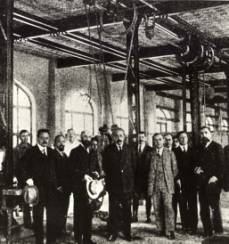
Technion founding father Prof. Albert Einstein at Technion.


The Brainstormer

“What is important are the many e-mails I receive from grateful patients helped by Rasagiline.” Prof. Moussa Youdim


It was his father’s struggle with deep depression over business troubles in 1957 that changed the course of Prof. Moussa Youdim’s life, from studying medicine to going into pharmacology. He sought a more refined, and merciful understanding of brain chemistry that would help bring treatment and relief to millions.
Prof. Youdim is today internationally renowned for his brain research and drug development in depressive illness and Parkinson’s and Alzheimer’s diseases. He has established the importance of monoamine oxidase and brain iron metabolism for brain function that can lead to cognitive impairments and neurodegenerative diseases.


Where internet began.

“They unequivocally bear the stamp of the present century.” BBVA Foundation President, Francisco Gonzále, at the Frontiers of Knowledge Awards, 2009.

The Lempel-Ziv algorithm – the mathematical formula for compressing vast amounts of information – is the thought power that enabled the high-tech communications revolution of our generation.
From the birth of the internet, through to the global broadcasting of live images from Mars, we are indebted to the science behind compression and decompression made possible by the legendary Technion algorithm in 1983.
Tiberius-born Prof. Jacob Ziv and Poland-born Prof. Abraham Lempel changed the direction of mankind by bringing the best compression ratio ever. This became the standard utility in unix systems, the gif image format, tiff, pdf and adobe acrobat software.
Generations of Technion graduates mentored by the two pioneering professors, adopted not only the knowledge, but also the spirit of innovation, empowering the high-tech revolution, in Israel and across the globe.


Light Man 2020

“Technion is the place I chose to do this research.” Distinguished Prof. Moti Segev

What is light? How is it composed? How to unravel the secrets of a soliton – a single wave packet of light? What wonders of technology and science can be achieved when we master its power?
Distinguished Prof.Mordechai (Moti) Segev was raised in Haifa to a poor immigrant family of shoemakers. But little Moti had a secret – the secret of what happens when you excel beyond all frontiers.
Years later – as the first Israeli to be offered a tenured position in Princeton in 1998 – Segev chose to return to Technion and to create there a focus of optics research alluring excellent students and faculty from across the world. Some proofs of his global success include  the world’s first observation of 2D lattice solitons, and the first experimental demonstration of Anderson localization in a disordered periodic system.


A Matter of Class

“If you believe in your research then fight for it. Fight for the truth.” Distinguished Prof. Dan Shechtman.

Since 1912, matter – the miracle of everything in our world – was defined by scientists with a strict paradigm: crystals are ordered and periodic  – with no exception. That was before Israeli-born Distinguished Prof. Dan Shechtman reached for the electron microsope in 1982 – the year humanity’s perception of matter was changed forever.
Shechtman broke all the rules when he revealed a new class of matter – “Shechtmanite” – crystals with 5-fold rotation symmetry. “I was alone. I was ridiculed by my colleagues and my peers,” tells Shechtman, who stood by his revolutionary research into quasi-periodic crystals despite the disgrace it brought him among international scientists.
The new strength of material made available through quasi-periodic crystals has today converted the world,  opening a range of applications in super-strong steel – especially where it contacts the human body, such as in surgical equipment.


Multi-tasking Stem Cells

“Everyone knows about the Technion…” Prof. Shulamit Levenberg

One of seven sisters in a religious family, no-one could foresee that Prof. Shulamit Levenberg would change the course of global science. Yet, when she revealed a breakthrough process to create living human tissue in the lab – she opened a new dimension of promise in medical research – that could eventually culminate in a medical ability to cultivate and replace damaged organs in the body.

Prof. Levenberg conducts interdisciplinary research in the subjects of tissue engineering from human embryonic stem cells using biodegradable polymers. She is recognized as a world leader in the field. Her research proved that it is possible to create complex muscle tissue including blood vessels (as well as beating heart muscle) in a laboratory. She has been named among the world’s top 50 science leaders by the prestigious magazine Scientific American.


The Imagineer

“Technion is a holistic experience.” Technion Alum Shai Agassi

Proud Technion alum Shai Agassi wants to put you behind the wheel of an electric car — but he doesn’t want you to sacrifice convenience (or cash) to do it.
When horrific climate-change scenarios elicit little but endless chatter from governments and entrenched special interests, the difference between talk and action represent an embarrassing gulf. Meet exemplary Technion alum Shai Agassi, who has stepped fearlessly into that gap. His approach to solving the puzzle of electric automobiles could spark nothing short of an automotive revolution.
Agassi stunned the software industry in 2007 by resigning from SAP to focus on his vision for breaking the world’s fossil-fuel habit, through his global start-up Project Better Place. Recently he signed up to make San Francisco the EV capital of the US – with a revolutionary switchable battery electric taxi program.


The Kiss of Life

“Mentorship is as important as science.” Nobel Laureate Avram Hershko

Ubiquitin: so called, because it is a protein present in all living cells. No-one knew why it was there, and no-one dared to wonder: it was just boring – “ubiquitous”.
But no living secrets are untouched by Technion scientists. Throughout the ‘70s and ‘80s, Distinguished Professors Avram Hershko and Aaron Ciechanover unveiled the mysteries of  the ubiquitin system, revealing the masterkeys of human health. The ubiquitous protein ubiquitin, they showed, is the key factor in deciding when and how a cell should regenerate. Imbalance in ubiquitin reveals itself in some of the world’s most incurable afflictions – such as cancer and neuro-degenerative disorders.
By 2004, the Technion research was already revolutionizing medical understanding and opening the way to innovative cures and treatments. No wonder that, in that year, the two Technion Professors became Israel’s first Nobel Laureates in science.


Sniffing Out Cancer

“I am where I feel that I contribute the most.” Dr. Hossam Haick


When Dr. Hossam Haick was studying for his doctorate, a friend of his was diagnosed with leukemia. “It was very painful for me. I saw his suffering. That was the first time I began to think about diagnosing cancer by means of oxygenating substances that are excreted in a photocatalytic procedure (accelerated by light ) and come into contact with cancer cells. Nazareth-born Haick has since amazed the world with an ingenious system for detecting cancer via breath tests.
Haick’s patented “electronic nose” promises to detect several types of cancer in their early stages. His goal is to detect cancer early enough  to give the human body a better chance of beating the disease.


9/11 Never again

“At critical moments in an emergency, there is no time.” Security expert Prof. Avi Kirschenbaum.

A decate later and the trauma is fresh. And the global threat is still there. Post 9/11, everyone wants to know they are safe on a plane.  
High-tech security innovation has always been quietly high on the scientific agenda of Israel’s top institute of technology, but recently world headlines showed another aspect of Technion expertise – people management in a crisis.
“At critical moments in an emergency, there is no time to consult a supervisor or read the manual,” says Prof. Avi Kirschenbaum, whose decades of expertise in home-front security recently won his team a $5 million grant by the European Union to ensure airport against hostile threats. “In order to prevent disasters and deal with them properly, we have to ensure that all the teams, and not just security teams, will be trained and highly motivated.”


Upwardly Motile

“For interdisciplinary science, Technion is an excellent place.”  Prof. Kinneret Keren

Named one of the 100 top young innovators by MIT’s Technology Review Magazine, Dr. Kinneret Keren is researching nature’s genius in self-assembly. On one hand this can be used  in the creation of nano-scale electronics; on the other, it brings a  wealth of understanding to  medical science – understanding  a cell’s motility – or how it  moves through space and time can provide the master-keys for healing such diseases as cancer or heart disease.
Keren integrates physics and cell biology in her research, moving between real and artificial cells. “The biophysical aspects of cell biology have been neglected in many areas,” she explains: “Basic cellular processes are highly relevant to understanding normal processes and diseases, for example, understanding how and why cells move faster brings a chance to better understand how cancer spreads.”


Think Global
Think Technion

“Israel can win the battle for survival only by developing expert knowledge in technology.”
Prof. Albert Einstein (President of the first Technion Society)

“Technion has a great contribution to make to Israel’s future prosperity, and Israel’s prosperity cannot but be of great benefit to other countries, as well.”
Winston Churchill (The late Prime Minister of Great Britain)

“You – the people of the Technion – have led the way in technology, science and engineering.”
Yitzhak Rabin (The late Prime Minister of Israel)

“The Technion has been a beacon of learning in our region.”
The late King Hussein of Jordan

And no-one should ignore the most amazing part of Technion….

THE STUDENTS!