Category Archives: News

Hot Technion FACTS on Startups, Innovation, Israel, Science & Technology

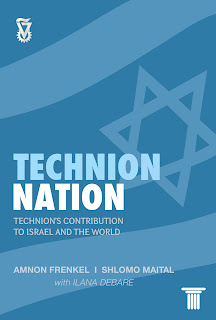
Film promo for the book “Technion Nation — Technion’s Contribution to Israel and the World.” Prof. Shlomo Maital takes you on a short journey through the book, written by Professors Amnon Frenkel and Maital, with Ms. Ilana DeBare that tells the story of how Technion’s graduates drove Israel’s transformation from an economy of Jaffa oranges to semiconductors, and of how Technion scientists have given the world new forms of matter, life-saving discoveries and countless innovations that enrich lives of people everywhere, winning Nobel Prizes along the way. 

Data published by the Samuel Neaman Institute.

National researchers have found that investment in human capital, in Technion undergraduate science and engineering students – has generated exceptionally high (and risk free) social rates of return.

Investment in human capital at Technion generates a 76‐197% social rate of return, at least, or in absolute terms, some $35‐$60 billion for 50 graduating classes.

The annual output of Technion graduates in high‐tech industries and computer services, communications and Research & Development is estimated at a minimum of $21 billion.

The median income of Technion graduates is NIS 20‐25,000 (gross income) per month, and is substantially higher than both the average wage in the economy and than the average wage of those with higher education.

The cost of the 2010 undergraduate class was approximately $1 billion (for four years of education). The social return to Israel’s economy is estimated at between $1.76 and $2.97 billion.

These calculations show that public investment in Technion science and engineering education is highly profitable, with higher rates of return that almost any other conceivable risk‐free investment.

An overall estimate of Technion graduates’ GDP contribution to the Israeli economy, shows an annual output of Technion graduates in high‐tech industries and computer services, communications and Research & Development at an estimated  $21 b., or some 20 per cent of the total annual output of these industries.

Technion engineers contribute to generating some 78,000 jobs that support high‐tech industries, jobs that pay relatively high wages.

Technion graduates’ contributions also find expression in the taxes they pay, some NIS 16.6 b. or about $4.4 b., in direct and indirect taxes, or some 13 per cent of the state revenue from direct and indirect taxes.

Findings in this research project show the unique contribution of Technion, through its graduates, to creation of human capital over a century of its operations.

Technion graduates participate in every facet of Israel’s economy, technology, education and management, especially in its high‐tech growth‐leading sectors.

Other findings in the research, based on a Web‐based survey of some 4,000 Technion graduates, indicate major contributions of individual Technion graduates to Israel and the world.

  • Some 67,000 persons have graduated from Technion since its first graduating class, and some 90,000 degrees have been awarded. Of Israel’s 125 top business leaders, according to Dun & Bradstreet, 41 (one‐third) are Technion graduates. Of these, 28 head publicly‐listed firms, and 13 lead private companies.
  • Technion graduates lead Israel’s 11 top exporters which account for $19.5 b. in exports out of a total of some $45 b., and employ 80,000 workers.   
  • Entrepreneurship:  of the 298 NASDAQ‐listed companies listed with “non‐American origins”,  fully 121 (41 per cent) are Israeli.  Of those, half (59) are led by Technion graduates and/or were founded by Technion graduates.  These Technion‐originating startup companies had a market value of $28.4 b. (as of Nov. 2010).   

Technion Inventions 

Among the widely‐used inventions or breakthroughs originating with Technion Faculty and/or Technion graduates:

  • Memory sticks (Dov Moran, M‐systems); 
  • Ziv‐Lempel data compression algorithm (used in pdf); 
  • Rasagiline (Azilect), for treating early‐stage Parkinson’s, developed by Moussa Youdim
  • Instant messaging (Yossi Vardi, father3 of ICQ inventor Arik Vardi, was a key founder of Mirabilus); 
  • Better Place electric cars (Shai Agassi)
  • Ubiquitin, the protein that causes cells to die, showing potential for new cancer treatments, discovered by Technion Nobel Laureates Ciechanover and  Hershko;  
  • Shechtmanite (quasi‐crystalline matter, once thought impossible, discovered by Dan Shechtman); 
  • NaNose’ that sniffs cancer (Hossam Haick); 
  • Non‐invasive destruction of tumors by ultrasound (Insightec, led by Technion graduate Yoav Medan); 
  • Cardiac imaging through PC‐based ultrasound (Alex Silberklang, who headed GE Ultrasound, based in Israel, for a decade), and a great many more.   

Industry and Startups 

Based on a web survey of graduates:

  • Out of 59,100 Technion graduates (who are currently of work age), one‐fourth (24 per cent) are either CEO’s or VP’s.  In addition, another 41 per cent fill management positions.   
  • 10,882 Technion graduates, or 18.4 per cent of all graduates, work currently, or worked at one time, in startup companies.
  • Some 13,500 Technion graduates, nearly one‐fourth of all graduates, at one time initiated a business. Some 15 per cent of Technion’s female graduates also launched businesses at one time.   
  • Of all Technion graduates, 35 per cent work in industry, and 12 per cent work in R&D; thus nearly half of all graduates are employed in jobs that either directly produce goods and services or help design and create them Of all Technion graduates employed in industry, 75 per cent are employed in high‐tech industries.

Source:   
Technion’s Contribution to the Israeli Economy through its Graduates, By    Amnon
Frenkel and Shlomo Maital.  S. Neaman Institute Working Paper, January 2012.  

To order a copy of Technion Nation, click here.

T3 – Technion office for Technology Transfer

Hot Technion FACTS on Startups, Innovation, Israel, Science, Technology

Prof. Shlomo Maital takes you on a short journey through the book, written by Professors Amnon Frenkel and Maital, with Ms. Ilana DeBare that tells the story of how Technion’s graduates drove Israel’s transformation from an economy of Jaffa oranges to semiconductors, and of how Technion scientists have given the world new forms of matter, life-saving discoveries and countless innovations that enrich lives of people everywhere, winning Nobel Prizes along the way.

Data published by the Samuel Neaman Institute.

National researchers have found that investment in human capital, in Technion undergraduate science and engineering students – has generated exceptionally high (and risk free) social rates of return.

Investment in human capital at Technion generates a 76‐197% social rate of return, at least, or in absolute terms, some $35‐$60 billion for 50 graduating classes.

The annual output of Technion graduates in high‐tech industries and computer services, communications and Research & Development is estimated at a minimum of $21 billion.

The median income of Technion graduates is NIS 20‐25,000 (gross income) per month, and is substantially higher than both the average wage in the economy and than the average wage of those with higher education.

The cost of the 2010 undergraduate class was approximately $1 billion (for four years of education). The social return to Israel’s economy is estimated at between $1.76 and $2.97 billion.

These calculations show that public investment in Technion science and engineering education is highly profitable, with higher rates of return that almost any other conceivable risk‐free investment.

An overall estimate of Technion graduates’ GDP contribution to the Israeli economy, shows an annual output of Technion graduates in high‐tech industries and computer services, communications and Research & Development at an estimated  $21 b., or some 20 per cent of the total annual output of these industries.

Technion engineers contribute to generating some 78,000 jobs that support high‐tech industries, jobs that pay relatively high wages.

Technion graduates’ contributions also find expression in the taxes they pay, some NIS 16.6 b. or about $4.4 b., in direct and indirect taxes, or some 13 per cent of the state revenue from direct and indirect taxes.

Findings in this research project show the unique contribution of Technion, through its graduates, to creation of human capital over a century of its operations.

Technion graduates participate in every facet of Israel’s economy, technology, education and management, especially in its high‐tech growth‐leading sectors.

Other findings in the research, based on a Web‐based survey of some 4,000 Technion graduates, indicate major contributions of individual Technion graduates to Israel and the world.

  • Some 67,000 persons have graduated from Technion since its first graduating class, and some 90,000 degrees have been awarded. Of Israel’s 125 top business leaders, according to Dun & Bradstreet, 41 (one‐third) are Technion graduates. Of these, 28 head publicly‐listed firms, and 13 lead private companies.
  • Technion graduates lead Israel’s 11 top exporters which account for $19.5 b. in exports out of a total of some $45 b., and employ 80,000 workers.
  • Entrepreneurship:  of the 298 NASDAQ‐listed companies listed with “non‐American origins”,  fully 121 (41 per cent) are Israeli.  Of those, half (59) are led by Technion graduates and/or were founded by Technion graduates.  These Technion‐originating startup companies had a market value of $28.4 b. (as of Nov. 2010).

Technion Inventions 

Among the widely‐used inventions or breakthroughs originating with Technion Faculty and/or Technion graduates:

  • Memory sticks (Dov Moran, M‐systems);
  • Ziv‐Lempel data compression algorithm (used in pdf);
  • Rasagiline (Azilect), for treating early‐stage Parkinson’s, developed by Moussa Youdim;
  • Instant messaging (Yossi Vardi, father3 of ICQ inventor Arik Vardi, was a key founder of Mirabilus);
  • Better Place electric cars (Shai Agassi);
  • Ubiquitin, the protein that causes cells to die, showing potential for new cancer treatments, discovered by Technion Nobel Laureates Ciechanover and  Hershko;
  • Shechtmanite (quasi‐crystalline matter, once thought impossible, discovered by Dan Shechtman);
  • NaNose’ that sniffs cancer (Hossam Haick);
  • Non‐invasive destruction of tumors by ultrasound (Insightec, led by Technion graduate Yoav Medan);
  • Cardiac imaging through PC‐based ultrasound (Alex Silberklang, who headed GE Ultrasound, based in Israel, for a decade), and a great many more.

Industry and Startups 

Based on a web survey of graduates:

  • Out of 59,100 Technion graduates (who are currently of work age), one‐fourth (24 per cent) are either CEO’s or VP’s.  In addition, another 41 per cent fill management positions.
  • 10,882 Technion graduates, or 18.4 per cent of all graduates, work currently, or worked at one time, in startup companies.
  • Some 13,500 Technion graduates, nearly one‐fourth of all graduates, at one time initiated a business. Some 15 per cent of Technion’s female graduates also launched businesses at one time.
  • Of all Technion graduates, 35 per cent work in industry, and 12 per cent work in R&D; thus nearly half of all graduates are employed in jobs that either directly produce goods and services or help design and create them Of all Technion graduates employed in industry, 75 per cent are employed in high‐tech industries.

Source:   
Technion’s Contribution to the Israeli Economy through its Graduates, By    Amnon
Frenkel and Shlomo Maital.  S. Neaman Institute Working Paper, January 2012.  

To order a copy of Technion Nation, click here.

T3 – Technion office for Technology Transfer

Hot Technion FACTS on Startups, Innovation, Israel, Science & Technology

Film promo for the book “Technion Nation — Technion’s Contribution to Israel and the World.” Prof. Shlomo Maital takes you on a short journey through the book, written by Professors Amnon Frenkel and Maital, with Ms. Ilana DeBare that tells the story of how Technion’s graduates drove Israel’s transformation from an economy of Jaffa oranges to semiconductors, and of how Technion scientists have given the world new forms of matter, life-saving discoveries and countless innovations that enrich lives of people everywhere, winning Nobel Prizes along the way. 

Data published by the Samuel Neaman Institute.

National researchers have found that investment in human capital, in Technion undergraduate science and engineering students – has generated exceptionally high (and risk free) social rates of return.

Investment in human capital at Technion generates a 76‐197% social rate of return, at least, or in absolute terms, some $35‐$60 billion for 50 graduating classes.

The annual output of Technion graduates in high‐tech industries and computer services, communications and Research & Development is estimated at a minimum of $21 billion.

The median income of Technion graduates is NIS 20‐25,000 (gross income) per month, and is substantially higher than both the average wage in the economy and than the average wage of those with higher education.

The cost of the 2010 undergraduate class was approximately $1 billion (for four years of education). The social return to Israel’s economy is estimated at between $1.76 and $2.97 billion.

These calculations show that public investment in Technion science and engineering education is highly profitable, with higher rates of return that almost any other conceivable risk‐free investment.

An overall estimate of Technion graduates’ GDP contribution to the Israeli economy, shows an annual output of Technion graduates in high‐tech industries and computer services, communications and Research & Development at an estimated  $21 b., or some 20 per cent of the total annual output of these industries.

Technion engineers contribute to generating some 78,000 jobs that support high‐tech industries, jobs that pay relatively high wages.

Technion graduates’ contributions also find expression in the taxes they pay, some NIS 16.6 b. or about $4.4 b., in direct and indirect taxes, or some 13 per cent of the state revenue from direct and indirect taxes.

Findings in this research project show the unique contribution of Technion, through its graduates, to creation of human capital over a century of its operations.

Technion graduates participate in every facet of Israel’s economy, technology, education and management, especially in its high‐tech growth‐leading sectors.

Other findings in the research, based on a Web‐based survey of some 4,000 Technion graduates, indicate major contributions of individual Technion graduates to Israel and the world.

  • Some 67,000 persons have graduated from Technion since its first graduating class, and some 90,000 degrees have been awarded. Of Israel’s 125 top business leaders, according to Dun & Bradstreet, 41 (one‐third) are Technion graduates. Of these, 28 head publicly‐listed firms, and 13 lead private companies.
  • Technion graduates lead Israel’s 11 top exporters which account for $19.5 b. in exports out of a total of some $45 b., and employ 80,000 workers.   
  • Entrepreneurship:  of the 298 NASDAQ‐listed companies listed with “non‐American origins”,  fully 121 (41 per cent) are Israeli.  Of those, half (59) are led by Technion graduates and/or were founded by Technion graduates.  These Technion‐originating startup companies had a market value of $28.4 b. (as of Nov. 2010).   

Technion Inventions 

Among the widely‐used inventions or breakthroughs originating with Technion Faculty and/or Technion graduates:

  • Memory sticks (Dov Moran, M‐systems); 
  • Ziv‐Lempel data compression algorithm (used in pdf); 
  • Rasagiline (Azilect), for treating early‐stage Parkinson’s, developed by Moussa Youdim
  • Instant messaging (Yossi Vardi, father3 of ICQ inventor Arik Vardi, was a key founder of Mirabilus); 
  • Better Place electric cars (Shai Agassi)
  • Ubiquitin, the protein that causes cells to die, showing potential for new cancer treatments, discovered by Technion Nobel Laureates Ciechanover and  Hershko;  
  • Shechtmanite (quasi‐crystalline matter, once thought impossible, discovered by Dan Shechtman); 
  • NaNose’ that sniffs cancer (Hossam Haick); 
  • Non‐invasive destruction of tumors by ultrasound (Insightec, led by Technion graduate Yoav Medan); 
  • Cardiac imaging through PC‐based ultrasound (Alex Silberklang, who headed GE Ultrasound, based in Israel, for a decade), and a great many more.   

Industry and Startups 

Based on a web survey of graduates:

  • Out of 59,100 Technion graduates (who are currently of work age), one‐fourth (24 per cent) are either CEO’s or VP’s.  In addition, another 41 per cent fill management positions.   
  • 10,882 Technion graduates, or 18.4 per cent of all graduates, work currently, or worked at one time, in startup companies.
  • Some 13,500 Technion graduates, nearly one‐fourth of all graduates, at one time initiated a business. Some 15 per cent of Technion’s female graduates also launched businesses at one time.   
  • Of all Technion graduates, 35 per cent work in industry, and 12 per cent work in R&D; thus nearly half of all graduates are employed in jobs that either directly produce goods and services or help design and create them Of all Technion graduates employed in industry, 75 per cent are employed in high‐tech industries.

Source:   
Technion’s Contribution to the Israeli Economy through its Graduates, By    Amnon
Frenkel and Shlomo Maital.  S. Neaman Institute Working Paper, January 2012.  

To order a copy of Technion Nation, click here.

T3 – Technion office for Technology Transfer

HACKERS ahead… Technion defends cyber space.

Technion Students Hack OSPF, the Most Popular Routing Protocol on the Internet.

The attack was part of a student project in the Computer Science Department and has attracted substantial interest in two scientific conferences; the students will be awarded the Technion Amdocs Prize.

Alex Kirshon and Dima Gonikman, students in the Technion Computer Science Department, showed how to hack the OSPF routing protocol, the most common protocol on the internet. The attack was part of a student project in the Laboratory of Computer Communication and Networking. It attracted substantial interest in the two scientific conferences it was presented where it was presented. Alex and Dima, supervised by Dr. Gabi Nakibly and Itai Dabran, will be awarded the Technion Amdocs Prize for Best Project in Computer Science.

Hundreds of thousands of routers work on the internet, linking the different networks. Each router is supposed to “know” all the other routers and to “talk” to them (to obtain information about their neighbors and about networks connected to them). The incessant involvement of the routers in the transmission of this information encumbers them and diminishes their effectiveness. Hence, the internet is in fact split into autonomic systems that “talk” to each other. The routers in each such system “know” each another.  

The most popular protocol for the transmission of information between routers in autonomic systems is OSPF. If it malfunctions, many messages will not reach their destination. Moreover, there is concern that these messages will reach the attacker of the protocol. Accordingly, stringent security measures are in place for the protocols of network routers.

One of the important defenses is called “fight-back”. When it is implemented – when a router recognizes that another router has sent data in its name – it immediately issues a correction.

With help from their supervisors, Alex Kirshon and Dima Gonikman “targeted” this correction. They triggered a fight-back from a router on the network, but immediately before it was sent, they sent a fight-back with false data that was received by some of the other routers. When these routers received the fight-back of the compromised router, they rejected it.

The “attacking” students also identified in advance which fight-back the attacked router will send, so that the other routers received it “without doubts or questions”.  From the moment they received the “fake” fight-back,  routers on the network have incorrect routing tables.

Such an attack can disrupt the entire operation of the autonomic system, prevent messages from reaching their destination and unnecessarily create substantial traffic on the network.

Hacker Inside Logo
You might also like: 

HACKERS ahead… Technion defends cyber space.

Technion Students Hack OSPF, the Most Popular Routing Protocol on the Internet.

The attack was part of a student project in the Computer Science Department and has attracted substantial interest in two scientific conferences; the students will be awarded the Technion Amdocs Prize.

Alex Kirshon and Dima Gonikman, students in the Technion Computer Science Department, showed how to hack the OSPF routing protocol, the most common protocol on the internet. The attack was part of a student project in the Laboratory of Computer Communication and Networking. It attracted substantial interest in the two scientific conferences it was presented where it was presented. Alex and Dima, supervised by Dr. Gabi Nakibly and Itai Dabran, will be awarded the Technion Amdocs Prize for Best Project in Computer Science.

Hundreds of thousands of routers work on the internet, linking the different networks. Each router is supposed to “know” all the other routers and to “talk” to them (to obtain information about their neighbors and about networks connected to them). The incessant involvement of the routers in the transmission of this information encumbers them and diminishes their effectiveness. Hence, the internet is in fact split into autonomic systems that “talk” to each other. The routers in each such system “know” each another.  

The most popular protocol for the transmission of information between routers in autonomic systems is OSPF. If it malfunctions, many messages will not reach their destination. Moreover, there is concern that these messages will reach the attacker of the protocol. Accordingly, stringent security measures are in place for the protocols of network routers.

One of the important defenses is called “fight-back”. When it is implemented – when a router recognizes that another router has sent data in its name – it immediately issues a correction.

With help from their supervisors, Alex Kirshon and Dima Gonikman “targeted” this correction. They triggered a fight-back from a router on the network, but immediately before it was sent, they sent a fight-back with false data that was received by some of the other routers. When these routers received the fight-back of the compromised router, they rejected it.

The “attacking” students also identified in advance which fight-back the attacked router will send, so that the other routers received it “without doubts or questions”.  From the moment they received the “fake” fight-back,  routers on the network have incorrect routing tables.

Such an attack can disrupt the entire operation of the autonomic system, prevent messages from reaching their destination and unnecessarily create substantial traffic on the network.

Hacker Inside Logo
You might also like: 

Satelites, Patents, Hackers & NYC: Technion LIVE Feb. 2012

Technion Live Newsletter | February 2012

February 2012
IF THIS NEWSLETTER DOESN’T LOOK RIGHT, CLICK HERE TO SEE THE WEB VERSION
How Start-ups get Started Trinity in Space Nurturing our Future 100 Years On
From the President

The founding vision of the Technion 100 years ago in 1912 was to become an institute of higher education in the Middle East that would serve all of humanity. There is a tremendous feeling of awe and deep satisfaction that 100 years later, we experience powerful proof of that vision. In 2012, we are a global institute of technology that has three faculty members who have received Nobel Prizes in the past seven years. The discovery of ubiquitin is already saving lives with the innovation of medical cures for age-old diseases such as cancer and neurodegeneration. The discovery of quasicrystals brought a whole new dimension to our understanding of the material world. And beyond the science that brought the world’s highest honor, Technion scientists are month by month unfurling new scientific discoveries and innovations in fields from water technology to advanced software and new ways to maximize the power of the sun.

At the close of 2011, we heard that Technion and its partner Cornell University had been selected to establish the Technion Cornell Innovation Institute (TCII) in the heart of New York City – another culmination of 100 years of vision. In its 100th year, Technion will be sharing its unique ability to target scientific research and to translate it into economic growth and prosperity with America and with students and researchers from across the globe. The multidisciplinary hubs of the new institute embody a new academic paradigm of targeted research initiated by Technion through its successful cross-faculty programs. It expresses a talent to think ahead on behalf of all humankind which has seeded, created and shaped the modern State of Israel.

Technion President
Prof. Peretz Lavie

100 Years Opens
1912-2012 – Technion celebrates 100 years since the first cornerstone with a festive concert of the Stanley Shalom Zielony Technion Orchestra and Choir, and the launching of a national centennial stamp.
NanoSpun
Featured on the Technion 2012 Cornerstone Centennial Stamp, the nanofibers behind the dynamic new start-up NanoSpun signify many of the secrets of Technion’s success in conceptualizing, shaping and nurturing Israel as the high-tech global success of the third millennium.
How Start-ups get Started
“Israel’s heroes used to be the generals. Now, the heroes are the entrepreneurs.” When Technion in partnership with Cornell University won the bid from New York City to set up a new ‘center for genius’ on Roosevelt Island, the creation of the Technion Cornell Institute of Innovation (TCII) was cited worldwide as a new educational and economic paradigm.
Cyber HQ
Technion is well known for contributions in computer security and cryptography. With recent cyber attacks throughout Israel, the Faculty of Computer Science is seeking to bring the brainpower of the cyber front line together in a focused drive to develop the software that will keep tomorrow’s world safe from cyber terrorism.
Trinity in Space
For the first time ever, an attempt will be made to launch three satellites that will fly together in a controlled formation. To date such a launch was not possible due to size and weight of the satellites. Now, working with NANO satellites, researchers at the Asher Space Research Institute (ASRI) and Technion Autonomous Systems Program (TASP) are revealing the technological impact of team work at the final frontier.
On Screen
Getting the MAX from Solar Energy
Engineering applicances for the solar powers of tomorrow to maximize the power we harness from the sun. Learn more from new faculty member Prof. Carmel Rotschild.
Power 2 the Nation
Prof. Gideon Grader, director of the Grand Technion Energy Program (GTEP), discusses I-CORE – the Technion-led national research initiative into pioneering solar power and fuels.
Nurturing our Future
Founded with the support of Dr. Martin and Grace Rosman of Sarasota Florida and Edgewater Maryland, the Rosman Family Gift for the Technion Springboard Program provides the means to excel for talented young people from Israel’s less privileged neighborhoods.
New Appointments
A new vice president and six new deans herald the opening of Technion’s centennial year. Read more about the new appointments here.
Unsubscribe from Technion Live

Satelites, Patents, Hackers & NYC: Technion LIVE Feb. 2012

Technion Live Newsletter | February 2012

February 2012
IF THIS NEWSLETTER DOESN’T LOOK RIGHT, CLICK HERE TO SEE THE WEB VERSION
How Start-ups get Started Trinity in Space Nurturing our Future 100 Years On
From the President

The founding vision of the Technion 100 years ago in 1912 was to become an institute of higher education in the Middle East that would serve all of humanity. There is a tremendous feeling of awe and deep satisfaction that 100 years later, we experience powerful proof of that vision. In 2012, we are a global institute of technology that has three faculty members who have received Nobel Prizes in the past seven years. The discovery of ubiquitin is already saving lives with the innovation of medical cures for age-old diseases such as cancer and neurodegeneration. The discovery of quasicrystals brought a whole new dimension to our understanding of the material world. And beyond the science that brought the world’s highest honor, Technion scientists are month by month unfurling new scientific discoveries and innovations in fields from water technology to advanced software and new ways to maximize the power of the sun.

At the close of 2011, we heard that Technion and its partner Cornell University had been selected to establish the Technion Cornell Innovation Institute (TCII) in the heart of New York City – another culmination of 100 years of vision. In its 100th year, Technion will be sharing its unique ability to target scientific research and to translate it into economic growth and prosperity with America and with students and researchers from across the globe. The multidisciplinary hubs of the new institute embody a new academic paradigm of targeted research initiated by Technion through its successful cross-faculty programs. It expresses a talent to think ahead on behalf of all humankind which has seeded, created and shaped the modern State of Israel.

Technion President
Prof. Peretz Lavie

100 Years Opens
1912-2012 – Technion celebrates 100 years since the first cornerstone with a festive concert of the Stanley Shalom Zielony Technion Orchestra and Choir, and the launching of a national centennial stamp.
NanoSpun
Featured on the Technion 2012 Cornerstone Centennial Stamp, the nanofibers behind the dynamic new start-up NanoSpun signify many of the secrets of Technion’s success in conceptualizing, shaping and nurturing Israel as the high-tech global success of the third millennium.
How Start-ups get Started
“Israel’s heroes used to be the generals. Now, the heroes are the entrepreneurs.” When Technion in partnership with Cornell University won the bid from New York City to set up a new ‘center for genius’ on Roosevelt Island, the creation of the Technion Cornell Institute of Innovation (TCII) was cited worldwide as a new educational and economic paradigm.
Cyber HQ
Technion is well known for contributions in computer security and cryptography. With recent cyber attacks throughout Israel, the Faculty of Computer Science is seeking to bring the brainpower of the cyber front line together in a focused drive to develop the software that will keep tomorrow’s world safe from cyber terrorism.
Trinity in Space
For the first time ever, an attempt will be made to launch three satellites that will fly together in a controlled formation. To date such a launch was not possible due to size and weight of the satellites. Now, working with NANO satellites, researchers at the Asher Space Research Institute (ASRI) and Technion Autonomous Systems Program (TASP) are revealing the technological impact of team work at the final frontier.
On Screen
Getting the MAX from Solar Energy
Engineering applicances for the solar powers of tomorrow to maximize the power we harness from the sun. Learn more from new faculty member Prof. Carmel Rotschild.
Power 2 the Nation
Prof. Gideon Grader, director of the Grand Technion Energy Program (GTEP), discusses I-CORE – the Technion-led national research initiative into pioneering solar power and fuels.
Nurturing our Future
Founded with the support of Dr. Martin and Grace Rosman of Sarasota Florida and Edgewater Maryland, the Rosman Family Gift for the Technion Springboard Program provides the means to excel for talented young people from Israel’s less privileged neighborhoods.
New Appointments
A new vice president and six new deans herald the opening of Technion’s centennial year. Read more about the new appointments here.
Unsubscribe from Technion Live

Christine Quinn at Technion City

Technion President Prof. Peretz Lavie with Christine Quinn of New York at Technion City, Feb. 2012.

“The Technion-Cornell Initiative will make our City the Global High-Tech Capital”

“The residents of New York City and its government are very excited about the planned applied science and engineering campus which Cornell and the Technion are partnering to establish”, said Christine Quinn, New York City council speaker, in her visit today to the Technion. “We have no doubt that this important venture, which will make our city the global high-tech capital, will inject new blood into it and improve all municipal aspects – from affordable housing to cafés and restaurants”.

Quinn, who in 2007 was ranked by the New York Post third in the list of the most influential women in New York, is a member of the Democratic Party, and is considered a leading candidate in the mayoral election that will end next year. She invests substantial resources in improving health care and in promoting affordable housing in New York. “We, as a municipality, cannot create entrepreneurial ventures, but we can and are committed to creating a suitable envelope for them: an efficient transportation system, personal security, housing, quality education and employment – without these, entrepreneurs and high-tech companies cannot be attracted to the city”.

 “Whenever I hear the slogan ‘Intel Inside’ I say: Haifa Inside.”

Technion President Professor Peretz Lavie said to the guest that the future is in the interdisciplinary realm, and that this is the rational behind the new campus that will be set-up  on Roosevelt Island in New York. “It may be that Prof. Shechtman is the last scientist to be awarded the Nobel Prize for research conducted by one person working alone in one laboratory,” said Prof. Lavie. “Nowadays, achieving significant scientific and engineering breakthroughs requires tremendous knowledge that the single scientist does not possess. In light of this, the new campus will be structured as interdisciplinary centers that will intercommunicate and overlap, rather than in the well-known university model of programs and faculties. With time this center will be surrounded by startup companies and extensions of large high-tech companies, just as such companies and extensions historically developed near the Technion. Intel is an example of a giant company that chose to establish here its first research center outside the US, and so whenever I hear the slogan ‘Intel Inside’ I say: Haifa Inside. Our innovative venture will build a bridge of friendship and cooperation between New York and Haifa”.

Christine Quinn at Technion City

Technion President Prof. Peretz Lavie with Christine Quinn of New York at Technion City, Feb. 2012.

“The Technion-Cornell Initiative will make our City the Global High-Tech Capital”

“The residents of New York City and its government are very excited about the planned applied science and engineering campus which Cornell and the Technion are partnering to establish”, said Christine Quinn, New York City council speaker, in her visit today to the Technion. “We have no doubt that this important venture, which will make our city the global high-tech capital, will inject new blood into it and improve all municipal aspects – from affordable housing to cafés and restaurants”.

Quinn, who in 2007 was ranked by the New York Post third in the list of the most influential women in New York, is a member of the Democratic Party, and is considered a leading candidate in the mayoral election that will end next year. She invests substantial resources in improving health care and in promoting affordable housing in New York. “We, as a municipality, cannot create entrepreneurial ventures, but we can and are committed to creating a suitable envelope for them: an efficient transportation system, personal security, housing, quality education and employment – without these, entrepreneurs and high-tech companies cannot be attracted to the city”.

 “Whenever I hear the slogan ‘Intel Inside’ I say: Haifa Inside.”

Technion President Professor Peretz Lavie said to the guest that the future is in the interdisciplinary realm, and that this is the rational behind the new campus that will be set-up  on Roosevelt Island in New York. “It may be that Prof. Shechtman is the last scientist to be awarded the Nobel Prize for research conducted by one person working alone in one laboratory,” said Prof. Lavie. “Nowadays, achieving significant scientific and engineering breakthroughs requires tremendous knowledge that the single scientist does not possess. In light of this, the new campus will be structured as interdisciplinary centers that will intercommunicate and overlap, rather than in the well-known university model of programs and faculties. With time this center will be surrounded by startup companies and extensions of large high-tech companies, just as such companies and extensions historically developed near the Technion. Intel is an example of a giant company that chose to establish here its first research center outside the US, and so whenever I hear the slogan ‘Intel Inside’ I say: Haifa Inside. Our innovative venture will build a bridge of friendship and cooperation between New York and Haifa”.

1912-2012: Technion Timeline of a Century.

Landmark behind Time


The Technion’s historic building was designed by the renowned Jewish German architect, Alexander Baerwald. His design includes both oriental and European motives. It is built from sandstone quarried in Tantura and Atlit. The building was part of Baerwald’s plan of an open corridor leading directly to the bay. He also designed buildings that would line the road, of which some were built, indeed (e.g. the Hebrew Reali School). 

The building’s cornerstone was laid in 1912. The building’s construction was delayed during the First World War. The partially completed building was used, then, as a military hospital. In 1925 it became the home of Israel’s first institute of higher education – The Technion, Israel Institute of Technology. Until 1953, all the Technion Faculties were located there. By 1965, most of them have moved to the Technion new campus in Haifa’s Nave Shaanan. The Faculty of Architecture and Town Planning stayed in the historic Technion building until 1985. 


Timeline of the Century

2012: Technion partners with Cornell University to found the Technion Cornell Institute of Innovation (TCII), an international ‘School of Genius’ in the heart of New York City.


2011: Technion Prof. Dan Shechtman receives the Nobel Prize in Chemistry for his discovery of quasicrystals.


2007: Technion pools its brainpower in a unique multidisciplinary center for research into energy science, technology and engineering: The Grand Technion Energy Program.


2006: Technion is Israel’s 1st university to receive the Nobel Prize for Science. Prof. Aaron Ciechanover and Prof. Avram Hershko jointly receive the Nobel Prize in Chemistry for their discovery, together with Irwin Rose, of the ubiquitin system within living cells.


2005: Technion opens the Russell Berrie Nanotechnology Institute (RBNI) to further empower and concentrate the plethora of excellent scientists, researchers and students pioneering science in the nano dimension.


2001: Technion scientists reveal they have long been quietly researching solutions to meet the threat of 3rd millennium terrorism as revealed by the horrific events in the US of September 11th


1998: Combining microbiology and microelectronics, scientists show how to make a transistor 1/100,000th the size of a human hair


1993: Technion students design and launch their own satellite: Gurwin Tech Sat. The satellite is still in orbit.


1991: Gulf War – Technion shows that the integration of expertise of Israel’s top institute of technology with its dynamic medical school makes Technion first responders in responding to missile attack on the home-front.


1989: Optoelectronics: A new center of excellence pioneering the technological promise of an expert understanding of light.


1982: The Rappaport Family Institute for Research in the Medical Sciences is established. During more than two decades of activity, the Institute has established itself as an internationally recognized research center and counts among its members several world-renowned scientists.
1981: Fiberoptics is pioneered by Technion


1978: Camp David accords with Egypt: the scientific challenges of peace and nation-planning means that in addition to its many projects in water management and environmental engineering, the Technion sets up the Samuel Neaman Institute.


1973: Yom Kippur War


1971: The Faculty of Biology is set up.


1969: The faculty of medicine is born. The first class consists of 43 students who had their preclinical education abroad. They were admitted to the fourth year and finished the requirements for the degree of Medical Doctor (M.D.), after two years of clinical training in the hospitals. The same year also sees the birth of the Department of Biomedical Engineering and the Faculty of Computer Science. 


1967: Six-Day War, Faculty of Materials Engineering is set up.


1966: Agricultural engineering degrees awarded to students from Africa and Asia


1965: Department of Education in Technology and Science


1962: Faculty of Food Engineering and Biotechnology 


1961: Technion offers a  flourishing graduate school and R&D foundation


1960: The Faculty of Mathematics and the Faculty of Physics are formed.

1958:  The opening of the Faculty of Chemistry, the Faculty of Industrial Engineering and Management, and The  Department of Humanities and Arts

1956: Students take part in the Sinai War


1954: Technion founding father Prof. Albert Einstein is awarded a Technion honorary doctorate. The Faculty of Chemical Engineering is opened.


1953:The Department of Aeronautical Engineering and the  Faculty of Agricultural Engineering are set up in the new campus.


1952: Rapid growth and expansion and increasing demand for Technion graduates and engineers nation-wide means the Technion leaves its first home in the historic building in down-town Haifa. Prime-Minister David Ben Gurion selects the new site for Technion City further up the slopes of Mount Carmel.


1948: With 680 students, Technion celebrates the declaration of independence. Studies are disrupted for most of the year as faculty and students fight for independence. The Faculty of Electrical Engineering and the Faculty of Mechanical Engineering are opened.


1944: Survival tasks – Technion develops early warning systems against air attacks as well as weapons for the Hagannah, the Israeli underground army that are preparing for the War of Independence.


1943: 1000 skilled Technion graduates join the war effort against Nazi Germany


1938: The Faculties of civil engineering, architecture, industrial engineering and opened, together with 11 new labs and a nautical school


1935: The Polish government recognizes Technion
1934: The Faculty of Industrial Technology is established covering broad fields. 


1931: Technion staff vote to work for nothing to ensure their institute survives.
1928: First class of 17 Technion engineers and architects graduates


1926: Zeev Jabotinsky addresses Technion Haganah members


1924: Technion officially enrolls 1st class of engineering students


1923: Einstein’s first visit in which he becomes president of the first Technion society, the German Technion Society


In 1923, Albert Einstein visited the empty building of the Technikum, where there was a plan to give courses for word workers, electricians and telephone and telegraph workers. Although the derelict buildings were being used as a hostel for immigrants from Europe, Albert Einstein did not think the dream of founding a technical university in the Middle East to be fantasy. As a great scientist, Einstein knew that what makes the impossible possible is the courage to follow an inspiration. 


1920: The building is legally acquired and recruitment for staff begins


1914: 1918 German, Turkish and then British troops occupy the building


1913: A battle continues over the language of Technion instruction: German or revitalized Hebrew?   Hebrew wins.


1912: The cornerstone is laid for Technion’s building


1908: Wissotzky, Schiff and the Jewish National Fund invest in the new “Technikum” 


1903: Hebrew teachers association of Palestine calls for a polytechnic university


1902 Herzl publishes the novel Altneuland  (The Old New Land), which takes place in Palestine, creating the vision for a Jewish state and Zionism.


1901: 5th Zionist congress calls for a Jewish technological university, as a first necessary step to realize the dream of a Jewish state.


File:Herzl.jpg


We began with a thought…
           
“Our technical inventors, who are the true benefactors of humanity… will discover things as marvelous as those we have already seen, or indeed more wonderful than these…”
Theordor Herzl, 1896, The Jewish State

In 1902, Theodor Herzl envisioned Haifa as “a great park….with an overhead electrical train…. a city of magnificent homes and public institutions all made possible by applied science, engineering and technology.” (Altneuland)
At that time, even an automobile was an exceptional extravagance of engineering. Electricity was still an expensive luxury for the elite few.
Haifa was a small, remote, coastal town most easily accessed by boat.
The advance of science and technology; the creation of the State of Israel; the emergence of the global village connected by the information superhighway; discoveries in basic science that have fundamentally changed the way scientists think about the material world, and the tremendous applied advances taking place in every corner of Technion City are just some of the miracles witnessed in the past century.

It all began with an inspirational thought in the mind of one man, Binyamin Ze’ev Herzl. Prof. Albert Einstein later added his mind to the vision. Thousands of great thinkers have since added to the blaze of light which is Technion, creating an institute of technology that in the 3rd millennium is truly a light to the nations.