Tag Archives: industry

A Trinity of High-tech Giants for NYC

Shaping the global future: Eric Schmidt (left), Irwin Jacobs, Michael Bloomberg.

Mayor Michael R. Bloomberg, Qualcomm Founder Irwin Jacobs and Google Executive Chairman Eric Schmidt to Guide Growth of Cornell NYC Tech. Three of world’s leading tech entrepreneurs will provide guidance to university leadership, helping to shape the vision for the new campus, including the Technion-Cornell Innovation Institute (TCII).

Cornell NYC Tech has announced that New York City Mayor Michael R. Bloomberg, Qualcomm Founder Irwin Jacobs, and Google Executive Chairman Eric Schmidt will provide ongoing guidance on the programmatic and physical development of the new world-class tech campus in New York City, including the Technion-Cornell Innovation Institute – the premier academic partnership at Cornell NYC Tech.  This senior group brings together three of the world’s leading tech entrepreneurs to lend unparalleled expertise to the campus in this critical early stage.“This is a dream team of three of the best entrepreneurs in the world. Their guidance will ensure that the Roosevelt Island campus will become a world leader in technology innovation with a global impact. I cannot think of a better guiding team.” Technion President Peretz Lavie

Mayor Bloomberg, who is serving ex-officio in his official capacity as mayor, Dr. Jacobs and Dr. Schmidt – will provide advice to tech campus leadership on the educational, research, economic development and community engagement functions of the campus, helping to promote new national and international models connecting academia and industry. The group’s focus will include critical elements that will shape the campus and its programs, including topics such as the interface between the campus and New York City, the role of the local and global tech community, the approaches to intellectual property and commercialization of technology, and the creation of partnership strategies.
“New York City’s growing tech industry is about to be infused with new talent, thanks to the historic investments made by the City and Cornell for the new campus on Roosevelt Island,” said Mayor Bloomberg. “Ensuring that the new campus is connected in the right way to the thriving entrepreneurial sector is important to delivering on the promise of economic growth that is at the center of this project. I look forward to advising the university leadership on how we can achieve these goals.”

“Both Cornell, where I received an excellent undergraduate engineering education, and Technion, which has trained many of the engineers working at Qualcomm Israel in Haifa, have the energy and experience to surpass our great expectations.” Qualcomm Founder Irwin Jacobs.

“Throughout my career as an educator and as founder of two companies based on innovation, I have experienced great satisfaction in developing unique products and growing large markets by exploiting rapid advances in applied science and engineering,” said Irwin Jacobs.  “I am excited by this opportunity to work with Mayor Bloomberg and Eric Schmidt in guiding Cornell NYC Tech and the Technion-Cornell Innovation Institute through a rapid transition from startup to major player in applied science education and the formation of impactful new companies. Both Cornell, where I received an excellent undergraduate engineering education, and Technion, which has trained many of the engineers working at Qualcomm Israel in Haifa, have the energy and experience to surpass our great expectations.”

“I am pleased to join the steering committee for Cornell NYC Tech as they build their presence in New York City,” said Google Executive Chairman Eric Schmidt. “This campus is an important step forward for the development of the city’s tech sector and its continued economic growth.”

“Cornell University is honored to have the wisdom and guidance of three legends in tech entrepreneurship as we develop and shape this groundbreaking new campus,” said Cornell President David J. Skorton. “Our vision for Cornell NYC Tech is already bold, and Mayor Bloomberg, Dr. Schmidt and Dr. Jacobs are leaders who will raise the bar even higher. We are committed to harnessing this extraordinary brainpower as we establish a center of technology leadership in the heart of New York City.”

“This is a dream team of three of the best entrepreneurs in the world,” said Technion President Peretz Lavie. “Their guidance will ensure that the Roosevelt Island campus will become a world leader in technology innovation with a global impact. I cannot think of a better guiding team.”

The new campus is offering a distinctive model of graduate tech education that fuses educational excellence with real-world commercial applications and entrepreneurship, rooted in the latest academic research. Students, faculty and industry experts will learn and work together to launch ideas and create new ventures that have global impact. The campus will attract the best and brightest in technology, immerse them in an entrepreneurial culture with deep ties to the local business community, and spur the creation of new companies and new industries in New York City.

The addition of this senior-level guidance is another major milestone for the campus. Cornell NYC Tech is now accepting applications for a “beta” class of computer science master of engineering students, which will begin classes in January in temporary space donated by Google in its New York City headquarters in Chelsea. The campus soon will be launching additional academic programs including interdisciplinary Technion-Cornell dual degrees, is actively recruiting star faculty, developing a distinctive new model of tech entrepreneurship, and designing its permanent campus on Roosevelt Island.

The City’s groundbreaking Applied Sciences NYC initiative was designed to capitalize on the considerable growth presently occurring within the science, technology and research fields in New York, and builds on the Bloomberg Administration’s record of creating a more diversified and competitive economy for the future. In July of 2011, New York City Economic Development Corporation issued the Request for Proposals seeking a university, institution or consortium to develop and operate a new or expanded campus in the City in exchange for City capital, access to City-owned land – at the Navy Hospital Campus at the Brooklyn Navy Yard, the Goldwater Hospital Campus on Roosevelt Island, or on Governors Island – and the full support and partnership of the Bloomberg Administration. In October, the City received seven responses from 17 world-class institutions from around the globe. In December of 2011, the Cornell and Technion partnership was selected by the City as the first winner of the competition and was provided with land on Roosevelt Island and $100 million in City capital to build the $2 billion, 2 million square foot tech campus. When completed, the new Roosevelt Island campus will house approximately 2,000 full-time, graduate students.
Hot Technion FACTS on Startups, Innovation, Israel, Science & Technology

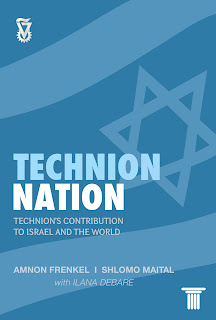
Film promo for the book “Technion Nation — Technion’s Contribution to Israel and the World.” Prof. Shlomo Maital takes you on a short journey through the book, written by Professors Amnon Frenkel and Maital, with Ms. Ilana DeBare that tells the story of how Technion’s graduates drove Israel’s transformation from an economy of Jaffa oranges to semiconductors, and of how Technion scientists have given the world new forms of matter, life-saving discoveries and countless innovations that enrich lives of people everywhere, winning Nobel Prizes along the way. 

Data published by the Samuel Neaman Institute.

National researchers have found that investment in human capital, in Technion undergraduate science and engineering students – has generated exceptionally high (and risk free) social rates of return.

Investment in human capital at Technion generates a 76‐197% social rate of return, at least, or in absolute terms, some $35‐$60 billion for 50 graduating classes.

The annual output of Technion graduates in high‐tech industries and computer services, communications and Research & Development is estimated at a minimum of $21 billion.

The median income of Technion graduates is NIS 20‐25,000 (gross income) per month, and is substantially higher than both the average wage in the economy and than the average wage of those with higher education.

The cost of the 2010 undergraduate class was approximately $1 billion (for four years of education). The social return to Israel’s economy is estimated at between $1.76 and $2.97 billion.

These calculations show that public investment in Technion science and engineering education is highly profitable, with higher rates of return that almost any other conceivable risk‐free investment.

An overall estimate of Technion graduates’ GDP contribution to the Israeli economy, shows an annual output of Technion graduates in high‐tech industries and computer services, communications and Research & Development at an estimated  $21 b., or some 20 per cent of the total annual output of these industries.

Technion engineers contribute to generating some 78,000 jobs that support high‐tech industries, jobs that pay relatively high wages.

Technion graduates’ contributions also find expression in the taxes they pay, some NIS 16.6 b. or about $4.4 b., in direct and indirect taxes, or some 13 per cent of the state revenue from direct and indirect taxes.

Findings in this research project show the unique contribution of Technion, through its graduates, to creation of human capital over a century of its operations.

Technion graduates participate in every facet of Israel’s economy, technology, education and management, especially in its high‐tech growth‐leading sectors.

Other findings in the research, based on a Web‐based survey of some 4,000 Technion graduates, indicate major contributions of individual Technion graduates to Israel and the world.

  • Some 67,000 persons have graduated from Technion since its first graduating class, and some 90,000 degrees have been awarded. Of Israel’s 125 top business leaders, according to Dun & Bradstreet, 41 (one‐third) are Technion graduates. Of these, 28 head publicly‐listed firms, and 13 lead private companies.
  • Technion graduates lead Israel’s 11 top exporters which account for $19.5 b. in exports out of a total of some $45 b., and employ 80,000 workers.   
  • Entrepreneurship:  of the 298 NASDAQ‐listed companies listed with “non‐American origins”,  fully 121 (41 per cent) are Israeli.  Of those, half (59) are led by Technion graduates and/or were founded by Technion graduates.  These Technion‐originating startup companies had a market value of $28.4 b. (as of Nov. 2010).   

Technion Inventions 

Among the widely‐used inventions or breakthroughs originating with Technion Faculty and/or Technion graduates:

  • Memory sticks (Dov Moran, M‐systems); 
  • Ziv‐Lempel data compression algorithm (used in pdf); 
  • Rasagiline (Azilect), for treating early‐stage Parkinson’s, developed by Moussa Youdim
  • Instant messaging (Yossi Vardi, father3 of ICQ inventor Arik Vardi, was a key founder of Mirabilus); 
  • Better Place electric cars (Shai Agassi)
  • Ubiquitin, the protein that causes cells to die, showing potential for new cancer treatments, discovered by Technion Nobel Laureates Ciechanover and  Hershko;  
  • Shechtmanite (quasi‐crystalline matter, once thought impossible, discovered by Dan Shechtman); 
  • NaNose’ that sniffs cancer (Hossam Haick); 
  • Non‐invasive destruction of tumors by ultrasound (Insightec, led by Technion graduate Yoav Medan); 
  • Cardiac imaging through PC‐based ultrasound (Alex Silberklang, who headed GE Ultrasound, based in Israel, for a decade), and a great many more.   

Industry and Startups 

Based on a web survey of graduates:

  • Out of 59,100 Technion graduates (who are currently of work age), one‐fourth (24 per cent) are either CEO’s or VP’s.  In addition, another 41 per cent fill management positions.   
  • 10,882 Technion graduates, or 18.4 per cent of all graduates, work currently, or worked at one time, in startup companies.
  • Some 13,500 Technion graduates, nearly one‐fourth of all graduates, at one time initiated a business. Some 15 per cent of Technion’s female graduates also launched businesses at one time.   
  • Of all Technion graduates, 35 per cent work in industry, and 12 per cent work in R&D; thus nearly half of all graduates are employed in jobs that either directly produce goods and services or help design and create them Of all Technion graduates employed in industry, 75 per cent are employed in high‐tech industries.

Source:   
Technion’s Contribution to the Israeli Economy through its Graduates, By    Amnon
Frenkel and Shlomo Maital.  S. Neaman Institute Working Paper, January 2012.  

To order a copy of Technion Nation, click here.

T3 – Technion office for Technology Transfer

Hot Technion FACTS on Startups, Innovation, Israel, Science & Technology

Film promo for the book “Technion Nation — Technion’s Contribution to Israel and the World.” Prof. Shlomo Maital takes you on a short journey through the book, written by Professors Amnon Frenkel and Maital, with Ms. Ilana DeBare that tells the story of how Technion’s graduates drove Israel’s transformation from an economy of Jaffa oranges to semiconductors, and of how Technion scientists have given the world new forms of matter, life-saving discoveries and countless innovations that enrich lives of people everywhere, winning Nobel Prizes along the way. 

Data published by the Samuel Neaman Institute.

National researchers have found that investment in human capital, in Technion undergraduate science and engineering students – has generated exceptionally high (and risk free) social rates of return.

Investment in human capital at Technion generates a 76‐197% social rate of return, at least, or in absolute terms, some $35‐$60 billion for 50 graduating classes.

The annual output of Technion graduates in high‐tech industries and computer services, communications and Research & Development is estimated at a minimum of $21 billion.

The median income of Technion graduates is NIS 20‐25,000 (gross income) per month, and is substantially higher than both the average wage in the economy and than the average wage of those with higher education.

The cost of the 2010 undergraduate class was approximately $1 billion (for four years of education). The social return to Israel’s economy is estimated at between $1.76 and $2.97 billion.

These calculations show that public investment in Technion science and engineering education is highly profitable, with higher rates of return that almost any other conceivable risk‐free investment.

An overall estimate of Technion graduates’ GDP contribution to the Israeli economy, shows an annual output of Technion graduates in high‐tech industries and computer services, communications and Research & Development at an estimated  $21 b., or some 20 per cent of the total annual output of these industries.

Technion engineers contribute to generating some 78,000 jobs that support high‐tech industries, jobs that pay relatively high wages.

Technion graduates’ contributions also find expression in the taxes they pay, some NIS 16.6 b. or about $4.4 b., in direct and indirect taxes, or some 13 per cent of the state revenue from direct and indirect taxes.

Findings in this research project show the unique contribution of Technion, through its graduates, to creation of human capital over a century of its operations.

Technion graduates participate in every facet of Israel’s economy, technology, education and management, especially in its high‐tech growth‐leading sectors.

Other findings in the research, based on a Web‐based survey of some 4,000 Technion graduates, indicate major contributions of individual Technion graduates to Israel and the world.

  • Some 67,000 persons have graduated from Technion since its first graduating class, and some 90,000 degrees have been awarded. Of Israel’s 125 top business leaders, according to Dun & Bradstreet, 41 (one‐third) are Technion graduates. Of these, 28 head publicly‐listed firms, and 13 lead private companies.
  • Technion graduates lead Israel’s 11 top exporters which account for $19.5 b. in exports out of a total of some $45 b., and employ 80,000 workers.   
  • Entrepreneurship:  of the 298 NASDAQ‐listed companies listed with “non‐American origins”,  fully 121 (41 per cent) are Israeli.  Of those, half (59) are led by Technion graduates and/or were founded by Technion graduates.  These Technion‐originating startup companies had a market value of $28.4 b. (as of Nov. 2010).   

Technion Inventions 

Among the widely‐used inventions or breakthroughs originating with Technion Faculty and/or Technion graduates:

  • Memory sticks (Dov Moran, M‐systems); 
  • Ziv‐Lempel data compression algorithm (used in pdf); 
  • Rasagiline (Azilect), for treating early‐stage Parkinson’s, developed by Moussa Youdim
  • Instant messaging (Yossi Vardi, father3 of ICQ inventor Arik Vardi, was a key founder of Mirabilus); 
  • Better Place electric cars (Shai Agassi)
  • Ubiquitin, the protein that causes cells to die, showing potential for new cancer treatments, discovered by Technion Nobel Laureates Ciechanover and  Hershko;  
  • Shechtmanite (quasi‐crystalline matter, once thought impossible, discovered by Dan Shechtman); 
  • NaNose’ that sniffs cancer (Hossam Haick); 
  • Non‐invasive destruction of tumors by ultrasound (Insightec, led by Technion graduate Yoav Medan); 
  • Cardiac imaging through PC‐based ultrasound (Alex Silberklang, who headed GE Ultrasound, based in Israel, for a decade), and a great many more.   

Industry and Startups 

Based on a web survey of graduates:

  • Out of 59,100 Technion graduates (who are currently of work age), one‐fourth (24 per cent) are either CEO’s or VP’s.  In addition, another 41 per cent fill management positions.   
  • 10,882 Technion graduates, or 18.4 per cent of all graduates, work currently, or worked at one time, in startup companies.
  • Some 13,500 Technion graduates, nearly one‐fourth of all graduates, at one time initiated a business. Some 15 per cent of Technion’s female graduates also launched businesses at one time.   
  • Of all Technion graduates, 35 per cent work in industry, and 12 per cent work in R&D; thus nearly half of all graduates are employed in jobs that either directly produce goods and services or help design and create them Of all Technion graduates employed in industry, 75 per cent are employed in high‐tech industries.

Source:   
Technion’s Contribution to the Israeli Economy through its Graduates, By    Amnon
Frenkel and Shlomo Maital.  S. Neaman Institute Working Paper, January 2012.  

To order a copy of Technion Nation, click here.

T3 – Technion office for Technology Transfer

Keep it PURE – Nano filters for cleantech & desalination.

Handing you the Future ~
1912-2012: the Technion Centennial Stamp features
one application of the innovative nano fibers
Featured on the Technion 2012 Cornerstone Centennial Stamp, the nanofibers behind the dynamic new start-up NanoSpun signify many of the secrets of Technion’s success in conceptualizing, shaping and nurturing Israel as the high-tech global success of the third millennium.
 
Why would Cornell University and New York City invite Technion to set up a new campus on Roosevelt Island, in order to boost economic growth through innovation and entrepreneurship? Throughout the world, news headlines have cited Technion’s unique ability to produce dynamic and profitable start ups using advanced technology and skills. In 2012, one company that exemplifies the secrets of this success is the prize-winning start up NanoSpun.

NANO Nutraceuticals – pioneering health.

Nanocapsules developed by Technion researchers from natural materials can also be used by the pharmaceutical industry – in the protection of medicines in the stomach and their release in the intestine, as well as for targeting cancerous tumors

Image Detail
Technion researchers have created nanocapsules that are based on natural food components, and trapped in them vitamins and nutraceuticals (health-enhancing micronutrients) that do not dissolve well in water. The nanocapsules can be added to clear beverages, thus increasing their health benefits without clouding them.
Dr. Yoav Livney and his team in the Faculty of Biotechnology and Food Engineering used the Maillard reaction to create nanocapsules based on the protein–polysaccharide conjugates. This natural reaction, which is the cause of the browning of food during baking and cooking, was used in the past in the creation of emulsions and microcapsules for nutrients that do not dissolve in water, but the problem with the existing methods is that the capsules obtained were large, so that they clouded the liquid they were added to.
To overcome this problem, Dr. Livney and his team conjugated maltodextrin, a product of the breakdown of starch into Casein, milk protein, in a controlled process. The conjugated molecules (conjugates) underwent spontaneous self-assembly into capsules of nanometric dimensions. These nanocapsules are so small, that the beverages they were added to remained clear.
In the next stage, the researchers trapped in the nanocapsules vitamin D (large parts of the population suffer from vitamin D deficiency, which could cause rickets in children and many other health disorders in adults). The research team found that the nanocapsules protect the vitamins “packed” in them. “They protected the vitamin D from degrading in an acidic environment, and during its refrigerated shelf-life”, says Dr. Livney. 
Another important material called EGCG (epigallocatechin gallate), that is found in green tea and that is considered to inhibit many diseases, among them are neurodegenerative diseases, cardiovascular diseases and cancer, was also significantly protected by the conjugates throughout its shelf-life.
The researchers also followed the release of the nutrients from the nanocapsules under simulated digestion conditions. They discovered that the nanocapsules succeeded in keeping the nutrients trapped in them, and in protecting them under stomach conditions. Livney believes that the enzymes in the small intestine will break the polysaccharide-protein envelope down easily, allowing the absorption of the nutritional nano-cargo at the desired location, in the small intestine.

In the future, Dr. Livney plans to “research the overall release profile of nutraceuticals through simulated digestion, and later to examine their bioavailability in vivo in clinical trials”. He adds that “we also intend to investigate the encapsulation by this method of other bio-active components, such as anti-cancer medicines.
Another team headed by Dr. Livney is currently developing the next generation of polysaccharide-protein conjugate-based nanocapsules, which are aimed at target-oriented delivery of medicines in the body, marking the location of cancerous tumors and destroying them.

Prior to becoming a faculty member in the Technion’s Faculty of Biotechnology and Food Engineering, Yoav Livney was involved in the development of “Gamadim”, “Ski” and “Symphony”, as part of his work as the product development manager of the cheese business unit at “Strauss”.