Category Archives: News

TeAMS – International Medical Studies at Technion.

A True Voice of TeAMS
Dr. Michael Star: “The research opportunities here were fantastic.”

An interview with Dr. Michael Star, a student of the Technion American Medical Students program (TeAMS)

Q: How did studying medicine at TeAMS give an extra dimension to medical studies?


A: I think that, first and foremost, being in Israel is a great part of being at the Technion.  I came here to experience life here, and get a medical degree, and both ended up being very successful experiences. On the medical side, there is no question that the approach to the patient, both from the perspective of the doctor, and the system as a whole, is very different from that in the States. There is no question in my mind that the medical system, as a whole, is more efficient at delivering quality medical care, from preventative medicine to acute care, and having the privilege of experiencing this system from the inside will definitely give me a unique perspective on the timely issue of health care in the States.


Q: What is your medical passion/direction. How did studies in Israel support that?


A: I am going into neurology, and will start my residency at Loyola University Hospital in June.  I got interested in neurology after my 3rd year clinical rotation in Nahariya with Dr. Bella Gross, who is not only a world-renowned researcher, but also a fantastic teacher and clinician who really turned me onto the field of neurology by showing a more human side to the treatment of neurological disorders.  I was able to achieve this residency in no small part due to fourth year rotations that the Technion helped me acquire through relationships fostered by the former of the medical school Dean, Ido Perlman.  In addition, since returning for the remainder of my fourth year here, I have been working on some clinical neurology cases with Dr. Beth Murinson, a neurologist at Rambam, which has already been a tremendous learning experience into the in’s-and-out’s of writing and publishing in the academic medical world.


Q: How was it to live here… community, Technion integration, support infrastructure, language?


A: Living here in Haifa was absolutely a pleasure.  My first two years here, I lived in Bat Galim so I could be close to the Faculty, and there was a small community of medical students, which helped.  While some students have chosen to live on the Technion’s campus in Neve Sha’anan. During my third year, I chose to move to Ahuza to be part of a larger, more established religious community, which has proven to be an amazing and warm community of families that has taken me in as one of their own.


Q: How would you sum up your experience at TeAMS?


A: The research opportunities here were fantastic, and the clinical teaching, where we got personal attention from doctors at the top of their respective fields, is something you don’t find very often even at top medical schools in the States.  And while there is certainly room for improvement, I think that the TeAMS program, which is still in its infancy, has the potential to be a world-class medical program that would attract the best and brightest from North America to study here in Israel.  Not only would it continue be an asset for the Technion, but is also good for Israel to be training medical students who go on to be top doctors in their fields.  

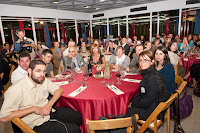
TeAMS Students – hands-on English language medical training.

Holocaust Memorial Day 2011

French Technion Society Mission honors the Righteous among the Nations.
 Prof. Shmuel Reis addresses the mission of the French Technion Society (ATF) on Holocaust Memorial Day.

Together with the Annual Mission of the French Technion Society to Israel, Technion honored the grandchildren of those who helped Jews during the Holocaust in Europe this Holocaust Memorial Day. Pictured above, Prof. Shmuel Reis shared his research and reflections with the distinguished Technion guests.

Prof. Reis gives the Holocaust and Medicine Course at the Technion’s Rappaport Faculty of Medicine. Physicians and health care professionals had a central role in every phase of the holocaust, and the lessons of the holocaust, says Prof. Reis, may contribute to the education of present and future physicians in the fields of medical ethics. The course addresses the roles of Nazi and Jewish physicians at that time, the treatment of survivors, the issues of next generations and the prevention of genocide.

Some snapshots of the ATF mission to Technion in May 2011.

Holocaust Memorial Day 2011

French Technion Society Mission honors the Righteous among the Nations.
 Prof. Shmuel Reis addresses the mission of the French Technion Society (ATF) on Holocaust Memorial Day.

Together with the Annual Mission of the French Technion Society to Israel, Technion honored the grandchildren of those who helped Jews during the Holocaust in Europe this Holocaust Memorial Day. Pictured above, Prof. Shmuel Reis shared his research and reflections with the distinguished Technion guests.

Prof. Reis gives the Holocaust and Medicine Course at the Technion’s Rappaport Faculty of Medicine. Physicians and health care professionals had a central role in every phase of the holocaust, and the lessons of the holocaust, says Prof. Reis, may contribute to the education of present and future physicians in the fields of medical ethics. The course addresses the roles of Nazi and Jewish physicians at that time, the treatment of survivors, the issues of next generations and the prevention of genocide.

Some snapshots of the ATF mission to Technion in May 2011.

Technion Maglev

Technion Autonomous Systems Program (TASP)
Technion student ingenuity won 1st prize for Maglev car.
 
“Studying at the Technion has made me realize I can learn and create almost anything.”
 
IMG_9814
Alert to future need: graduate student in civil engineering Erez Horev.
 

Cars that use magnets to hover through the air could sound like science fiction, or the fantasy of children. But since the success of high-speed Maglev (Magnetic levitaton) trains in Japan, there is reason to dream. Having worked in Israel’s transport system, Technion student Erez Horev is determined to explore the science that could make Maglev transport part of Israel’s future – dramatically saving energy and reducing environmental damage.

Although he is a graduate student in civil engineering, Erez Horev heard of the competition at the Technion Autonomous Systems Program and seized the moment. For months in his spare time he had been working on his Maglev car, and although his supervisor saw it as “too futuristic” for a full-time research project, Horev (like his name-sake former Technion President and global leader in engineering Amos Horev), he doesn’t give up.

The first prize, won together with another project in which a toolbox follows it’s owner around, won the attention of Israel’s national media. The idea first came to Horev when he was working on Israel’s new fast pay-road Highway 6, and later on the new light rail project in Haifa. The car operates normally but has six magnets attached to underside. When it enters the magnetic highway, the system is activated. “With this system, you could live in Italy and work n Germany and commute the whole distance in 50 minutes,” says Horev. “The car will go at 400 mph and the driver can go to sleep.”

In ordinary vehicles, 99% of the energy is used to overcome the friction between the wheels and the road. In the Maglev car, the friction is so minimal that it would lead to enormous savings in fuel. The system  simulates a magnetic toll road for private vehicles. “Because of the high speeds that can reach them using this technology, the project could compete not only with existing toll roads, but even with domestic flights and trains,” says Horev.

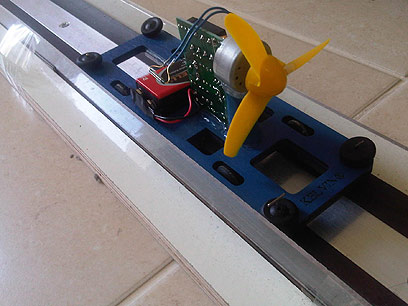
Prize-winning Maglev car prototype “floats” above road surface at high speed.

“At the Technion, studies are always multidisciplinary. Although I study civil engineering, we also delve into physics, mathematics, organic chemistry. Studying at the Technion has made me realize I can learn and create almost anything.”

One can’t help think about Technion graduate Shai Agassi who launched his exemplary electric car system and infrastructure in Israel through the global company Better Place. A man who dares to dream and has the practical penchant for problem-solving and determination to see a project through, Horev admits that Agassi is in himself a template for Technion students.

“Every day is a new day,” he smiles, “Today, there is little research in the field of maglev. It is seen as too futuristic. But I will go on implementing the idea in my space time. I want to address a huge demand for governments and companies to invest in research and development of new transportation methods and efficiency, since citizens are tired of spending more than two hours in endless traffic jams. This issue is close to my heart, and I’m going to go with it to the end.”

To enhance their research, the Technion established the Technion Autonomous Systems Program(TASP), the only one of its kind in Israel, and the scientific home for dozens of advanced researchers from many faculties.  


Technion Maglev

Technion Autonomous Systems Program (TASP)
Technion student ingenuity won 1st prize for Maglev car.
 
“Studying at the Technion has made me realize I can learn and create almost anything.”
 
IMG_9814
Alert to future need: graduate student in civil engineering Erez Horev.
 

Cars that use magnets to hover through the air could sound like science fiction, or the fantasy of children. But since the success of high-speed Maglev (Magnetic levitaton) trains in Japan, there is reason to dream. Having worked in Israel’s transport system, Technion student Erez Horev is determined to explore the science that could make Maglev transport part of Israel’s future – dramatically saving energy and reducing environmental damage.

Although he is a graduate student in civil engineering, Erez Horev heard of the competition at the Technion Autonomous Systems Program and seized the moment. For months in his spare time he had been working on his Maglev car, and although his supervisor saw it as “too futuristic” for a full-time research project, Horev (like his name-sake former Technion President and global leader in engineering Amos Horev), he doesn’t give up.

The first prize, won together with another project in which a toolbox follows it’s owner around, won the attention of Israel’s national media. The idea first came to Horev when he was working on Israel’s new fast pay-road Highway 6, and later on the new light rail project in Haifa. The car operates normally but has six magnets attached to underside. When it enters the magnetic highway, the system is activated. “With this system, you could live in Italy and work n Germany and commute the whole distance in 50 minutes,” says Horev. “The car will go at 400 mph and the driver can go to sleep.”

In ordinary vehicles, 99% of the energy is used to overcome the friction between the wheels and the road. In the Maglev car, the friction is so minimal that it would lead to enormous savings in fuel. The system  simulates a magnetic toll road for private vehicles. “Because of the high speeds that can reach them using this technology, the project could compete not only with existing toll roads, but even with domestic flights and trains,” says Horev.

Prize-winning Maglev car prototype “floats” above road surface at high speed.

“At the Technion, studies are always multidisciplinary. Although I study civil engineering, we also delve into physics, mathematics, organic chemistry. Studying at the Technion has made me realize I can learn and create almost anything.”

One can’t help think about Technion graduate Shai Agassi who launched his exemplary electric car system and infrastructure in Israel through the global company Better Place. A man who dares to dream and has the practical penchant for problem-solving and determination to see a project through, Horev admits that Agassi is in himself a template for Technion students.

“Every day is a new day,” he smiles, “Today, there is little research in the field of maglev. It is seen as too futuristic. But I will go on implementing the idea in my space time. I want to address a huge demand for governments and companies to invest in research and development of new transportation methods and efficiency, since citizens are tired of spending more than two hours in endless traffic jams. This issue is close to my heart, and I’m going to go with it to the end.”

To enhance their research, the Technion established the Technion Autonomous Systems Program(TASP), the only one of its kind in Israel, and the scientific home for dozens of advanced researchers from many faculties.  


Technion Maglev

Technion Autonomous Systems Program (TASP)
Technion student ingenuity wins 1st prize for Maglev car.
A student at the Technion has developed a magnetic hovering air vehicle
Inventors are not always connected to the ground: They like to dream big. Erez Horev, a student at the Technion, he decided to take it a step further and invented a tool – a vehicle that can hover through the magnet
Shay Zamir
Released: 03:05:11, 11:12
Tools – Magnetic car floating in the air powered tool box keeps track of the owners are two of the projects presented by students in the competition conducted by the Technion Atonomiut modeling unmanned systems within the Faculty of Aerospace.
Erez Horev, a graduate student at the Faculty of Civil Engineering, Build Tools – vehicles moving on wheels but can also float in the air using sophisticated magnet. “Tool – based on motor vehicle and six magnets push, rejected the wheels up and allow the vehicle to float in the air travel,” said Horev.
Faster, more economical: magnetic car (Photo: Erez Horev)
Horev worked in the past on Highway 6 project matron (light rail Haifa) where the idea came to him Turnpike futuristic model that could compete with domestic flights and trains.
“It’s like working in Italy and live in Germany and do the distance in 50 minutes,” said Horev. “The car will go at 400 mph and the driver can go to sleep. It’s good long roads with no ports. “
Inventions and innovations
Students at the Technion have developed an elevator into space / Hayadan
Dragonfly flying unmanned aircraft Stealth lunar space elevator are just some outstanding projects created by students and will be presented this week at Jubilee to be held at the Technion Aerospace Sciences
Read more
Tool – ordinary vehicles, 99% of the energy used to overcome the friction wheels, so the selection tool – Vehicle compete only with negligible air friction will bring huge savings in fuel.
Other wins the contest, Dorothy light, built a model of the tool box follows the owner. Previously, he worked as a maintenance factory of Kibbutz Dan had to drag him the heavy toolbox. Model planned, could solve this problem by using electro-sensing system – enabling a mechanical trunk accompany its owner.
– 
1. What is special to you about studying at the Technion?
I was a student of Civil Engineering, which includes a lot of courses in modern physics. I have gained knowledge in physics, mathematics, the building blocks of the physical world such as quantum science,  physical organic chemistry. This has made me realize that with mind and will, I can learn and create anything.
2. What are your dreams / plans for the future?
Every day is a new day, and each year I look back, I’m again amazed again how my plans can differ from what happens. 
   
3. What was the inspiration behind the current project? 
My idea is to connect all the vehicles with magnetic wheels to reduce friction dramatically the use of energy.
Recently, I worked in two projects aimed at solving transportation problems in Israel, the first project is Highway 6 (Israel’s only toll road) and then I worked in the Haifa matron project (light rail) 
I think the combination Between these two projects brought me the idea of another form of mass transport. Looking 20-30 years ahead, it is a very realistic idea and it would only be a matter of time until the amount of roads would decrease significantly. 
Today, there is no research in the field of magnetic stability whip (Erez, do you have the English term for this?).
I asked to do my Technion thesis in magnetic stability, but was rejected on the grounds that the field too futuristic and did not represent the existential need of the market in Israel and abroad.
I recently got a lot of ideas in the whip(English?) and I hope to implement them privately in my spare time. This issue is close to my heart, and I’m going to go with it to the end.
4. Are you related to General Amos Horev? 🙂 
No, my grandfather changed his name from “Julio” and “multi” when he immigrated to Israel in the 40, I was not involved in the decision 🙂
5. Some biographical info – your parents, where you grew up … 
I am 29. I grew up in Netanya at 18 volunteer army performs Achachakcen intelligence, 
Today, I am a man of peace and my children very gwa not mobilize the army, Israel has a lot of self-involved companies in the military, I would never work in them, and I try my circle of friends will not be consists of people who work in these companies, the year I started a master’s degree in project management in construction while I’m looking for a job that I could combine my studies came also, dear wife (to win the long life) also is a graduate of Technion, electrical engineer and works at Intel (is successful among us)
6. Something more …
I want to address a huge demand for governments and companies to invest in research and development of new transportation methods and efficiency, since citizens are tired of spending more than two hours in endless traffic jams.

To enhance their research, the Technion established the Technion Autonomous Systems Program(TASP), the only one of its kind in Israel, and the scientific home for dozens of advanced researchers from many faculties.  Headed by Distinguished Professor Daniel Weihs, TASP has world-class facilities for application-oriented research and development of complete autonomous systems, including hardware, software, operations principles, and manufacturing and maintenance considerations. Developments in micro- and nanotechnology are also critical to the development and practical application of autonomous systems.

Technion Maglev

Technion Autonomous Systems Program (TASP)
Technion student ingenuity wins 1st prize for Maglev car.
A student at the Technion has developed a magnetic hovering air vehicle
Inventors are not always connected to the ground: They like to dream big. Erez Horev, a student at the Technion, he decided to take it a step further and invented a tool – a vehicle that can hover through the magnet
Shay Zamir
Released: 03:05:11, 11:12
Tools – Magnetic car floating in the air powered tool box keeps track of the owners are two of the projects presented by students in the competition conducted by the Technion Atonomiut modeling unmanned systems within the Faculty of Aerospace.
Erez Horev, a graduate student at the Faculty of Civil Engineering, Build Tools – vehicles moving on wheels but can also float in the air using sophisticated magnet. “Tool – based on motor vehicle and six magnets push, rejected the wheels up and allow the vehicle to float in the air travel,” said Horev.
Faster, more economical: magnetic car (Photo: Erez Horev)
Horev worked in the past on Highway 6 project matron (light rail Haifa) where the idea came to him Turnpike futuristic model that could compete with domestic flights and trains.
“It’s like working in Italy and live in Germany and do the distance in 50 minutes,” said Horev. “The car will go at 400 mph and the driver can go to sleep. It’s good long roads with no ports. “
Inventions and innovations
Students at the Technion have developed an elevator into space / Hayadan
Dragonfly flying unmanned aircraft Stealth lunar space elevator are just some outstanding projects created by students and will be presented this week at Jubilee to be held at the Technion Aerospace Sciences
Read more
Tool – ordinary vehicles, 99% of the energy used to overcome the friction wheels, so the selection tool – Vehicle compete only with negligible air friction will bring huge savings in fuel.
Other wins the contest, Dorothy light, built a model of the tool box follows the owner. Previously, he worked as a maintenance factory of Kibbutz Dan had to drag him the heavy toolbox. Model planned, could solve this problem by using electro-sensing system – enabling a mechanical trunk accompany its owner.
– 
1. What is special to you about studying at the Technion?
I was a student of Civil Engineering, which includes a lot of courses in modern physics. I have gained knowledge in physics, mathematics, the building blocks of the physical world such as quantum science,  physical organic chemistry. This has made me realize that with mind and will, I can learn and create anything.
2. What are your dreams / plans for the future?
Every day is a new day, and each year I look back, I’m again amazed again how my plans can differ from what happens. 
   
3. What was the inspiration behind the current project? 
My idea is to connect all the vehicles with magnetic wheels to reduce friction dramatically the use of energy.
Recently, I worked in two projects aimed at solving transportation problems in Israel, the first project is Highway 6 (Israel’s only toll road) and then I worked in the Haifa matron project (light rail) 
I think the combination Between these two projects brought me the idea of another form of mass transport. Looking 20-30 years ahead, it is a very realistic idea and it would only be a matter of time until the amount of roads would decrease significantly. 
Today, there is no research in the field of magnetic stability whip (Erez, do you have the English term for this?).
I asked to do my Technion thesis in magnetic stability, but was rejected on the grounds that the field too futuristic and did not represent the existential need of the market in Israel and abroad.
I recently got a lot of ideas in the whip(English?) and I hope to implement them privately in my spare time. This issue is close to my heart, and I’m going to go with it to the end.
4. Are you related to General Amos Horev? 🙂 
No, my grandfather changed his name from “Julio” and “multi” when he immigrated to Israel in the 40, I was not involved in the decision 🙂
5. Some biographical info – your parents, where you grew up … 
I am 29. I grew up in Netanya at 18 volunteer army performs Achachakcen intelligence, 
Today, I am a man of peace and my children very gwa not mobilize the army, Israel has a lot of self-involved companies in the military, I would never work in them, and I try my circle of friends will not be consists of people who work in these companies, the year I started a master’s degree in project management in construction while I’m looking for a job that I could combine my studies came also, dear wife (to win the long life) also is a graduate of Technion, electrical engineer and works at Intel (is successful among us)
6. Something more …
I want to address a huge demand for governments and companies to invest in research and development of new transportation methods and efficiency, since citizens are tired of spending more than two hours in endless traffic jams.

To enhance their research, the Technion established the Technion Autonomous Systems Program(TASP), the only one of its kind in Israel, and the scientific home for dozens of advanced researchers from many faculties.  Headed by Distinguished Professor Daniel Weihs, TASP has world-class facilities for application-oriented research and development of complete autonomous systems, including hardware, software, operations principles, and manufacturing and maintenance considerations. Developments in micro- and nanotechnology are also critical to the development and practical application of autonomous systems.

Systems Engineering

It’s in the system.

A pioneer of systems engineering in Israel, Bernard Marshall Gordon became an honorable member of the Israeli Society for Systems Engineers, in March 2011. The honor was conferred at the opening Session of the Bi-Annual conference on systems engineering “Look before you leap.” The certificate was conferred in the company of of hundreds of engineers and Gordon’s long-term friend former Technion President Amos Horev. Gordon was made an honorary doctor of science by Technion in 2005. You can read more about him on Wikipedia.

With vision and a passion for the trade, Bernard Gordon established The Gordon Center for Systems Engineering at Technion in 2002. The internationally acclaimed center is Israel’s first stop for research and engineering into systems research.
You might not naturally think that engineers could multi-task, but the ability to hold many parameters in mind at once in order to produce an effective, targeted system is the main key to success. Excellence in engineering will always involve systems. Systems engineering focuses on defining customer needs and required functionality early in the development cycle, documenting requirements, then proceeding with design synthesis and system validation while all the time holding the template of the complete problem.
The Gordon Center’s mission is to advance the practice, methods and theories of systems engineering applied to complex systems through collaborative research, training, post-graduate education and knowledge sharing.
Established in 2002 within the Technion, the center’s acclaimed post-graduate program (Master of Engineering in Systems Engineering) is the leading academic organization in systems engineering training, education, and knowledge sharing in Israel.
The Gordon Center is affiliated with the faculties of Aerospace Engineering; Mechanical Engineering and Industrial Engineering and Management, although collaborations are active across Technion City.
Bernard Marshall Gordon, (known as Bernie), was born in Springfield, Massachusetts, in 1927.At an early age he developed an interest in electronics. Upon graduation from Springfield’s TechnicalHigh School, he enlisted in the U.S. Navy and later became a commissioned officer.  He earned B.S. and M.S. degrees in Electrical Engineering at the Massachusetts Institute of Technology via the U.S. Navy’s V-12 program and the GI Bill. In 2002, Bernard and his wife Sophia turned their attention to engineering in Israel, and began supporting the new center at the Technion.


Nanomed: the secrets of cell fusion

The treatment of worm parasites will be upgraded thanks to a discovery by researchers at the Technion-Israel Institute of Technology in Haifa. The work of biology Prof. Benjamin Podbilewicz and his colleagues can be implemented immediately to develop the treatment, he says, after discovering proteins that merge any two animal cells – even a virus – with mammalian cells.

Podbilewicz and his colleagues discovered a family of genes in many organisms that normally merge cells to form body organs. Transfer of such genes to mammalian cells is enough to fuse any two cells, even those that do not naturally fuse. An engineered pseudo-virus was successfully targeted with this technology to infect animal cells. This discovery, which recently appeared in Science, is aimed at treating parasites not only in plants and cattle but also in humans.

The ability of two or more cells to fuse into one is vital for the initial development of an embryo by fusing the sperm and ovum, and for the development of body organs such asthe skeleton, muscles and placenta. Despite the importance of the fusion process for human health and reproduction, the cell fusion mechanism is still unknown. Yet certain enveloped viruses use similar strategies, which have been deciphered in detail, to fuse and infect body cells of their host such as flu and the HIV virus.

These processes are being unraveled in Podbilewicz’s lab, as critical proteins mediating the process in animals have now been identified for the first time and their operating mechanism characterized at the molecular level.

In the just-published research, his doctoral student Ori Avinoam discovered that this fusion family (“FF”) of genes – initially discovered by their lab in common C. elegans worms – also exists in other organisms, and that when transferred to mammalian cells, are enough to force any two cells to fuse.

“In the beginning we thought we had discovered a gene family that exists only in nematode worms,” says Podbilewicz. “We were surprised to discover that these genes also exist in other organisms, which makes them or others similar to them the leading candidates for being responsible for the fusion process between cells in all kingdoms of life.”

In the future, they conclude, this discovery will enable scientists to understand how cells in the human body fuse, and then help treat diseases stemming from defects in the fusion process that are liable to cause serious problems in fertility and the musculoskeletal system.

img_05064
Ori Avinoam

2006-2  Podbilewicz, B., Leikina, E., Sapir, A., Valansi, C., Suissa, M., Shemer, G. and Chernomordik, L. V. (2006). The C. elegans developmental fusogen EFF-1 mediates homotypic fusion in heterologous cells and in vivoDev Cell 11, 471-81.  
2004-2  Shemer, G., Suissa, M., Kolotuev, I., Nguyen, K. C., Hall, D. H. and Podbilewicz, B. (2004). EFF-1 is sufficient to initiate and execute tissue-specific cell fusion in C. elegans. Curr Biol 14, 1587-91.  
developmental_cell 
Mohler, W. A., Shemer, G., del Campo, J. J., Valansi, C., Opoku-Serebuoh, E., Scranton, V., Assaf, N., White, J. G. and Podbilewicz, B. (2002). The type I membrane protein EFF-1 is essential for developmental cell fusion. Dev Cell 2, 355-62.  

Nanomed: the secrets of cell fusion

The treatment of worm parasites will be upgraded thanks to a discovery by researchers at the Technion-Israel Institute of Technology in Haifa. The work of biology Prof. Benjamin Podbilewicz and his colleagues can be implemented immediately to develop the treatment, he says, after discovering proteins that merge any two animal cells – even a virus – with mammalian cells.

Podbilewicz and his colleagues discovered a family of genes in many organisms that normally merge cells to form body organs. Transfer of such genes to mammalian cells is enough to fuse any two cells, even those that do not naturally fuse. An engineered pseudo-virus was successfully targeted with this technology to infect animal cells. This discovery, which recently appeared in Science, is aimed at treating parasites not only in plants and cattle but also in humans.

The ability of two or more cells to fuse into one is vital for the initial development of an embryo by fusing the sperm and ovum, and for the development of body organs such asthe skeleton, muscles and placenta. Despite the importance of the fusion process for human health and reproduction, the cell fusion mechanism is still unknown. Yet certain enveloped viruses use similar strategies, which have been deciphered in detail, to fuse and infect body cells of their host such as flu and the HIV virus.

These processes are being unraveled in Podbilewicz’s lab, as critical proteins mediating the process in animals have now been identified for the first time and their operating mechanism characterized at the molecular level.

In the just-published research, his doctoral student Ori Avinoam discovered that this fusion family (“FF”) of genes – initially discovered by their lab in common C. elegans worms – also exists in other organisms, and that when transferred to mammalian cells, are enough to force any two cells to fuse.

“In the beginning we thought we had discovered a gene family that exists only in nematode worms,” says Podbilewicz. “We were surprised to discover that these genes also exist in other organisms, which makes them or others similar to them the leading candidates for being responsible for the fusion process between cells in all kingdoms of life.”

In the future, they conclude, this discovery will enable scientists to understand how cells in the human body fuse, and then help treat diseases stemming from defects in the fusion process that are liable to cause serious problems in fertility and the musculoskeletal system.

img_05064
Ori Avinoam

2006-2  Podbilewicz, B., Leikina, E., Sapir, A., Valansi, C., Suissa, M., Shemer, G. and Chernomordik, L. V. (2006). The C. elegans developmental fusogen EFF-1 mediates homotypic fusion in heterologous cells and in vivoDev Cell 11, 471-81.  
2004-2  Shemer, G., Suissa, M., Kolotuev, I., Nguyen, K. C., Hall, D. H. and Podbilewicz, B. (2004). EFF-1 is sufficient to initiate and execute tissue-specific cell fusion in C. elegans. Curr Biol 14, 1587-91.  
developmental_cell 
Mohler, W. A., Shemer, G., del Campo, J. J., Valansi, C., Opoku-Serebuoh, E., Scranton, V., Assaf, N., White, J. G. and Podbilewicz, B. (2002). The type I membrane protein EFF-1 is essential for developmental cell fusion. Dev Cell 2, 355-62.