Tag Archives: start-ups

A Trinity of High-tech Giants for NYC

Shaping the global future: Eric Schmidt (left), Irwin Jacobs, Michael Bloomberg.

Mayor Michael R. Bloomberg, Qualcomm Founder Irwin Jacobs and Google Executive Chairman Eric Schmidt to Guide Growth of Cornell NYC Tech. Three of world’s leading tech entrepreneurs will provide guidance to university leadership, helping to shape the vision for the new campus, including the Technion-Cornell Innovation Institute (TCII).

Cornell NYC Tech has announced that New York City Mayor Michael R. Bloomberg, Qualcomm Founder Irwin Jacobs, and Google Executive Chairman Eric Schmidt will provide ongoing guidance on the programmatic and physical development of the new world-class tech campus in New York City, including the Technion-Cornell Innovation Institute – the premier academic partnership at Cornell NYC Tech.  This senior group brings together three of the world’s leading tech entrepreneurs to lend unparalleled expertise to the campus in this critical early stage.“This is a dream team of three of the best entrepreneurs in the world. Their guidance will ensure that the Roosevelt Island campus will become a world leader in technology innovation with a global impact. I cannot think of a better guiding team.” Technion President Peretz Lavie

Mayor Bloomberg, who is serving ex-officio in his official capacity as mayor, Dr. Jacobs and Dr. Schmidt – will provide advice to tech campus leadership on the educational, research, economic development and community engagement functions of the campus, helping to promote new national and international models connecting academia and industry. The group’s focus will include critical elements that will shape the campus and its programs, including topics such as the interface between the campus and New York City, the role of the local and global tech community, the approaches to intellectual property and commercialization of technology, and the creation of partnership strategies.
“New York City’s growing tech industry is about to be infused with new talent, thanks to the historic investments made by the City and Cornell for the new campus on Roosevelt Island,” said Mayor Bloomberg. “Ensuring that the new campus is connected in the right way to the thriving entrepreneurial sector is important to delivering on the promise of economic growth that is at the center of this project. I look forward to advising the university leadership on how we can achieve these goals.”

“Both Cornell, where I received an excellent undergraduate engineering education, and Technion, which has trained many of the engineers working at Qualcomm Israel in Haifa, have the energy and experience to surpass our great expectations.” Qualcomm Founder Irwin Jacobs.

“Throughout my career as an educator and as founder of two companies based on innovation, I have experienced great satisfaction in developing unique products and growing large markets by exploiting rapid advances in applied science and engineering,” said Irwin Jacobs.  “I am excited by this opportunity to work with Mayor Bloomberg and Eric Schmidt in guiding Cornell NYC Tech and the Technion-Cornell Innovation Institute through a rapid transition from startup to major player in applied science education and the formation of impactful new companies. Both Cornell, where I received an excellent undergraduate engineering education, and Technion, which has trained many of the engineers working at Qualcomm Israel in Haifa, have the energy and experience to surpass our great expectations.”

“I am pleased to join the steering committee for Cornell NYC Tech as they build their presence in New York City,” said Google Executive Chairman Eric Schmidt. “This campus is an important step forward for the development of the city’s tech sector and its continued economic growth.”

“Cornell University is honored to have the wisdom and guidance of three legends in tech entrepreneurship as we develop and shape this groundbreaking new campus,” said Cornell President David J. Skorton. “Our vision for Cornell NYC Tech is already bold, and Mayor Bloomberg, Dr. Schmidt and Dr. Jacobs are leaders who will raise the bar even higher. We are committed to harnessing this extraordinary brainpower as we establish a center of technology leadership in the heart of New York City.”

“This is a dream team of three of the best entrepreneurs in the world,” said Technion President Peretz Lavie. “Their guidance will ensure that the Roosevelt Island campus will become a world leader in technology innovation with a global impact. I cannot think of a better guiding team.”

The new campus is offering a distinctive model of graduate tech education that fuses educational excellence with real-world commercial applications and entrepreneurship, rooted in the latest academic research. Students, faculty and industry experts will learn and work together to launch ideas and create new ventures that have global impact. The campus will attract the best and brightest in technology, immerse them in an entrepreneurial culture with deep ties to the local business community, and spur the creation of new companies and new industries in New York City.

The addition of this senior-level guidance is another major milestone for the campus. Cornell NYC Tech is now accepting applications for a “beta” class of computer science master of engineering students, which will begin classes in January in temporary space donated by Google in its New York City headquarters in Chelsea. The campus soon will be launching additional academic programs including interdisciplinary Technion-Cornell dual degrees, is actively recruiting star faculty, developing a distinctive new model of tech entrepreneurship, and designing its permanent campus on Roosevelt Island.

The City’s groundbreaking Applied Sciences NYC initiative was designed to capitalize on the considerable growth presently occurring within the science, technology and research fields in New York, and builds on the Bloomberg Administration’s record of creating a more diversified and competitive economy for the future. In July of 2011, New York City Economic Development Corporation issued the Request for Proposals seeking a university, institution or consortium to develop and operate a new or expanded campus in the City in exchange for City capital, access to City-owned land – at the Navy Hospital Campus at the Brooklyn Navy Yard, the Goldwater Hospital Campus on Roosevelt Island, or on Governors Island – and the full support and partnership of the Bloomberg Administration. In October, the City received seven responses from 17 world-class institutions from around the globe. In December of 2011, the Cornell and Technion partnership was selected by the City as the first winner of the competition and was provided with land on Roosevelt Island and $100 million in City capital to build the $2 billion, 2 million square foot tech campus. When completed, the new Roosevelt Island campus will house approximately 2,000 full-time, graduate students.

Technology Transfer All the Way.

File:Rasagiline-3D-balls-B.png
A flagship example of T3 Technology Transfer: Rasagiline – a discovery by Prof. Moussa Youdim now marketed as a drug for Parkinsons disease Azilect(TM) by Teva Pharmaceuticals, also demonstrates the powerful Technion process of technology transfer – from the lab. to the marketplace. Image: Wikicommons.

The company Mazor Robotics won FDA approval to apply its robotic surgical system to neurosurgery in July 2012. In the same month, the flagship company Corindus won FDA approval for its CorPath 200 System to be used in performing percutaneous coronary interventions (PCI). The technology is now approved in the United States to assist interventional cardiologists in performing PCI, a procedure to restore blood flow to blocked arteries in patients with coronary artery disease (CAD).Recent global headlines have evidenced the ongoing miracle of Israel’s ability to translate new discoveries into patented innovations that become applicable on world markets. In the past two months, two flagship companies created through the dynamic activities of the T3 – the Technion office of Technology Transfer, passed the key milestone and significant hurdle in the process of effective technology transfer, with the reception of approval from the US Food and Drug Administration (FDA).

The mission of T3 – the technology transfer arm of the Technion, is to transform scientific discoveries and innovative technologies into real-life, applied solutions for the advancement of humanity, the State of Israel, and the Technion. By creating optimal alliances between scientists, industry and investors, T3 facilitates the smooth transfer of technologies to the commercial sector. This is accomplished through the licensing of intellectual property and the establishment of start-up companies. Occasionally, T3 also plays an active role as an entrepreneur by building teams, preparing business plans and providing the capital necessary to bring the technologies developed by Technion researchers to maturity.

The Technion – Israel Institute of Technology is Israel’s first university and home to three Nobel Laureates. The Technion is credited worldwide for its ability to generate start-ups, its remarkable ability to innovate and its powerful connections to industry. Known as “Israel’s MIT,” the Technion has made a significant impact across the range of applied science and technology including electronics, information technology, water management, nanotechnology, life sciences & chemistry, clean-tech, materials engineering and aerospace engineering.

During the past years, T3 has enjoyed a robust and marked increase both in the number of patent families originating from Technion research as well as in the number of commercialization successes. With 80-100 new patent filings every year, over 400 granted patents and over 900 pending patents, Technion now has approximately 400 patent families available for commercialization.


 oraclead

Oracle: $7.5 million to Mazor robotic spine & brain surgery

Oracle Investment invests $7.5m in Mazor RoboticsMazor will seek to list ADRs on Nasdaq or the NYSE.

12 August 12 11:05, Extracted from Globes

Mazor Robotics Ltd. (TASE:MZOR), a maker of robotic navigation systems for spinal surgeries, has signed an agreement with two funds of Oracle Investment Managements Inc., which will invest an initial $7.5 million in the company and up to an additional $7.5 million over 36 months, subject to certain conditions.

Mazor will allot 7,053,529 shares to Oracle Investment, reflecting a price of NIS 4.25 per share. It will also give Oracle Investment warrants convertible into the same number of shares at the same price, exercisable for 36 months from the closing of the deal. The strike price will be either NIS 6 or Mazor’s average price over the ten days preceding the exercise of the option, whichever is lower, but not less than NIS 4.25 per share.

Mazor also undertakes to register Class 2 American Depository Receipt (ADR) on either Nasdaq or the New York Stock Exchange within 240 days of the closing. When the registration is completed, the shares and warrants allotted to Oracle Investments will immediately be converted into ADR’s at Mazor’s expense.
Larry Feinberg founded Oracle Investments in 1993 to invest in the global health care and bioscience industries.

Editor’s note: Mazor Robotics was founded out of patented innovations from the lab. of Technion Prof. Moshe Shoham.

FDA Approved. Corindus – making heart surgery safer

FDA CLEARS FIRST ROBOTIC-ASSISTED SYSTEM FOR CORONARY ARTERY DISEASE STENT PROCEDURES

Corindus Vascular Robotics wins 510(k) clearance for CorPath® 200 System; Robotic-assisted percutaneous coronary interventions (PCI) enhances control and protects physicians from radiation


Continue reading FDA Approved. Corindus – making heart surgery safer

FDA Approved. Corindus – making heart surgery safer

FDA CLEARS FIRST ROBOTIC-ASSISTED SYSTEM FOR CORONARY ARTERY DISEASE STENT PROCEDURES

Corindus Vascular Robotics wins 510(k) clearance for CorPath® 200 System; Robotic-assisted percutaneous coronary interventions (PCI) enhances control and protects physicians from radiation


Continue reading FDA Approved. Corindus – making heart surgery safer

Keep it PURE – Nano filters for cleantech & desalination.

Handing you the Future ~
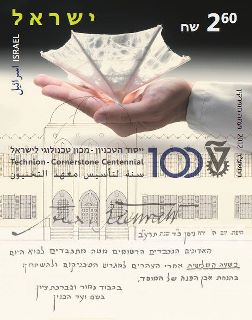
1912-2012: the Technion Centennial Stamp features
one application of the innovative nano fibers
Featured on the Technion 2012 Cornerstone Centennial Stamp, the nanofibers behind the dynamic new start-up NanoSpun signify many of the secrets of Technion’s success in conceptualizing, shaping and nurturing Israel as the high-tech global success of the third millennium.
 
Why would Cornell University and New York City invite Technion to set up a new campus on Roosevelt Island, in order to boost economic growth through innovation and entrepreneurship? Throughout the world, news headlines have cited Technion’s unique ability to produce dynamic and profitable start ups using advanced technology and skills. In 2012, one company that exemplifies the secrets of this success is the prize-winning start up NanoSpun.

How start-ups get started. Israel, NYC & TCII

Silicon Island: a NYC hub for technology transfer

“We are glad to have the opportunity to join forces with Cornell University, to tap into the already rich innovative New York based eco-system and share our tech-transfer practices, insights and methodologies”

One of the most significant global academic milestones of this century must be the decision announced on December 19th 2011 by New York Mayor Bloomberg of Cornell University and Technion-Israel Institute of Technology as winners in a $2 billion competition to build a science and engineering campus on Roosevelt Island. The planned campus aims to serve 2,500 students and 280 faculty by 2043. It also intends to boost the number of graduate engineering students in the area by 70 percent. For the first time in history, the new academic venture will be called an institute of “Innovation”.

For Technion scientists patenting new technologies and looking at commercialization, TCII represents a foothold in New York City which is vital for global commercialization and networking. US investors will also have a domestic gateway to emerging technologies from Israel’s top powerhouse of innovation.

Included in plans for TCII (the Technion Cornell Institute of Innovation), is a $150 million fund to spawn New York area startups. The move comes on the heels of plans from IBM, Intel and others to participate in a $4.4 billion New York state effort to develop semiconductor technology for 450mm wafers.

“The message we are sending with this announcement is: look out Silicon Valley, look out Boston, New York will be second to none,” stated U.S. Senator Charles E. Schumer.

The campus will be organized around three interdisciplinary hubs: Connective Media, Healthier Life, and the Built Environment. Cornell will immediately offer Master and Doctoral degrees in areas such as Computer Science, Electrical and Computer Engineering, and Information Science and Engineering. In addition, after receiving the required accreditation, the campus will also offer innovative Technion-Cornell dual Master of Applied Sciences degrees. The concept of organizing TCII into multidiciplinary ‘hubs’ was introduced by the Technion, based on its successful multidisciplinary research centers, such as the Grand Technion Energy Program, says Technion President Peretz Lavie.

The TCII Campus will host entrepreneurs-in-residence, organize business competitions, provide legal support for startups, reach out to existing companies to form research partnerships and sponsor research, and establish a pre-seed financing program to support promising research. In addition, the campus will structure its tech transfer office, which will be on-site, to facilitate startup formation and technology licensing. The TCII Campus will also establish a $150 million revolving financing fund that will be solely devoted to start-up businesses in new York City.

“Starting today, we are going to put our plan to work, tapping into our extensive connections throughout the city and build a truly 21st Century campus to fuel the creation of new businesses and new industries throughout the city for decades to come.

“Technology Transfer activity takes place at the Technion in many shapes and forms resulting in significant economic development both locally and nationally,” says manager of the Technion Technology Transfer Office ( T3 ) Benjamin Soffer. “We are glad to have the opportunity to join forces with Cornell University, tap into the already rich innovative New York based eco-system and share our tech-transfer practices, insights  and methodologies to the benefit of the state of New York and the US at large.” 

IP (intellectual property) coming out of the TCII will be held jointly by Cornell University and Technion.

According to Israel’s Ministry of Foreign Affairs, Technion has a world-class track-record in research, development and entrepreneurship. The Technion’s departments of Electrical Engineering and Computer Science are considered among the best in the world. It  boasts top ranking faculty members including Nobel laureates. The Technion has long been considered a driving force behind Israel’s emergence as one of the world’s great centers of technology.

“Israel’s heros used to be the generals; now, the heros are the entrepreneurs.”

Technion  T3 Manager Benjamin Soffer,

Israel today has one of the highest concentrations of high-tech start-up companies globally. In partnership with a strong community of incubators, private investors, venture capitalists, angel groups and entrepreneurs, the Technion’s tech transfer arm, Technion Technology Transfer ( T3 ), has filed an average of 300 new patents each year and annually nurtures innovative startups in sectors such as clean-tech, cell therapy, drug delivery, nanotechnology and others. Companies including Intel, Google, Microsoft, IBM, Qualcomm, Broadcom, Yahoo! and Hewlett-Packard have established major operations near or on the Technion campus. Only this month, Apple announced that it will be joining the others to set up a ground-breaking R&D Center near Technion City – to be headed by Technion graduate Aharon Aharon.

Technion graduates currently head nearly half of the 121 Israeli companies on the NASDAQ, which have a combined market value of over $28 billion. More than 70 percent of the Technion graduates are employed in the high technology sectors that drive Israel’s economic growth.  Presently, Israeli companies headed by the Technion graduates employ 85 percent of Israel’s technical workforce.  According to a recent article in the Israeli newspaper Haaretz, there are approximately 4,000 start-up companies located around the Technion’s home campus.

President Lavie addresses press. NYC, 19th December, 2011

With the selection of Cornell/Technion now complete, the project is scheduled to move into the environmental and land use review process, expected to be completed by the fall of 2013. Groundbreaking on the first phase of the Roosevelt Island campus is expected by the beginning of 2015. A temporary off-site campus will be open in 2012.

QuasiCrystals, Shechtmanite… Future Applications.


Surface Coatings

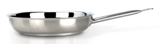
An important area of application is the use of quasicrystals as materials for surface coatings, which benefit from the hardness of quasicrystals. The most prominent example is the use of quasicrystalline coatings in frying pans – an application famous in the quasicrystal community as it has served as a key example. Recently, quasicrystal-coated frying pans appeared on the market, and are sold by the French company Sitram under the trademark Cybernox.

Due to their particular physical and chemical properties, quasicrystalline coatings are suited for this kind of application. They are also rather cheap which makes them even more interesting for industrial applications. 

Alloys Containing Quasicrystalline Nanoparticles

A different way to circumvent the brittleness of quasicrystalline bulk material while preserving some of its useful properties is the use of an Al-based alloy reinforced by precipitation of icosahedral particles in the nanometer range. Such materials, which are now commercially available in Japan, are of great technological interest as they can be strong but much lighter than other materials with comparable physical properties.

Examples of existing applications include razor blades and surgeon’s instruments, though this may have been more by chance than being an intentional application of quasicrystals. Experts predict that a similar use could soon find its way to the aviation industry.

Hydrogen Storage

A third, and maybe more speculative, application concerns the use of quasicrystals as a reversible storage medium for hydrogen. The most promising quasicrystal materials for hydrogen storage are Zr-based quasicrystals. For such systems, storage capabilities of almost two hydrogen atoms per metal atom have been reported, comparable to the storage capability of the Ti-Fe hybrides which have already been applied in non-polluting internal combustion engines. Further investigation are being carried out to reach the stage of industrial applicability.

Prof. Dan Shechtman Discusses Quasicrystal Applications 
(Oct. 2011)
“There is always something new in quasicrystals. There are so many people working on it around the world, so every month there are new developments. If you use a material for an application, then you need a special property that will be better than other materials—otherwise, why use this material? Quasi-periodic materials have certain properties which are unique, such as electrical properties, optical properties, hardness and nonstick properties. The direction of light through this material is different. Electrically, they behave in a very peculiar way depending on temperature. Some of these properties have been put to use. 
The first application was nonstick coating on frying pans and cooking utensils. If you cook on quasicrystals, your omelet will not stick to it, like Teflon. But unlike Teflon, if you use a knife in the [quasicrystal] skillet, you will ruin the knife. When you have Teflon and you use a knife, you ruin the Teflon. Ruined Teflon is not healthy. I have a frying pan which is plasma-coated with quasicrystals and it works fine. It was made by a French company, Sitram. They closed the production line because they had a few problems in the reaction of the coating with salt. If people cook with a lot of salt it will etch the quasicrystalline coating. People didn’t like it, so they did not continue.
Sandvik, a company in Sweden, produces a precipitation-hardened stainless steel that has interesting properties. The steel is strengthened by small quasicrystalline particles and it does not corrode. It is an extremely strong steel. It is used for anything that touches the skin, for instance, razor blades or surgery tools. When a material deforms in such a way that it will not spring back, in most cases, the deformation is due to a process called dislocation glide. There are defects in the material that cause dislocations. If they are free to move, then it is easy to bend the material. But if something stops them, then it is more difficult and the material is harder and stronger. These little quasicrystalline particles impede the motion of dislocation in the material.
Because some of these materials have a low coefficient of friction, and they have nonstick properties and are also hard, imagine what would happen if you produce quasicrystalline powder in tiny little balls by rapid solidification process, a gas-atomizing process, then you can embed the fine powders in plastic. Because these particles are strong and can withstand friction and wear, you can make gears from this plastic and the gears will not erode because of these embedded particles. It’s like a protection from erosion. This can serve in ventilators and fans that have plastic gears. Also, the heat conductivity of some of these quasicrystals is very poor. It’s almost an insulator. So you can coat with it and it will insulate against heat transfer.
This is an important discovery, because it’s the first one found in nature, but there are no practical applications. There are many, many metals, but if you think that all the metals can be used for something useful, think again. Look at construction materials. We have steel, which is based on iron, we have aluminum alloys, magnesium alloys, titanium-based alloys, nickel-based alloys, copper alloys, and that’s about all, if I haven’t forgotten any. What do all the other metals do? What are the applications of ytterbium? What are the applications of all the other metals? So to have an application for a material is not trivial.”

QuasiCrystals, Shechtmanite… Future Applications.


Surface Coatings

An important area of application is the use of quasicrystals as materials for surface coatings, which benefit from the hardness of quasicrystals. The most prominent example is the use of quasicrystalline coatings in frying pans – an application famous in the quasicrystal community as it has served as a key example. Recently, quasicrystal-coated frying pans appeared on the market, and are sold by the French company Sitram under the trademark Cybernox.

Due to their particular physical and chemical properties, quasicrystalline coatings are suited for this kind of application. They are also rather cheap which makes them even more interesting for industrial applications. 

Alloys Containing Quasicrystalline Nanoparticles

A different way to circumvent the brittleness of quasicrystalline bulk material while preserving some of its useful properties is the use of an Al-based alloy reinforced by precipitation of icosahedral particles in the nanometer range. Such materials, which are now commercially available in Japan, are of great technological interest as they can be strong but much lighter than other materials with comparable physical properties.

Examples of existing applications include razor blades and surgeon’s instruments, though this may have been more by chance than being an intentional application of quasicrystals. Experts predict that a similar use could soon find its way to the aviation industry.

Hydrogen Storage

A third, and maybe more speculative, application concerns the use of quasicrystals as a reversible storage medium for hydrogen. The most promising quasicrystal materials for hydrogen storage are Zr-based quasicrystals. For such systems, storage capabilities of almost two hydrogen atoms per metal atom have been reported, comparable to the storage capability of the Ti-Fe hybrides which have already been applied in non-polluting internal combustion engines. Further investigation are being carried out to reach the stage of industrial applicability.

Prof. Dan Shechtman Discusses Quasicrystal Applications 
(Oct. 2011)
“There is always something new in quasicrystals. There are so many people working on it around the world, so every month there are new developments. If you use a material for an application, then you need a special property that will be better than other materials—otherwise, why use this material? Quasi-periodic materials have certain properties which are unique, such as electrical properties, optical properties, hardness and nonstick properties. The direction of light through this material is different. Electrically, they behave in a very peculiar way depending on temperature. Some of these properties have been put to use. 
The first application was nonstick coating on frying pans and cooking utensils. If you cook on quasicrystals, your omelet will not stick to it, like Teflon. But unlike Teflon, if you use a knife in the [quasicrystal] skillet, you will ruin the knife. When you have Teflon and you use a knife, you ruin the Teflon. Ruined Teflon is not healthy. I have a frying pan which is plasma-coated with quasicrystals and it works fine. It was made by a French company, Sitram. They closed the production line because they had a few problems in the reaction of the coating with salt. If people cook with a lot of salt it will etch the quasicrystalline coating. People didn’t like it, so they did not continue.
Sandvik, a company in Sweden, produces a precipitation-hardened stainless steel that has interesting properties. The steel is strengthened by small quasicrystalline particles and it does not corrode. It is an extremely strong steel. It is used for anything that touches the skin, for instance, razor blades or surgery tools. When a material deforms in such a way that it will not spring back, in most cases, the deformation is due to a process called dislocation glide. There are defects in the material that cause dislocations. If they are free to move, then it is easy to bend the material. But if something stops them, then it is more difficult and the material is harder and stronger. These little quasicrystalline particles impede the motion of dislocation in the material.
Because some of these materials have a low coefficient of friction, and they have nonstick properties and are also hard, imagine what would happen if you produce quasicrystalline powder in tiny little balls by rapid solidification process, a gas-atomizing process, then you can embed the fine powders in plastic. Because these particles are strong and can withstand friction and wear, you can make gears from this plastic and the gears will not erode because of these embedded particles. It’s like a protection from erosion. This can serve in ventilators and fans that have plastic gears. Also, the heat conductivity of some of these quasicrystals is very poor. It’s almost an insulator. So you can coat with it and it will insulate against heat transfer.
This is an important discovery, because it’s the first one found in nature, but there are no practical applications. There are many, many metals, but if you think that all the metals can be used for something useful, think again. Look at construction materials. We have steel, which is based on iron, we have aluminum alloys, magnesium alloys, titanium-based alloys, nickel-based alloys, copper alloys, and that’s about all, if I haven’t forgotten any. What do all the other metals do? What are the applications of ytterbium? What are the applications of all the other metals? So to have an application for a material is not trivial.”