Tag Archives: Israel

Imaging: a sub-wavelength revolution.

You may also like:

Prof. Moti Segev, Faculty of Physics.

Technion Researchers Develop Computational Method for Improving the Resolution of Microscopes and Imaging Systems

Technion researchers have demonstrated an innovative method that substantially improves the resolution (the ability to distinguish between details) of microscopes. This was reported by the prestigious scientific journal Nature Materials. The method is based on innovative concepts, and scientists hail it as being a “breakthrough with the potential to change the world of microscopy, imaging systems, and other optical measurement systems”. The method is attracting great interest, both in the scientific world and in industry.

When you look through an optical microscope at an object with features (optical information) smaller than one half the wavelength of light – you necessarily see a blurred image”, explains Distinguished Prof. Mordechai (Moti) Segev of the Technion’s Department of Physics. “The reason for this is that the information about the structure of very small features does not propagate through space and thus does not reach the eye or the microscope camera. Today, a number of methods are used to achieve a resolution under one half of the wavelength of light, but they all require point-by-point scanning of the object. Hence, these methods may be used only for a static object, which does not change during the scan”.

Scientists have attempted for many years to find algorithms to reconstruct the sub-wavelength information lost between the object and the microscope camera. But thus far all such attempts were largely unsuccessful. The main reason is noise: random scattering of light (for example, from reflections off non-ideal surfaces), which is inevitable in optical systems, has thus far prevented algorithmic reconstruction of features smaller than one half the wavelength of light from measurements of the blurred image.

Now a team of Technion researchers presented a breakthrough algorithmic method for improving the resolution of microscopes to considerably under one half the wavelength of light. To a great extent, the project was successful thanks to the collaboration between several research groups from four different Technion faculties (the groups of Prof. Moti Segev and of Dr. Oren Cohen of the Department of Physics, Prof. Yonina Eldar of the Department of Electrical Engineering, Prof. Irad Yavneh and Dr. Michael Zibulevsky of the Computer Science Department, and Prof. Shy Shoham of the Department of Biomedical Engineering).

“The algorithmic method relies on finding the most suitable reconstruction that meets two criteria: the reconstructed high-resolution image must conform to the blurred image, and it must minimize of the number of the degrees of freedom”, explains Prof. Segev. “The second criterion has to do with understanding compact (sparse) representation of information and with the effect caused by noise in the measurement system. Random noise occupies all degrees of freedom, whereas information has some structure, hence it occupies a given number of degrees of freedom and never all of them. In many cases, there is some sort of a priori knowledge about the information. In principle, in such a case the information may be presented compactly, such that mathematically it is represented by a small number of projections onto basis functions that cover all the possibilities of spatial information. It is then said that the information is sparsely represented, and the number of degrees of freedom it occupies is small. In general, there are many cases where information can be represented compactly. A well known example is file compression using JPEG, a method of compact representation through projection onto a basis where the information in the file is represented sparsely (compactly)”.

This innovative concept of improving resolution in microscopy through representation of the image in the correct basis in which the image is sparse, was developed by Prof. Moti Segev of the Department of Physics and Prof. Yonina Eldar of the Department of Electrical Engineering, graduate students Snir Gazit and Yoav Shechtman and postdoctoral researcher Alex Szameit, currently a professor at the University of Jena, Germany. 

The idea was initially demonstrated in 2009. However, exhausting the full potential of the resolution improvement necessitated measuring the phase of the light reaching the microscope camera. Phase measurement requires interference-based methods (interferometric methods) which increase the complexity of the system substantially and limit the applications of this method.

About two years ago, Dr. Oren Cohen proposed adding an important layer to the algorithm, which in effect replaces the need for phase measurement, and to thus obtain image reconstruction at a higher resolution than one half the wavelength of light, through intensity measurement only (using a regular camera). In fact, Dr. Cohen proposed that two research directions be combined – Profs. Segev and Eldar’s idea of sub-wavelength imaging and “lensless imaging”, in which images are algorithmically (computationally) reconstructed from measurements of the intensity of the light at a very far distance from the image. This area – of lensless imaging – has recently become an extremely important field of science. On completion of the construction of three short pulse X-ray lasers (in the USA, Germany and Japan) at a cost of one billion dollars per laser, researchers intend to use lensless imaging to measure the structure of hundreds of thousands of single molecules (molecules that cannot be assembled into a crystallized structure). Understanding the structure of these molecules will pave the way for chemists, biologists and doctors to understand many biological processes at the molecular level. Until now, the resolution of all “lensless imaging” methods has been limited to features bigger than a wavelength. However, the methods developed by the Technion researchers could bring about a revolutionary improvement of the entire “lensless imaging” field, and allow measurement of dynamically changing molecules.

The Technion research team has demonstrated in experiments the reconstruction of details at least five times smaller than the wavelength of light, in a single-shot measurement of the light intensity at the focal plane of the microscope lens. The research work was published in the prestigious journal Nature Materials. The majority of the research work was done by postdoctoral researcher Alex Szameit and graduate students Yoav Shechtman and Eli Osherovich. The experiments, conducted by Alex Szameit and Hod Dana (graduate student at the Department of Biomedical Engineering), demonstrated reconstructions of objects with optical features 100 nanometers in size using radiation with a wavelength of 530 nanometers. In comparison, without using the new method, the resolution of this microscope is limited to features bigger than 300 nanometers.

As described above, the main part of the research is the development of the algorithm for the reconstruction of missing information: (a) reconstruction of the phase of light measured by the camera and (b) reconstruction of the part of the optical information which never reached the camera (information on features smaller than one half the wavelength of light). The initial algorithm, developed by Elad Bullkich, an undergraduate student at the time the research was conducted, and Yoav Shechtman, was based on performing the phase reconstruction algorithm followed by the algorithm for the reconstruction of sub-wavelength information. Some time later, Eli Osherovich developed a far better algorithm that reconstructs both types of “missing information” concurrently, thereby substantially increasing performance and allowing handling a wide range of images.

Technion researchers are now working on the development of similar methods for improving the resolution of other measurement systems. For example, graduate student Pavel Sidorenko has recently demonstrated breaking the resolution barrier of spectroscopic resolution: he has reconstructed spectral information at a higher resolution than the fundamental limit on spectroscopy (the time duration a photon spends in the measuring instrument). The researchers hope that these developments will lead to the improvement of spectral systems used, as an example, for the measurement of pollutants in the air of in water, detection of explosives, etc.

Imaging: a sub-wavelength revolution.

You may also like:

Prof. Moti Segev, Faculty of Physics.

Technion Researchers Develop Computational Method for Improving the Resolution of Microscopes and Imaging Systems

Technion researchers have demonstrated an innovative method that substantially improves the resolution (the ability to distinguish between details) of microscopes. This was reported by the prestigious scientific journal Nature Materials. The method is based on innovative concepts, and scientists hail it as being a “breakthrough with the potential to change the world of microscopy, imaging systems, and other optical measurement systems”. The method is attracting great interest, both in the scientific world and in industry.

When you look through an optical microscope at an object with features (optical information) smaller than one half the wavelength of light – you necessarily see a blurred image”, explains Distinguished Prof. Mordechai (Moti) Segev of the Technion’s Department of Physics. “The reason for this is that the information about the structure of very small features does not propagate through space and thus does not reach the eye or the microscope camera. Today, a number of methods are used to achieve a resolution under one half of the wavelength of light, but they all require point-by-point scanning of the object. Hence, these methods may be used only for a static object, which does not change during the scan”.

Scientists have attempted for many years to find algorithms to reconstruct the sub-wavelength information lost between the object and the microscope camera. But thus far all such attempts were largely unsuccessful. The main reason is noise: random scattering of light (for example, from reflections off non-ideal surfaces), which is inevitable in optical systems, has thus far prevented algorithmic reconstruction of features smaller than one half the wavelength of light from measurements of the blurred image.

Now a team of Technion researchers presented a breakthrough algorithmic method for improving the resolution of microscopes to considerably under one half the wavelength of light. To a great extent, the project was successful thanks to the collaboration between several research groups from four different Technion faculties (the groups of Prof. Moti Segev and of Dr. Oren Cohen of the Department of Physics, Prof. Yonina Eldar of the Department of Electrical Engineering, Prof. Irad Yavneh and Dr. Michael Zibulevsky of the Computer Science Department, and Prof. Shy Shoham of the Department of Biomedical Engineering).

“The algorithmic method relies on finding the most suitable reconstruction that meets two criteria: the reconstructed high-resolution image must conform to the blurred image, and it must minimize of the number of the degrees of freedom”, explains Prof. Segev. “The second criterion has to do with understanding compact (sparse) representation of information and with the effect caused by noise in the measurement system. Random noise occupies all degrees of freedom, whereas information has some structure, hence it occupies a given number of degrees of freedom and never all of them. In many cases, there is some sort of a priori knowledge about the information. In principle, in such a case the information may be presented compactly, such that mathematically it is represented by a small number of projections onto basis functions that cover all the possibilities of spatial information. It is then said that the information is sparsely represented, and the number of degrees of freedom it occupies is small. In general, there are many cases where information can be represented compactly. A well known example is file compression using JPEG, a method of compact representation through projection onto a basis where the information in the file is represented sparsely (compactly)”.

This innovative concept of improving resolution in microscopy through representation of the image in the correct basis in which the image is sparse, was developed by Prof. Moti Segev of the Department of Physics and Prof. Yonina Eldar of the Department of Electrical Engineering, graduate students Snir Gazit and Yoav Shechtman and postdoctoral researcher Alex Szameit, currently a professor at the University of Jena, Germany. 

The idea was initially demonstrated in 2009. However, exhausting the full potential of the resolution improvement necessitated measuring the phase of the light reaching the microscope camera. Phase measurement requires interference-based methods (interferometric methods) which increase the complexity of the system substantially and limit the applications of this method.

About two years ago, Dr. Oren Cohen proposed adding an important layer to the algorithm, which in effect replaces the need for phase measurement, and to thus obtain image reconstruction at a higher resolution than one half the wavelength of light, through intensity measurement only (using a regular camera). In fact, Dr. Cohen proposed that two research directions be combined – Profs. Segev and Eldar’s idea of sub-wavelength imaging and “lensless imaging”, in which images are algorithmically (computationally) reconstructed from measurements of the intensity of the light at a very far distance from the image. This area – of lensless imaging – has recently become an extremely important field of science. On completion of the construction of three short pulse X-ray lasers (in the USA, Germany and Japan) at a cost of one billion dollars per laser, researchers intend to use lensless imaging to measure the structure of hundreds of thousands of single molecules (molecules that cannot be assembled into a crystallized structure). Understanding the structure of these molecules will pave the way for chemists, biologists and doctors to understand many biological processes at the molecular level. Until now, the resolution of all “lensless imaging” methods has been limited to features bigger than a wavelength. However, the methods developed by the Technion researchers could bring about a revolutionary improvement of the entire “lensless imaging” field, and allow measurement of dynamically changing molecules.

The Technion research team has demonstrated in experiments the reconstruction of details at least five times smaller than the wavelength of light, in a single-shot measurement of the light intensity at the focal plane of the microscope lens. The research work was published in the prestigious journal Nature Materials. The majority of the research work was done by postdoctoral researcher Alex Szameit and graduate students Yoav Shechtman and Eli Osherovich. The experiments, conducted by Alex Szameit and Hod Dana (graduate student at the Department of Biomedical Engineering), demonstrated reconstructions of objects with optical features 100 nanometers in size using radiation with a wavelength of 530 nanometers. In comparison, without using the new method, the resolution of this microscope is limited to features bigger than 300 nanometers.

As described above, the main part of the research is the development of the algorithm for the reconstruction of missing information: (a) reconstruction of the phase of light measured by the camera and (b) reconstruction of the part of the optical information which never reached the camera (information on features smaller than one half the wavelength of light). The initial algorithm, developed by Elad Bullkich, an undergraduate student at the time the research was conducted, and Yoav Shechtman, was based on performing the phase reconstruction algorithm followed by the algorithm for the reconstruction of sub-wavelength information. Some time later, Eli Osherovich developed a far better algorithm that reconstructs both types of “missing information” concurrently, thereby substantially increasing performance and allowing handling a wide range of images.

Technion researchers are now working on the development of similar methods for improving the resolution of other measurement systems. For example, graduate student Pavel Sidorenko has recently demonstrated breaking the resolution barrier of spectroscopic resolution: he has reconstructed spectral information at a higher resolution than the fundamental limit on spectroscopy (the time duration a photon spends in the measuring instrument). The researchers hope that these developments will lead to the improvement of spectral systems used, as an example, for the measurement of pollutants in the air of in water, detection of explosives, etc.

Phase 2 Study heralds hope for Alzheimers patients


PRESS RELEASE
May 17, 2012, 11:36 a.m. EDT

Avraham Pharmaceuticals Announces Commencement of a Phase 2 Study of Ladostigil for the Treatment of MCI

Enrollment has been completed in a Phase 2 study of ladostigil for the treatment of Alzheimer’s Disease and results expected in Q4 2012


Avraham Pharmaceuticals Ltd. has announced the commencement of a Phase 2 clinical trial to evaluate the safety and efficacy of ladostigil in patients diagnosed with mild cognitive impairment (MCI). This 36-month, multi-centre, randomized, double-blind, placebo-controlled trial will include at least 200 patients in 16 centers in Europe and Israel.
In parallel, Avraham Pharmaceuticals has also completed the enrollment of 200 patients in a Phase 2 trial of ladostigil, a novel molecule for the treatment of mild to moderate Alzheimer’s disease. The Phase 2 study is a double-blind, closed-label, placebo-controlled trial taking place at 20 sites in five countries across Europe. In January 2012, the Company performed an interim analysis of this Phase 2 trial, which indicated that the drug is safe and well tolerated, as well as shows a positive trend toward efficacy. Final results of the 26-week trial are expected in the fourth quarter of 2012.
Ladostigil was developed out of the pioneering research into neurodegeneration of Technion Prof. Moussa Youdim.
“We are pleased that another Phase 2 clinical trial in patients with MCI has begun in parallel, and look forward to the final results of the Phase 2 study for the treatment of Alzheimer’s disease expected at the end of this year,” said Yaacov Michlin, Chairman of Avraham Pharmaceuticals
“I am delighted to lead Avraham in these exciting times for the company, as we advance ladostigil in 2 Phase 2 clinical trials simultaneously. We believe that this unique drug candidate has the potential to transform the treatment of various neurodegenerative diseases,” said Dr. Yona Geffen, Avraham Pharmaceuticals Chief Executive Officer.
About Ladostigil
Ladostigil is a novel cholinesterase and brain-selective monoamine oxidase inhibitor, and neuroprotective agent for the treatment of Alzheimer’s disease, mild cognitive impairment and other neurodegenerative diseases. The drug, which was exclusively licensed to Avraham Pharmaceuticals by Yissum Research Development Company Ltd., and by the Technion Research and Development Foundation Ltd. (TRDF), has proven to be safe and well tolerated in Phase 1 and Phase 2 clinical trials. Like other cholinesterase inhibitors currently on the market, ladostigil targets symptomatic relief in Alzheimer’s disease patients. But unlike these drugs, ladostigil, which also causes brain selective inhibition of monoamine oxidase (MAO) provides the potential to improve the behavioral and psychological symptoms of dementia such as depression and anxiety. Moreover, ladostigil has the potential to slow progression of clinical symptoms of Alzheimer’s disease for sustained periods of time and to modify the pathology associated with the disease. In addition, the neuroprotective activity of ladostigil provides a drug candidate that may have the potential to slow progression to Alzheimer’s disease in patients diagnosed with MCI. This potential has been amply demonstrated in animal models, especially in studies of ageing rats.
Ladostigil was designed by Professor Marta Weinstock-Rosin of the Hebrew University of Jerusalem, inventor of Exelon(R) and Professor Moussa B.H. Youdim of the Technion Israel Institute of Technology, inventor of Azilect(R). The drug substance was first synthesized by Professor Michael Chorev of the Hebrew University, who is now based at Harvard University. All three distinguished scientists act as scientific advisors to Avraham Pharmaceuticals.
About Alzheimer’s Disease
Alzheimer’s disease is the most common cause of dementia worldwide, affecting about one in 20 people 65 years of age or older, accounting for 60-80% of dementia cases. In 2010, 5.4 million people were affected by Alzheimer’s disease in the U.S., where it is the 6th leading cause of death. In Europe, more than 6 million are living with the disease. Approximately half of Alzheimer’s patients also suffer from depression, and up to 40% also exhibit Parkinson-like symptoms.
About Mild Cognitive Impairment
Mild cognitive impairment (MCI) is a syndrome defined as an intermediate stage between the expected cognitive decline of normal aging and the more pronounced decline of dementia. It involves problems with memory, language, thinking and judgment that are greater than typical age-related changes. Although MCI can present with a variety of symptoms, when memory loss is the predominant symptom it is termed “amnestic MCI” and is frequently seen as a prodromal stage of Alzheimer’s disease. Prevalence in population-based epidemiological studies ranges from 3% to 19% in adults older than 65 years. There is no proven treatment or therapy for MCI.
About Avraham Pharmaceutical
Founded in 2010, Avraham Pharmaceuticals has raised more than $12 million to advance the development of its unique, multi-functional drug substance, ladostigil, currently undergoing two Phase 2 clinical trials for the treatment of Alzheimer’s disease and mild cognitive impairment. 


FROM SLAVERY TO FREEDOM: Message from Technion President Prof. Peretz Lavie.

A Creative Space: The Technion Gutwirth Ecological Garden,
April 2012, Picture by Technion student Guy Shahar
Welcome to this spring 2012 edition of Technion LIVE. In these days we are celebrating the redemption of the Jewish people from slavery in Egypt through the festival of Passover. Also in this time, we celebrate 100 years since April 11th, 1912 – the day when the first cornerstone was placed to physically declare the intent to create a first center of higher learning for the Jewish people in what was then Ottomon-occupied Palestine. 
We must never forget the creative space that comes before a great inspiration. Whether it was the urge of Moses to redeem his people through a great leap of trust into the wilderness, or whether it was the early visionaries of the Technion – who saw that the Jewish people could be freed from centuries of bloodshed and antisemitism in the diaspora by taking physical responsibility for their destiny and by moving also with a great leap of faith into the unknown. 
Technion is a place that is world-renowned for innovation and for its record numbers of start-ups and patents. Yet, our innermost secret is the strength of our basic research – that which has won Nobel Prizes for three of our scientists. This basic research is a direct function of our ability to invest in creative space – where the scientists can move with freedom and curiosity – pursing knowledge and skills, following his or her inspiration, without conditions. Only academic institutes of research can give this. From the front-lines of research at the Russell Berrie Nanotechnology Institute (RBNI), through to the steady unveiling of the mysteries of life through the Lorry I. Lokey Center for Life Sciences and Engineering, through to dyamic programs like the Grand Technion Energy Program (GTEP) which is now a national coordinator in research into solar fuels – this creative space of basic research is the potent key to discovery and progress.
A Happy Passover and a proud Technion Cornerstone Centennial to all our students, friends and alumni in Israel and around the world. May we join together as one humanity in taking responsibility for our global future in order to open more freedom, peace and progress for all.
 
Professor Peretz Lavie 
President

FROM SLAVERY TO FREEDOM: Message from Technion President Prof. Peretz Lavie.

A Creative Space: The Technion Gutwirth Ecological Garden,
April 2012, Picture by Technion student Guy Shahar
Welcome to this spring 2012 edition of Technion LIVE. In these days we are celebrating the redemption of the Jewish people from slavery in Egypt through the festival of Passover. Also in this time, we celebrate 100 years since April 11th, 1912 – the day when the first cornerstone was placed to physically declare the intent to create a first center of higher learning for the Jewish people in what was then Ottomon-occupied Palestine. 
We must never forget the creative space that comes before a great inspiration. Whether it was the urge of Moses to redeem his people through a great leap of trust into the wilderness, or whether it was the early visionaries of the Technion – who saw that the Jewish people could be freed from centuries of bloodshed and antisemitism in the diaspora by taking physical responsibility for their destiny and by moving also with a great leap of faith into the unknown. 
Technion is a place that is world-renowned for innovation and for its record numbers of start-ups and patents. Yet, our innermost secret is the strength of our basic research – that which has won Nobel Prizes for three of our scientists. This basic research is a direct function of our ability to invest in creative space – where the scientists can move with freedom and curiosity – pursing knowledge and skills, following his or her inspiration, without conditions. Only academic institutes of research can give this. From the front-lines of research at the Russell Berrie Nanotechnology Institute (RBNI), through to the steady unveiling of the mysteries of life through the Lorry I. Lokey Center for Life Sciences and Engineering, through to dyamic programs like the Grand Technion Energy Program (GTEP) which is now a national coordinator in research into solar fuels – this creative space of basic research is the potent key to discovery and progress.
A Happy Passover and a proud Technion Cornerstone Centennial to all our students, friends and alumni in Israel and around the world. May we join together as one humanity in taking responsibility for our global future in order to open more freedom, peace and progress for all.
 
Professor Peretz Lavie 
President

Outsmarting HIV with X-Ray Crystallography

Dr, Alian Akram, Lorry I. Lokey Center for Life Science & Engineering, Technion.

Outsmarting HIV


It sound like modern warfare, and indeed, even when aiming to outsmart a killer virus on a scale of about 100 nanometers, the latest technology makes all the difference. One of the deep passions behind Dr. Alian Akram’s pioneering crystallographic work in the Technion is a desire to advance treatments for HIV, the causative agent of AIDS.


Scientists in Akram’s lab investigate the general principles of how aggressive virus lock into the genetic resources of a patient – and how to prevent them from doing this. “It is a MUST to learn about the critical interactions and the mechanisms of resistance,” says Akram. The team is taking a sharp look at pathogen-host interaction and how the HIV virus literally hijacks the machinery of the host cell in order to replicate itself, and how it escapes the immune system. “We are hoping to determine the structures of key interacting molecules and develop new intervening strategies and drugs that prevent their interaction. We also want to understand the mechanism of emergent resistance in the proteins of this virus.”


Current drugs for HIV bind viral proteins – and yet it continues to mutate and regenerate. Akram’s team is working on a protein discovered in 2004 – intrinsic immunity APOBEC3G. This protein attacks the genome of HIV and causes hypermutation that leads to an abortive replication cycle for HIV. However, HIV expresses a protein that destroys APOBEC, so the Akram’s group wants to understand this process better so that it can be blocked.
Crystal structure of Pseudouridine synthase in complex with RNA solved by  Akram Alian. The structure reveals base-pair rearrangement as the key mechanism to rRNA substrate selectivity  (http://rnajournal.cshlp.org/content/16/6.cover-expansion)”

Outsmarting HIV with X-Ray Crystallography

Dr, Alian Akram, Lorry I. Lokey Center for Life Science & Engineering, Technion.

Outsmarting HIV


It sound like modern warfare, and indeed, even when aiming to outsmart a killer virus on a scale of about 100 nanometers, the latest technology makes all the difference. One of the deep passions behind Dr. Alian Akram’s pioneering crystallographic work in the Technion is a desire to advance treatments for HIV, the causative agent of AIDS.


Scientists in Akram’s lab investigate the general principles of how aggressive virus lock into the genetic resources of a patient – and how to prevent them from doing this. “It is a MUST to learn about the critical interactions and the mechanisms of resistance,” says Akram. The team is taking a sharp look at pathogen-host interaction and how the HIV virus literally hijacks the machinery of the host cell in order to replicate itself, and how it escapes the immune system. “We are hoping to determine the structures of key interacting molecules and develop new intervening strategies and drugs that prevent their interaction. We also want to understand the mechanism of emergent resistance in the proteins of this virus.”


Current drugs for HIV bind viral proteins – and yet it continues to mutate and regenerate. Akram’s team is working on a protein discovered in 2004 – intrinsic immunity APOBEC3G. This protein attacks the genome of HIV and causes hypermutation that leads to an abortive replication cycle for HIV. However, HIV expresses a protein that destroys APOBEC, so the Akram’s group wants to understand this process better so that it can be blocked.
Crystal structure of Pseudouridine synthase in complex with RNA solved by  Akram Alian. The structure reveals base-pair rearrangement as the key mechanism to rRNA substrate selectivity  (http://rnajournal.cshlp.org/content/16/6.cover-expansion)”

Hot Technion FACTS on Startups, Innovation, Israel, Science & Technology

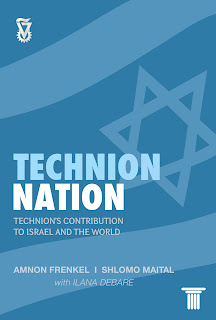
Film promo for the book “Technion Nation — Technion’s Contribution to Israel and the World.” Prof. Shlomo Maital takes you on a short journey through the book, written by Professors Amnon Frenkel and Maital, with Ms. Ilana DeBare that tells the story of how Technion’s graduates drove Israel’s transformation from an economy of Jaffa oranges to semiconductors, and of how Technion scientists have given the world new forms of matter, life-saving discoveries and countless innovations that enrich lives of people everywhere, winning Nobel Prizes along the way. 

Data published by the Samuel Neaman Institute.

National researchers have found that investment in human capital, in Technion undergraduate science and engineering students – has generated exceptionally high (and risk free) social rates of return.

Investment in human capital at Technion generates a 76‐197% social rate of return, at least, or in absolute terms, some $35‐$60 billion for 50 graduating classes.

The annual output of Technion graduates in high‐tech industries and computer services, communications and Research & Development is estimated at a minimum of $21 billion.

The median income of Technion graduates is NIS 20‐25,000 (gross income) per month, and is substantially higher than both the average wage in the economy and than the average wage of those with higher education.

The cost of the 2010 undergraduate class was approximately $1 billion (for four years of education). The social return to Israel’s economy is estimated at between $1.76 and $2.97 billion.

These calculations show that public investment in Technion science and engineering education is highly profitable, with higher rates of return that almost any other conceivable risk‐free investment.

An overall estimate of Technion graduates’ GDP contribution to the Israeli economy, shows an annual output of Technion graduates in high‐tech industries and computer services, communications and Research & Development at an estimated  $21 b., or some 20 per cent of the total annual output of these industries.

Technion engineers contribute to generating some 78,000 jobs that support high‐tech industries, jobs that pay relatively high wages.

Technion graduates’ contributions also find expression in the taxes they pay, some NIS 16.6 b. or about $4.4 b., in direct and indirect taxes, or some 13 per cent of the state revenue from direct and indirect taxes.

Findings in this research project show the unique contribution of Technion, through its graduates, to creation of human capital over a century of its operations.

Technion graduates participate in every facet of Israel’s economy, technology, education and management, especially in its high‐tech growth‐leading sectors.

Other findings in the research, based on a Web‐based survey of some 4,000 Technion graduates, indicate major contributions of individual Technion graduates to Israel and the world.

  • Some 67,000 persons have graduated from Technion since its first graduating class, and some 90,000 degrees have been awarded. Of Israel’s 125 top business leaders, according to Dun & Bradstreet, 41 (one‐third) are Technion graduates. Of these, 28 head publicly‐listed firms, and 13 lead private companies.
  • Technion graduates lead Israel’s 11 top exporters which account for $19.5 b. in exports out of a total of some $45 b., and employ 80,000 workers.   
  • Entrepreneurship:  of the 298 NASDAQ‐listed companies listed with “non‐American origins”,  fully 121 (41 per cent) are Israeli.  Of those, half (59) are led by Technion graduates and/or were founded by Technion graduates.  These Technion‐originating startup companies had a market value of $28.4 b. (as of Nov. 2010).   

Technion Inventions 

Among the widely‐used inventions or breakthroughs originating with Technion Faculty and/or Technion graduates:

  • Memory sticks (Dov Moran, M‐systems); 
  • Ziv‐Lempel data compression algorithm (used in pdf); 
  • Rasagiline (Azilect), for treating early‐stage Parkinson’s, developed by Moussa Youdim
  • Instant messaging (Yossi Vardi, father3 of ICQ inventor Arik Vardi, was a key founder of Mirabilus); 
  • Better Place electric cars (Shai Agassi)
  • Ubiquitin, the protein that causes cells to die, showing potential for new cancer treatments, discovered by Technion Nobel Laureates Ciechanover and  Hershko;  
  • Shechtmanite (quasi‐crystalline matter, once thought impossible, discovered by Dan Shechtman); 
  • NaNose’ that sniffs cancer (Hossam Haick); 
  • Non‐invasive destruction of tumors by ultrasound (Insightec, led by Technion graduate Yoav Medan); 
  • Cardiac imaging through PC‐based ultrasound (Alex Silberklang, who headed GE Ultrasound, based in Israel, for a decade), and a great many more.   

Industry and Startups 

Based on a web survey of graduates:

  • Out of 59,100 Technion graduates (who are currently of work age), one‐fourth (24 per cent) are either CEO’s or VP’s.  In addition, another 41 per cent fill management positions.   
  • 10,882 Technion graduates, or 18.4 per cent of all graduates, work currently, or worked at one time, in startup companies.
  • Some 13,500 Technion graduates, nearly one‐fourth of all graduates, at one time initiated a business. Some 15 per cent of Technion’s female graduates also launched businesses at one time.   
  • Of all Technion graduates, 35 per cent work in industry, and 12 per cent work in R&D; thus nearly half of all graduates are employed in jobs that either directly produce goods and services or help design and create them Of all Technion graduates employed in industry, 75 per cent are employed in high‐tech industries.

Source:   
Technion’s Contribution to the Israeli Economy through its Graduates, By    Amnon
Frenkel and Shlomo Maital.  S. Neaman Institute Working Paper, January 2012.  

To order a copy of Technion Nation, click here.

T3 – Technion office for Technology Transfer

Hot Technion FACTS on Startups, Innovation, Israel, Science & Technology

Film promo for the book “Technion Nation — Technion’s Contribution to Israel and the World.” Prof. Shlomo Maital takes you on a short journey through the book, written by Professors Amnon Frenkel and Maital, with Ms. Ilana DeBare that tells the story of how Technion’s graduates drove Israel’s transformation from an economy of Jaffa oranges to semiconductors, and of how Technion scientists have given the world new forms of matter, life-saving discoveries and countless innovations that enrich lives of people everywhere, winning Nobel Prizes along the way. 

Data published by the Samuel Neaman Institute.

National researchers have found that investment in human capital, in Technion undergraduate science and engineering students – has generated exceptionally high (and risk free) social rates of return.

Investment in human capital at Technion generates a 76‐197% social rate of return, at least, or in absolute terms, some $35‐$60 billion for 50 graduating classes.

The annual output of Technion graduates in high‐tech industries and computer services, communications and Research & Development is estimated at a minimum of $21 billion.

The median income of Technion graduates is NIS 20‐25,000 (gross income) per month, and is substantially higher than both the average wage in the economy and than the average wage of those with higher education.

The cost of the 2010 undergraduate class was approximately $1 billion (for four years of education). The social return to Israel’s economy is estimated at between $1.76 and $2.97 billion.

These calculations show that public investment in Technion science and engineering education is highly profitable, with higher rates of return that almost any other conceivable risk‐free investment.

An overall estimate of Technion graduates’ GDP contribution to the Israeli economy, shows an annual output of Technion graduates in high‐tech industries and computer services, communications and Research & Development at an estimated  $21 b., or some 20 per cent of the total annual output of these industries.

Technion engineers contribute to generating some 78,000 jobs that support high‐tech industries, jobs that pay relatively high wages.

Technion graduates’ contributions also find expression in the taxes they pay, some NIS 16.6 b. or about $4.4 b., in direct and indirect taxes, or some 13 per cent of the state revenue from direct and indirect taxes.

Findings in this research project show the unique contribution of Technion, through its graduates, to creation of human capital over a century of its operations.

Technion graduates participate in every facet of Israel’s economy, technology, education and management, especially in its high‐tech growth‐leading sectors.

Other findings in the research, based on a Web‐based survey of some 4,000 Technion graduates, indicate major contributions of individual Technion graduates to Israel and the world.

  • Some 67,000 persons have graduated from Technion since its first graduating class, and some 90,000 degrees have been awarded. Of Israel’s 125 top business leaders, according to Dun & Bradstreet, 41 (one‐third) are Technion graduates. Of these, 28 head publicly‐listed firms, and 13 lead private companies.
  • Technion graduates lead Israel’s 11 top exporters which account for $19.5 b. in exports out of a total of some $45 b., and employ 80,000 workers.   
  • Entrepreneurship:  of the 298 NASDAQ‐listed companies listed with “non‐American origins”,  fully 121 (41 per cent) are Israeli.  Of those, half (59) are led by Technion graduates and/or were founded by Technion graduates.  These Technion‐originating startup companies had a market value of $28.4 b. (as of Nov. 2010).   

Technion Inventions 

Among the widely‐used inventions or breakthroughs originating with Technion Faculty and/or Technion graduates:

  • Memory sticks (Dov Moran, M‐systems); 
  • Ziv‐Lempel data compression algorithm (used in pdf); 
  • Rasagiline (Azilect), for treating early‐stage Parkinson’s, developed by Moussa Youdim
  • Instant messaging (Yossi Vardi, father3 of ICQ inventor Arik Vardi, was a key founder of Mirabilus); 
  • Better Place electric cars (Shai Agassi)
  • Ubiquitin, the protein that causes cells to die, showing potential for new cancer treatments, discovered by Technion Nobel Laureates Ciechanover and  Hershko;  
  • Shechtmanite (quasi‐crystalline matter, once thought impossible, discovered by Dan Shechtman); 
  • NaNose’ that sniffs cancer (Hossam Haick); 
  • Non‐invasive destruction of tumors by ultrasound (Insightec, led by Technion graduate Yoav Medan); 
  • Cardiac imaging through PC‐based ultrasound (Alex Silberklang, who headed GE Ultrasound, based in Israel, for a decade), and a great many more.   

Industry and Startups 

Based on a web survey of graduates:

  • Out of 59,100 Technion graduates (who are currently of work age), one‐fourth (24 per cent) are either CEO’s or VP’s.  In addition, another 41 per cent fill management positions.   
  • 10,882 Technion graduates, or 18.4 per cent of all graduates, work currently, or worked at one time, in startup companies.
  • Some 13,500 Technion graduates, nearly one‐fourth of all graduates, at one time initiated a business. Some 15 per cent of Technion’s female graduates also launched businesses at one time.   
  • Of all Technion graduates, 35 per cent work in industry, and 12 per cent work in R&D; thus nearly half of all graduates are employed in jobs that either directly produce goods and services or help design and create them Of all Technion graduates employed in industry, 75 per cent are employed in high‐tech industries.

Source:   
Technion’s Contribution to the Israeli Economy through its Graduates, By    Amnon
Frenkel and Shlomo Maital.  S. Neaman Institute Working Paper, January 2012.  

To order a copy of Technion Nation, click here.

T3 – Technion office for Technology Transfer

Christine Quinn at Technion City

Technion President Prof. Peretz Lavie with Christine Quinn of New York at Technion City, Feb. 2012.

“The Technion-Cornell Initiative will make our City the Global High-Tech Capital”

“The residents of New York City and its government are very excited about the planned applied science and engineering campus which Cornell and the Technion are partnering to establish”, said Christine Quinn, New York City council speaker, in her visit today to the Technion. “We have no doubt that this important venture, which will make our city the global high-tech capital, will inject new blood into it and improve all municipal aspects – from affordable housing to cafés and restaurants”.

Quinn, who in 2007 was ranked by the New York Post third in the list of the most influential women in New York, is a member of the Democratic Party, and is considered a leading candidate in the mayoral election that will end next year. She invests substantial resources in improving health care and in promoting affordable housing in New York. “We, as a municipality, cannot create entrepreneurial ventures, but we can and are committed to creating a suitable envelope for them: an efficient transportation system, personal security, housing, quality education and employment – without these, entrepreneurs and high-tech companies cannot be attracted to the city”.

 “Whenever I hear the slogan ‘Intel Inside’ I say: Haifa Inside.”

Technion President Professor Peretz Lavie said to the guest that the future is in the interdisciplinary realm, and that this is the rational behind the new campus that will be set-up  on Roosevelt Island in New York. “It may be that Prof. Shechtman is the last scientist to be awarded the Nobel Prize for research conducted by one person working alone in one laboratory,” said Prof. Lavie. “Nowadays, achieving significant scientific and engineering breakthroughs requires tremendous knowledge that the single scientist does not possess. In light of this, the new campus will be structured as interdisciplinary centers that will intercommunicate and overlap, rather than in the well-known university model of programs and faculties. With time this center will be surrounded by startup companies and extensions of large high-tech companies, just as such companies and extensions historically developed near the Technion. Intel is an example of a giant company that chose to establish here its first research center outside the US, and so whenever I hear the slogan ‘Intel Inside’ I say: Haifa Inside. Our innovative venture will build a bridge of friendship and cooperation between New York and Haifa”.