Category Archives: News

New Patents for Social Networks


Social networks have swept the internet scene from other budding concepts and taken center stage in such an overwhelming way, that one is hard pressed nowadays, to find someone who isn’t involved in one network or another. Whether its on Facebook, Twitter, or another venue, people are constantly busy searching out friends, getting, and providing updates, sending messages, and playing games. If you think this whole social scene is  mostly for young people looking to mingle, and that you, as a ’serious’ person, have no time to spend on this fad, you should think again. Chances are, that if you work for a medium, to large size organization, you are probably already spending time on a social network within your organization’s enterprise portal, without even knowing it. 


If you follow colleagues’ birthdays, tag friends in company photos, or even keep your own blog on the enterprise portal, you are most likely a closet intranet addict. Rest assured though, you are not alone. The rise of organizational portals has seen the increased presence of social networking on these portals. The development of enterprise social media tools is on a steady rise. Microsoft’s Sharepoint, and SAP’s NetWeaver, are two good examples of enterprise tools that are constantly getting their social networking features tweaked and enhanced.


Is it all about social opportunities?


The ongoing growth of the enterprise portal market, constantly requires development of new tools, and feature sets for smart data management. With this market in mind, Technion Institute researchers, Prof. Oded Shmueli, and Royi Ronen, have developed a novel concept: a Generic social protocol, that can upgrade data management within a portal’s social networks.


Social Protocols are automation tools for social networks that govern the network’s structure, and the way data is communicated within, and without it.. Social protocols enable all of the connectivity features that make a network social. For example, say you are invited to a party by someone using the Facebook Events feature. When you receive the invitation you are asked whether or not you will be attending, and given the option to answer tentatively, with a ‘maybe’. Since your response is visible to the rest of the invitees, it may affect their responses, and possibly facilitate with the organization of the party. In fact, the social protocol behind ‘Facebook Events’ directly impacts the party’s organization by providing the three options for response.


The Generic Social Protocol


The idea behind the Generic Social Protocol is to create a malleable protocol that can be adapted to the needs of each organizational social network, by allowing users that initiate an event to set the protocol logic rules themselves. In This way, by applying protocol modifiers, an event initiator can have greater control over the behavior of their invitees. Assume for the moment that you wish to recruit several developers using the “one member brings another” method.  An event is initiated by sending an initiation message to any desired set of network members. By applying protocol modifiers, you can define that only developers will enjoy the privilege of forwarding the message to their social network friends outside the company, whereas others can only view the message. In this manner you gain more control over information sharing between your social network participants. A tool such as this is bound to improve an organization’s productivity, streamline it’s work process, and become a meaningful supplement for social networks on enterprise portals. The Generic Social Protocol widens the number of potential participants who are not necessarily directly connected to the event’s initiator and can greatly change decision making, regarding events in any social network.


If you are interested in our novel technology for commercial purposes you are welcome to join the Technion Entrepreneur in Residence (EIR) program.


EiR program introduces entrepreneurs to the Technion’s research environment, helps them, identify promising technologies, and assists them with the launching of Start-up Company.


The above article is extracted from The Wadi.

The Patent

animated gif
Social networks interaction protocol
Ref. COM-1197


BACKGROUND

Recently, social networks turn into an automated platform which enables participants to become dynamic users rather than just provide site contents. Social networks applications structure participants intelligent communication by sending automate invitation to friends in the same network and collect different types of given responses. Since these responses can be viewed by all invited friends, they create great impact during decision making regarding the event on large number of participants.However, a better solution of structured communication is a modified interaction protocol that offers a wide range of communication and dissemination options

METHOD

Our methodology provides a platform for structured communication between participants which includes several types of modifiable messages . In every instance of the modified protocol, the participants determine their status regarding a certain event, which can be any happening, physical or virtual. As the protocol instance runs, participants make some of their friends in the network aware of event. Participants who are aware of the event may determine their status regarding this event as ‘positive’, ‘negative’ or ‘undecided’, and their friends can see these decisions. Based on such status decisions, other participants may determine their own status regarding the event. In addition, Since the protocol fits participant’s specific needs it enables decisions changing by activating additional protocols during each run of the protocol instance. 

ADVANTAGES

• Enables protocol modifying according to user’s definition of protocol
• Enables better decision making regarding events in social network

APPLICATIONS

• Enterprise portal social networks 
• Web 2.0 social networks – Facebook, Twitter, Linked in

Fulfilling the promise of the sun

Technion GTEP pioneers national and global research collaboration into new solar fuels through I-CORE.

Our global future will be affected by our ability to create scientific and technological solutions to unlock new sources and methods of renewable energy. In Israel, regional instability is threatening energy sources and the cost of conventional fuels is multiplied.

At the Solar Fuels I-CORE, top Israeli scientists from Ben Gurion University of the Negev, Technion – Israel Institute of Technology and the Weizmann Institute of Science have joined forces to create a synergy of expertise in order to generate clean, efficient energy from renewable sources. In addition, the Solar Fuels I-CORE is an Israeli multidisciplinary task force attracting returning Israeli energy scientists from across the world.

Through intense research, world-class facilities, a dynamic agenda of educational and outreach programs and global collaboration, the Solar FueIs I-CORE team is passionate about fulfilling the promise of paving the road towards a sustainable future for all humanity. Read More…

Supported by the I-CORE Program of the Planning and Budgeting Committee and The Israel Science Foundation


Fulfilling the promise of the sun

Technion GTEP pioneers national and global research collaboration into new solar fuels through I-CORE.

Our global future will be affected by our ability to create scientific and technological solutions to unlock new sources and methods of renewable energy. In Israel, regional instability is threatening energy sources and the cost of conventional fuels is multiplied.

At the Solar Fuels I-CORE, top Israeli scientists from Ben Gurion University of the Negev, Technion – Israel Institute of Technology and the Weizmann Institute of Science have joined forces to create a synergy of expertise in order to generate clean, efficient energy from renewable sources. In addition, the Solar Fuels I-CORE is an Israeli multidisciplinary task force attracting returning Israeli energy scientists from across the world.

Through intense research, world-class facilities, a dynamic agenda of educational and outreach programs and global collaboration, the Solar FueIs I-CORE team is passionate about fulfilling the promise of paving the road towards a sustainable future for all humanity. Read More…

Supported by the I-CORE Program of the Planning and Budgeting Committee and The Israel Science Foundation


Technology Transfer All the Way.

File:Rasagiline-3D-balls-B.png
A flagship example of T3 Technology Transfer: Rasagiline – a discovery by Prof. Moussa Youdim now marketed as a drug for Parkinsons disease Azilect(TM) by Teva Pharmaceuticals, also demonstrates the powerful Technion process of technology transfer – from the lab. to the marketplace. Image: Wikicommons.

The company Mazor Robotics won FDA approval to apply its robotic surgical system to neurosurgery in July 2012. In the same month, the flagship company Corindus won FDA approval for its CorPath 200 System to be used in performing percutaneous coronary interventions (PCI). The technology is now approved in the United States to assist interventional cardiologists in performing PCI, a procedure to restore blood flow to blocked arteries in patients with coronary artery disease (CAD).Recent global headlines have evidenced the ongoing miracle of Israel’s ability to translate new discoveries into patented innovations that become applicable on world markets. In the past two months, two flagship companies created through the dynamic activities of the T3 – the Technion office of Technology Transfer, passed the key milestone and significant hurdle in the process of effective technology transfer, with the reception of approval from the US Food and Drug Administration (FDA).

The mission of T3 – the technology transfer arm of the Technion, is to transform scientific discoveries and innovative technologies into real-life, applied solutions for the advancement of humanity, the State of Israel, and the Technion. By creating optimal alliances between scientists, industry and investors, T3 facilitates the smooth transfer of technologies to the commercial sector. This is accomplished through the licensing of intellectual property and the establishment of start-up companies. Occasionally, T3 also plays an active role as an entrepreneur by building teams, preparing business plans and providing the capital necessary to bring the technologies developed by Technion researchers to maturity.

The Technion – Israel Institute of Technology is Israel’s first university and home to three Nobel Laureates. The Technion is credited worldwide for its ability to generate start-ups, its remarkable ability to innovate and its powerful connections to industry. Known as “Israel’s MIT,” the Technion has made a significant impact across the range of applied science and technology including electronics, information technology, water management, nanotechnology, life sciences & chemistry, clean-tech, materials engineering and aerospace engineering.

During the past years, T3 has enjoyed a robust and marked increase both in the number of patent families originating from Technion research as well as in the number of commercialization successes. With 80-100 new patent filings every year, over 400 granted patents and over 900 pending patents, Technion now has approximately 400 patent families available for commercialization.


 oraclead

Technion Supercomputing & the Octopus

Image courtesy of SGI

An SGI computer which has been nicknamed the ‘Octopus’ and which is currently the largest civil server cluster in Israel has been installed at the Technion computer labs.

The computer will mainly serve researchers at the Minerva Center for Cognitive Processes and the Russell Berrie Nanotechnology Institute (RBNI) but researchers from a variety of fields that demand high performance computing will also have access.


Continue reading Technion Supercomputing & the Octopus

Technion Supercomputing & the Octopus

Image courtesy of SGI

An SGI computer which has been nicknamed the ‘Octopus’ and which is currently the largest civil server cluster in Israel has been installed at the Technion computer labs.

The computer will mainly serve researchers at the Minerva Center for Cognitive Processes and the Russell Berrie Nanotechnology Institute (RBNI) but researchers from a variety of fields that demand high performance computing will also have access.


Continue reading Technion Supercomputing & the Octopus

New Life – The Healing Promise of Stem Cells

Diseases and conditions where stem cell treatment is promising or emerging. Source: Wikipedia

Since the late 1990s, the Technion has been at the forefront of stem-cell research. Stem cells are the master keys because they can be converted into many different kinds of cells, opening many different doors to potential cures and treatments. Beating heart tissue is one of the major stem cell achievements from the Technion.

Healing the Heart

Technion scientists showed this year that they can turn skin tissue from heart attack patients into fresh, beating heart cells in a first step towards a new therapy for the condition. The procedure may eventually help scores of people who survive heart attacks but are severely debilitated by damage to the organ.
By creating new heart cells from a patient’s own tissues, doctors avoid the risk of the cells being rejected by the immune system once they are transplanted.Though the cells were not considered safe enough to put back into patients, they appeared healthy in the laboratory and beat in time with other cells in animal models.
“We have shown that it’s possible to take skin cells from an elderly patient with advanced heart failure and end up with his own beating cells in a laboratory dish that are healthy and young – the equivalent to the stage his heart cells were in when he was just born,” Prof. Lior Gepstein told the British national paper The Guardian.

Pancreatic Tissue for Diabetes

Prof. Shulamit Levenberg of the Technion, who has spent many years trying to create replacement human organs by building them up on a “scaffold,” has created tissue from the insulin-producing islets of Langerhans in the pancreas surrounded by a three-dimensional network of blood vessels.The tissue she and her team created has significant advantages over traditional transplant material that has been harvested from healthy pancreatic tissue.

“We have shown that the three-dimensional environment and the engineered blood vessels support the islets – and this support is important for the survival of the islets and for their insulin secretion activity”, says Prof. Levenberg of the Department of Biomedical Engineering.


In the Bones

BonusBio - Health News - Israel


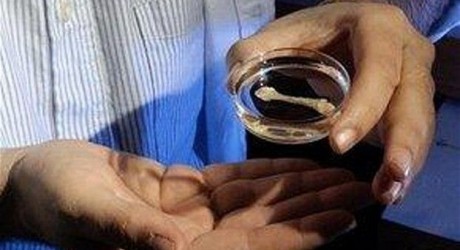
In collaboration with industry and global research partners, Technion scientists have grown human bone from stem cells in a laboratory. The development opens the way for patients to have broken bones repaired or even replaced with entire new ones grown outside the body from a patient’s own cells. The researchers started with stem cells taken from fat tissue. It took around a month to grow them into sections of fully-formed living human bone up to a couple of inches long. The success was reported by the UK national paper The Telegraph.


Stem Cell Proliferation

““These are our next generation of scientists and Nobel Laureates,” says Prof. Dror Seliktar, of the Department of Biomedical Engineering. “The future of the Technion relies on that.”

Seliktar and his research team at the Lokey Center for Biomaterials and Tissue Regeneration at Technion is working on a new material for the mass production of stem cells to make their commercial use viable on an industrial scale.

“In the biotechnology industries, there is an inherent need for expanding populations of stem cells for therapeutic purposes,” says Seliktar, who has published over 50 papers in the field, won over 14 awards and launched one of Israel’s promising biotech startups, Regentis Biomaterials.

Read more.

Prof. Joseph Itskovitz-Eldor of the Faculty of Medicine was on the international team that in 1998 first discovered the potential of stem cells to form any kind of tissue and pioneered stem-cell technology. The breakthrough garnered headlines around the world. He is the Director of the Technion Stem Cell Center.

New Life – The Healing Promise of Stem Cells

Diseases and conditions where stem cell treatment is promising or emerging. Source: Wikipedia

Since the late 1990s, the Technion has been at the forefront of stem-cell research. Stem cells are the master keys because they can be converted into many different kinds of cells, opening many different doors to potential cures and treatments. Beating heart tissue is one of the major stem cell achievements from the Technion.

Healing the Heart

Technion scientists showed this year that they can turn skin tissue from heart attack patients into fresh, beating heart cells in a first step towards a new therapy for the condition. The procedure may eventually help scores of people who survive heart attacks but are severely debilitated by damage to the organ.
By creating new heart cells from a patient’s own tissues, doctors avoid the risk of the cells being rejected by the immune system once they are transplanted.Though the cells were not considered safe enough to put back into patients, they appeared healthy in the laboratory and beat in time with other cells in animal models.
“We have shown that it’s possible to take skin cells from an elderly patient with advanced heart failure and end up with his own beating cells in a laboratory dish that are healthy and young – the equivalent to the stage his heart cells were in when he was just born,” Prof. Lior Gepstein told the British national paper The Guardian.

Pancreatic Tissue for Diabetes

Prof. Shulamit Levenberg of the Technion, who has spent many years trying to create replacement human organs by building them up on a “scaffold,” has created tissue from the insulin-producing islets of Langerhans in the pancreas surrounded by a three-dimensional network of blood vessels.The tissue she and her team created has significant advantages over traditional transplant material that has been harvested from healthy pancreatic tissue.

“We have shown that the three-dimensional environment and the engineered blood vessels support the islets – and this support is important for the survival of the islets and for their insulin secretion activity”, says Prof. Levenberg of the Department of Biomedical Engineering.


In the Bones

BonusBio - Health News - Israel


In collaboration with industry and global research partners, Technion scientists have grown human bone from stem cells in a laboratory. The development opens the way for patients to have broken bones repaired or even replaced with entire new ones grown outside the body from a patient’s own cells. The researchers started with stem cells taken from fat tissue. It took around a month to grow them into sections of fully-formed living human bone up to a couple of inches long. The success was reported by the UK national paper The Telegraph.


Stem Cell Proliferation

““These are our next generation of scientists and Nobel Laureates,” says Prof. Dror Seliktar, of the Department of Biomedical Engineering. “The future of the Technion relies on that.”

Seliktar and his research team at the Lokey Center for Biomaterials and Tissue Regeneration at Technion is working on a new material for the mass production of stem cells to make their commercial use viable on an industrial scale.

“In the biotechnology industries, there is an inherent need for expanding populations of stem cells for therapeutic purposes,” says Seliktar, who has published over 50 papers in the field, won over 14 awards and launched one of Israel’s promising biotech startups, Regentis Biomaterials.

Read more.

Prof. Joseph Itskovitz-Eldor of the Faculty of Medicine was on the international team that in 1998 first discovered the potential of stem cells to form any kind of tissue and pioneered stem-cell technology. The breakthrough garnered headlines around the world. He is the Director of the Technion Stem Cell Center.