Category Archives: News

Raising Chutzpah

Israeli Professor Peretz Lavie says one of the secrets to success in innovation is to not give up on the young.
Jameson Berkow, Financial Post · Apr. 4, 2011 | Last Updated: Apr. 4, 2011 8:36 AM ET
Professor Peretz Lavie is a serial entrepreneur and president of The Technion: Israel Institute of Technology. He was in Toronto last week to speak to the Economic Club of Canada about Israel’s thriving high-tech startup economy. Financial Post technology reporter Jameson Berkow had a chance to sit down with Prof. Lavie to discuss the origins of that booming industry and how Canada might be able to replicate some of that success. The following is an edited transcription of their conversation.
Q Your institution notes that Israel is home to about 4,000 high-tech startups, the equivalent to the entire European continent in absolute numbers. What do you believe accounts for that?
There is something about Israel, the combination of excellent education plus some attributes that are unique to Israel that make it such an innovative society.
Q What are some examples of those attributes?
A There are Israeli characteristics. If you are [here] and you give a talk to students and you ask questions, the fear of the hierarchy is so embedded in the culture that the fear of being embarrassed in public is a major issue. For Israelis, the hierarchy is very weak. They challenge you whether you are a professor, whether you are a CEO, whether you are a politician, they constantly challenge you so there is no fear of failure, we call it chutzpah. It is part of the spirit and I think the characteristic of the Israeli culture; the ability to find solutions where everybody says there is no solution; the resilience, you fail? that is part of the game, we’ll do it again.
Is it Israeli chutzpah that has attracted large technology firms such as Intel Corp. and Microsoft Corp. to open research centres in Israel?
Microsoft, Google, Yahoo, every major company has an R&D centre in Israel. Many of the microchips for [Intel Corp.] were developed in Haifa. I was in the U.S. and I visited several of these companies in Silicon Valley three weeks ago and I asked them what brought you to Israel? They said if we have a problem that cannot be solved, we know that the centre that will do it is in Israel. It is like the elite troops that [Israel] has and they have 30 centres all over the world. But if they need something that is tough where there is no other solution, they know the only place where it can be done is in Israel.
Canadians are not exactly known for their chutzpah. Quite the opposite in fact, we are known for being shy and non-confrontational. Do those characteristics represent a barrier to fostering the same entrepreneurial drive and passion?
I believe so. I think that to really invest in innovative technologies you must take risks, you must have this chutzpah. In the book Startup Nation the authors describe a scenario in which somebody is buying an Israeli company and when he met the employees for one second he wasn’t so sure who was buying who because of the way they asked him questions and talked about the company. So I think you need a society that encourages shorter distances between different hierarchies.
Q You mentioned that Israel went from being a Jaffaoranges economy to one based on semi-conductors in recent decades. What else might account for that transformation?
We had an influx of one million people from the former Soviet Union. They were highly educated, highly talented, with an inclination toward the natural sciences. So the number of engineers and scientists in Israel, mostly because of the Russian immigration, is the largest in the world per capita. I also should credit the government. It is interesting and very few people know that during the 1960s when Levi Eshkol was prime minister, he established in every ministry a chief scientist position and the chief scientist was given a budget for research and development. It helped to generate some of these companies, and then there was a community of venture capitalists that developed and continued to fuel this trend.
That is a stark contrast to Canada, which is currently facing a serious labour shortage for technology-related positions. Do you have any advice for how Canada can encourage more students to study math and science?
A The philosophy is you have to encourage these children at the age of 8 or 9, otherwise don’t invest. That is wrong, it can be done and it is incredible. We have something called the ‘pre-academic centre’ in which we take 700 youth a year after their army service and they come to the centre for six to 18 months depending on how much they need to complete the course. Out of this 700, two thirds are accepted to the Technion. So one of the keys is not to give up on the young people who drop out and facilitate some education that will allow them to catch up and join university and professional schools. I see it as a national mission.

Top 100 in Materials Science

World-class Matters


Prof. Yeshayahu Lifshitz
Prof. Yeshayahu Lifshitz from the Technion's Department of Materials Engineering has been included in Thomson Reuters list (based on Essential Science Indicators) of the top 100 materials scientists in the world of the past decade (the only one from Israel) which according to them represents the top 0.02 of 1 percent in the field.

Thomson Reuters Logo

On March 2, 2011, Thomson Reuters released the data that identifies the world’s top 100 materials scientists who achieved the highest citation impact scores for their papers (articles and reviews) published since January 2000.

Lifshitz is an active member of Technion's Russell Berrie Nanotechnology Institute (RBNI)


Image: Dept. of Materials Engineering Homepage.


Happy Passover from Technion President Peretz Lavie.

HAPPY PASSOVER 2011 FROM ALL THE TECHNION FAMILY!

Passover 2011 Message from Technion President Prof. Peretz Lavie.


“Only when we have the courage to regard ourselves as a nation, only when we respect ourselves, can we win the respect of others; or rather, the respect of others will then come of itself.”
Technion founding father Albert Einstein, 1931.
.

Welcome to the April 2011 Passover issue of TechnionLIVE. At Technion, we are deeply aware of the central themes of freedom and national realization embedded within the Passover story. We were slaves in Egypt. We could have continued that way for generations, but there was a critical shift in attitude. We stopped seeing ourselves as the “problem”, and we became the solution. We took responsibility for our position, individually and as a whole, and we took an unconditional movement into our own integrity. Together, the entire Jewish workforce of Egypt got up and left. The reward for this act of responsibility and unity was great: it initiated a process in which we were to receive the land of Israel.


At the opening of the last century, we were again scattered around the planet, enduring antisemitism, persecution, and exclusion. We could complain and mourn injustice, or we could take responsibility. Embedded in the vision of Theodore Herzl was a movement into vision, responsibility and application in which freedom will always be the outcome.


The inspired question then, as ever, was: “How do we do it?” How do we build a nation from nothing? Jews were barred from technical universities and professions, and there just wasn’t the skilled manpower to begin laying the foundations of an independent state. Back then, we took responsibility, and the answer was a technical university in Haifa. 99 years ago, in 1912, the first cornerstone was laid. Nearly 100 years later, millions of people in Israel and across the world feel the reward of this freedom.

Gathering to lay the 1st cornerstone of the Technion, 1912.
This is the spirit of Technion. We don’t see problems, we see opportunities. We take responsibility for real concerns, and stone by stone, we build the basis of our freedom. 
One person who for many of us, really embodied this wisdom, was the great philanthropist and unshakeable friend of the State of Israel and the Technion Henry Taub, who sadly passed away on April 1st, 2011. A giant of his generation, Henry left his imprint on every aspect of Technion life and shaped the building of its campus. We have lost a true and beloved friend.
The past month has revealed many global challenges. In Japan, nature has shown us how truly powerful it is, unfortunately, with devastating effects. One of our former students of physics from Japan, Shumon Mor, wrote to us of the “nightmare” happening in his country.  We send our sincere hopes that recovery will come swiftly and as painlessly as possible. We also thoroughly believe and trust in the ability of our Japanese colleagues to find even smarter ways to rebuild their nation, and to meet the challenge of finding ways to heal the wounds, creating a Japan that will be stronger than ever before.


Events in Japan highlight the energy choices facing nations today. The depletion of fossil fuels brings a serious risk of war, terrorism and poverty. Events in Japan have shown that the nuclear power alternative has grave drawbacks. New energy sources – such as wind, solar, hydrogen and biofuels – need researching, improving and developing in order to power tomorrow’s world. We also need to research smarter, cleaner and more efficient ways to use conventional energy sources, including oil, coal, and Israel’s newfound gas resources. Also here, in the establishment of the multidisciplinary Grand Technion Energy Program (GTEP)  we took a critical step of responsibility and vision, through which we will gain our freedom in the future.

Following events in Japan, an understandable response is to ask: “Could it happen in Israel?” The answer, unfortunately, from a top Technion disaster expert Prof. Avi Kirshenbaum, is: “Yes, it could.” It is our task as scientists to come with the simulations, crisis research, building codes, sensors, and systems that will make the difference should Israel ever face a similar challenge as its friend, Japan.

Across Technion, spring is in the air and the green spaces have become a forest of spring flowers. The Zielony Graduate Student Village is getting its final touches, as it will soon become a thriving community of top graduate researchers, their partners and young children. Some of them will be pursuing advanced multidisciplinary degrees in Nanotechnology or Energy Science. These are the graduates with the spirit of responsibility and freedom that have made Israel great, some of whom you can read about at TechnionLIVE.
We sincerely wish you all a Happy Passover, and that you will feel your strength and unity with the whole Technion Family. Together, we take responsibility for our shared future, and together, we celebrate in freedom.

Henry Taub: a Giant of his Generation

Technion Family Mourns the Loss of Henry Taub, Great Friend of Israel and the Technion

“The Technion has lost a beloved friend, a visionary technology pioneer – a giant of his generation. My profound condolences to Marilyn and the family.”

Technion President, Prof. Peretz Lavie.
Henry Taub: 1927-2011.

The worldwide Technion family deeply mourns the loss of Henry Taub, who passed away in New Jersey on March 31, 2011, at the age of 83.

Henry Taub was one of the Technion’s greatest and most revered friends. His four decades of devoted service included numerous key leadership roles, including President of the American Technion Society (1974 – 1976) and Chairman of the International Board of Governors (1990 – 2003). The Technion honored him with it highest tributes: Honorary Doctor (1983) and the Technion Medal (1998).

A man of great vision and generosity, Henry Taub left his imprint on every aspect of life at the Technion and on the development of the campus. Among the projects he and his wife Marilyn promoted were the Henry and Marilyn Taub and Family Science and Technology Center, a Technion campus landmark and home to its Faculty of Computer Science, considered one of the best in the world; the Leaders in Science and Technology Faculty Recruitment Program; and the Henry and Marilyn Taub Fund for the Future.
Chairman of the Technion Board of Governors, Lawrence S. Jackier, and Chairman of the Technion Council, Yoram Alster, said “the State of Israel has lost a true friend, who understood that the future of Israel depends on the quality of its higher education and advanced technology, and strongly supported young scientists.”
Henry Taub was a visionary businessman and technology pioneer. In 1949, at the age of 22, he founded Automatic Payrolls Inc., now known as Automatic Data Processing, the leading provider of computerized payroll and benefits management services to employers in the U.S.
In addition to his decades of devoted service to the Technion, Henry Taub held active leadership roles in a variety of charitable, educational and cultural organizations such as the American Joint Distribution Committee, the United Israel Appeal, New York and Columbia universities, Interfaith Hunger Appeal and the New York Shakespeare Festival/Public Theater.
The Technion sends its most heartfelt condolences to his beloved wife Marilyn Taub, his children Ira Taub, Judith Gold and Steven Taub, his grandchildren and the entire Taub family.

A Serious Matter – Dan Shechtman and a revolution in basic science.

Clear as crystal


Three decades ago, Prof. Dan Shechtman looked into an electron microscope and couldn’t believe what he saw. His discovery led to a new field of study and an ongoing candidacy for a Nobel Prize

By Asaf Shtull-Trauring Reproduced from Haaretz.

On a cool, clear Thursday morning in April 1982, Prof. Dan Shechtman was alone in the laboratory of the National Bureau of Standards in Gaithersburg, a handsome suburb of Washington D.C., where he was spending a sabbatical. At about 10 o’clock, he examined through an electron microscope a new crystal he had produced in his laboratory. The electron beam passed through the crystal and left a diffraction pattern of points of light on the screen of the microscope.

Shechtman counted the points: 10 points, arranged in a circle around a central point. He counted again and got the same result: 10 points. He had never before seen a pattern like this. Moreover, he realized immediately that the pattern he was looking at was impossible under the laws of crystallography, the science of crystals. He went out into the long corridor outside the lab, looking for someone with whom to share this strange finding. The corridor was empty. Returning to the lab, he looked again at the peculiar pattern of dots of light.

“I told myself that there is no such thing,” he recalls. Since the birth of modern crystallography in 1912, when x-rays were diffracted from a crystal for the first time, until that moment 70 years later, this branch of science had relied on an unchallengeable basic tenet: the atoms in crystalline solids – such as metals, rocks or ceramic materials – are arranged in periodic order. The periodic pattern repeats itself throughout the crystal, as in a chessboard or a honeycomb hexagon. The regularity of the pattern dictates another important quality: crystals are composed of “tiles” possessing rotational symmetry. In other words, if the basic form that makes up the crystal is rotated, it will look exactly the same. A chessboard can be rotated four times, a quarter of a rotation each time, and it will look the same; the hexagon of a honeycomb can be rotated six times.

Crystallographers determined that there were only five possible rotational symmetries: single symmetry (there is only one way to rotate the tile so it will look the same ), double (two stages of rotation ), triangular, quadruple and hexagonal. The scientists concluded that there can be no pentagonal symmetry in crystals, since they cannot create periodic order – as anyone who has tried to cover a bathroom floor with five-sided tiles knows. In countless observations over many decades, crystallographers indeed saw only geometric crystals, all of them possessing rotational symmetry.

But on that April day in 1982, when Shechtman looked at the pattern of points created by the crystal of the alloy he had prepared in the lab from aluminum and manganese, he saw a structure that contradicted both rules: the 10 points that appeared through the microscope attested to the existence of pentagonal symmetry; and the immediate conclusion was that the crystal did not possess a periodic structure. Shechtman had discovered a new world, in which there are solid crystals, but the known order was gone.

“On that day the realization that this was something new trickled in, but I didn’t yet know what it was,” he relates.

From that very moment, when he hunched over an electron microscope and then went out to look for someone to join him in counting the 10 points, his conclusions sounded utterly baseless. Moreover, he had not come to the laboratory on the East Coast of the United States to produce far-reaching theoretical developments in the study of crystals, a field that in many ways had itself crystallized and solidified. Shechtman had been invited to the institute to do research on light alloys for the aircraft industry. Within days, his peculiar ideas generated suspicion and ridicule, to which he would be subjected for some time. Until he succeeded in convincing everyone.

Looking for a partner

“I told everyone who was ready to listen that I had material with pentagonal symmetry. People just laughed at me,” Shechtman says in his office at the Technion, in Haifa. On one wall hang a row of certificates testifying that something major happened that day: the Rothschild Prize in Engineering, 1990; the Israel Prize in physics, 1998; the Wolf Prize in physics, 1999; the EMET Prize in chemistry, 2002. Amid the prize certificates Shechtman has hung Hieronymus Bosch’s triptych “The Garden of Earthly Delights.”

His colleagues, he says, attributed the discovery to the “twinning phenomenon,” a convergence of crystals that can create a semblance of pentagonal symmetry. But Shechtman, who was familiar with the phenomenon from previous research, had already contemplated that possibility. Following a series of tests with the electron microscope on the day of the discovery, he ruled out the twinning phenomenon as a possible explanation.

In the months that followed, he tried to persuade his colleagues in the lab that what they were looking at was a previously unknown crystal. But in vain. “I knew my observations were in order. I couldn’t explain the phenomenon, but I knew it was material that no one had seen before me, impossible material according to the laws of crystallography,” he says. The incessant criticism sent him back to the microscope repeatedly in order to reexamine the alloy, but his initial insight remained intact.

One day, the administrative director of his research group approached him. “He gave a sheepish smile, placed a textbook on my desk and said, ‘Please read what’s written here.’ I told him that I taught my students from the book, but that I also knew that we’re dealing with something that exceeded the book’s understanding,” Shechtman says. The director returned 24 hours later and asked him to leave the research group, because he was “bringing disgrace” on the members.

“I felt rejected,” Shechtman says. “As I see it, the head of the group expressed the view of many. He would not have reached that conclusion unless he heard from others that someone in his group was fiddling with nonsense.”

Shechtman moved to another group and continued his research. However, the researchers at the institute were not able to check the discovery for themselves. Many of them did not know how to work with an electron microscope, which is the most appropriate tool for identifying rotational symmetries in small crystals. Moreover, he notes, “They were not really interested in dealing with it.”

Shechtman also forwarded the findings to a friend, who was about to go on a scientific tour. When the friend returned, Shechtman relates, he brought an array of off-the-wall explanations for the 10 microscopic points, gleaned from colleagues. None of them took seriously the possibility that it was a case of pentagonal symmetry.

At the end of 1983, following the conclusion of his sabbatical, Shechtman returned to the Technion. He continued to share his discovery in Israel. But only one person was ready to listen in earnest: Prof. Ilan Blech, from the Technion’s Faculty of Materials Science. He suggested that the two of them work together on the discovery. Within a short time he developed a model that derives the phenomenon from a pentagonal symmetry, which is one of the rotational symmetries of a three-dimensional body called an icosahedron – an entity composed of 20 identical equilateral triangular faces. Shechtman now felt sufficiently confident to publish an article on the subject.

Until then, he says, “I was afraid to publish alone, in case it turned out to be nonsense.”

He returned to the National Bureau of Standards in Maryland in the summer of 1984, where he wrote the article together with Blech and send it to the Journal of Applied Physics. Within a short while a reply arrived from the editor, rejecting the article as not being of interest to physicists. “The editor later deeply regretted his decision,” Shechtman says. Disappointed, Shechtman turned to the senior scientist John Cahn, who had invited him to work in the institute. Cahn initially had reservations, but afterward worked with Shechtman and proposed that they co-author an article. For the mathematical aspects he added a French crystallographer, Denis Gratias, and the three wrote an article that was a concise, refined version of the first article. They added Ilan Blech’s name as a fourth author and sent the article to Physical Review Letters, which also deals with physics. The addition of Cahn’s name turned out to be a winning move: the article appeared in November 1984, within a few weeks of its submission.

Fear and compliments

Publication of the article provoked a brouhaha in the scientific community. The discovery of a crystalline structure possessing pentagonal rotational symmetry and overall icosahedral symmetry – a concept that until then had been confined largely to the realm of mathematical amusements – demanded a fundamental change in all the textbooks on the subject. To get researchers to believe him, Shechtman described exactly how to prepare the alloy.

“There are people who keep the mode of preparation secret, but I wanted every researcher who had an appropriate laboratory to be able to prepare the material and examine it under an electron microscope within a few days,” he says. “Telephone calls started coming in very soon from scientists around the world. ‘I have it,’ they told me.”

However, despite the success in repeating the experiment in several labs, only a few scientists accepted the thesis of pentagonal symmetry. Leading scientists rejected Shechtman’s conclusions, and towering above all of them was Linus Pauling, the only person ever to have been awarded the Nobel Prize twice on his own, once for chemistry and once for peace, and considered one of the most important chemists of the 20th century. The issue of quasiperiodic crystals continued to exercise him from the moment the article was published in 1984 until his death a decade later.

“There are tens of thousands of chemists in the United States, and Pauling was their star,” Shechtman notes. “He would open the conferences of the American Chemical Society, and quasiperiodic crystals were always his topic. I attended one of the conferences, at Stanford. Thousands of people were there, and he attacked me. He would stand on those platforms and declare, ‘Danny Shechtman is talking nonsense. There is no such thing as quasicrystals, only quasi-scientists.’

“At first, being the target of this crusade was scary at an existential level,” Shechtman admits. One day, he relates, his daughter came back from school and told him she had learned about Linus Pauling. “She asked me if this was the same Linus Pauling who was against me; because if so, she said, he must be right.”

Shechtman was concerned that his promotion would be impeded. “I knew that if it turned out to be a flop, it would be a major flop.” Nevertheless, he says, he was very confident about the findings. Not long after the article’s publication, Shechtman received a copy of “The Structure of Scientific Revolutions,” by the philosopher of science Thomas Kuhn. That iconic book deals with the process by which scientific paradigms are produced and replaced. “I went through stage after stage, just as Kuhn describes. I told myself I have gone through chapter one, I have gone through chapter two, and I know what lies ahead.”

In the first years following the discovery, Shechtman’s support came primarily from physicists and mathematicians. But crystallographers had a serious problem with the findings: Shechtman had used an electron microscope, whereas their main tool was the x-ray. “It’s as though a mechanical engineer were to explain to a heart surgeon how to perform an operation,” Shechtman says. “From their point of view, I was not a crystallographer, because I had used a tool they considered imprecise and illegitimate.”

It was not easy to repeat the successful experiment with the use of x-rays, which produce more accurate results than a microscope but demand larger single quasi-periodic crystals. However, in 1987, friends of Shechtman’s from France and Japan succeeded in growing quasi-periodic crystals large enough for x-rays to repeat and verify what he had discovered with the electron microscope: the existence of pentagonal symmetry.


“In the forefront of science there is not much difference between religion and science People harbor beliefs. The argument with Linus Pauling was almost theological.”


That summer of 1987, Shechtman presented the photographs at a large conference of crystallographers in Perth, Australia. This brought about the turning point he had been anticipating for the past five years. “Suddenly people told me, ‘Now you’re talking,'” he recalls. After the Perth conference, recognition of Shechtman’s achievement began to trickle down into the ranks of the scientists. Linus Pauling, however, persisted in his opposition until his final day.

“In the forefront of science there is not much difference between religion and science,” Shechtman says. “People harbor beliefs. That’s what happens when people believe something religiously. The argument with Linus Pauling was almost theological.” Still, their disagreements never deteriorated to the personal level. “At conferences people would wait for fights to break out between us over dinner. But Pauling was always cordial. He was a New Yorker with southern manners. We would sit and talk for hours about things we agreed on. For example, he was a big advocate of vitamin C, and so am I. We agreed about everything, but not about quasicrystals.”


Nobel Laureate and top Materials Scientist Linus Pauling.

As his fear of not finding employment faded, Pauling’s assaults became a compliment for Shechtman. “I realized that if it’s Pauling against Shechtman, then at some level we are equals. From a situation in which I was on the floor and he was on the ceiling, I saw that very slowly, over a period of 10 years, the balance was shifting,” he says. At the beginning of the 1990s, with Pauling also in his nineties, he made a gesture to Shechtman, inviting him to write a joint article, “Shechtman-Pauling,” on quasiperiodic crystals. Shechtman replied that he would be delighted to co-author the article with him, but that Pauling first had to agree that quasi-periodic crystals in fact exist. Pauling’s rejoinder was that it was apparently still too soon for a joint article. A year later, he died. With his death, the opposition to Shechtman in the scientific community vanished.

Music of chance

Like many scientific revolutions in the past, Shechtman’s discovery involved luck, professionalism and determination. Indeed, Shechtman describes his whole scientific path as an interplay of those qualities. “I always say that people are like peanut shells on the ocean: the waves will take them everywhere.”

Dan Shechtman was born 70 years ago in Tel Aviv and grew up in Ramat Gan and Petah Tikva. He may well have inherited his industriousness from his grandparents, who arrived in the Second Aliya (wave of Jewish immigration to Palestine, 1904-1914 ) and founded a well-known printing press. But Jules Verne was responsible for the young Shechtman’s scientific aspirations. “My childhood dream was to study mechanical engineering,” Shechtman says. “After reading ‘The Mysterious Island’ – which I read 25 times as a boy – I thought that was the best thing a person could do. The engineer in the book knows mechanics and physics, and he creates a whole way of life on the island out of nothing. I wanted to be like that.”

He obtained his first degree from the Technion in 1966, but the best job he was able to find during that recession period was as an official in charge of road signs. He quickly went on to a master’s degree in materials engineering, a field he came to by chance. In the senior year of his undergraduate degree, a friend told him about a nice project they could do in metallurgy. “It was quite random; if that guy hadn’t approached me, I would be in a different place,” he says. A year later he found himself a graduate student of metallurgy.

After obtaining his doctorate, in 1972, Shechtman did post-doctoral work for the U.S. Air Force, at the conclusion of which he was offered what he describes as a “marvelous position.” Shechtman continues: “I was already married and we had three daughters. We sat down and drew up a list of reasons to stay in the United States and reasons to return to Israel. The first list was about a meter long, the second maybe a centimeter.” But on the day he was supposed to sign the contract, he received a message from the Technion that he had a position there if he wanted it. “I am a Zionist and I try to do many things for Israel’s good,” he says. “I went to my boss and told him I was going back to Israel. He was a Jew and he understood.” After six years at the Technion came a sabbatical. And during the sabbatical came that moment of discovery.

That major discovery has long since taken on a life of its own, independent of Shechtman. For more than a decade he has not been working on quasiperiodic crystals but on developing new magnesium alloys for various industrial applications, materials that can be used for implants and be absorbed by the body afterward. However, the field he founded has become a scientific branch of its own.

Prof. Shlomo Ben-Abraham, one of the first Israeli scientists to support the discovery, says, “Until Danny’s discovery, we thought the subject of crystal structure was completely closed. Today, nearly 30 years later, we know we have not even scratched the surface. There is a great deal of activity, things are getting interesting and there are constant surprises and many questions to which we do not yet have an answer.”

Another researcher, who took part in an international conference held in January of this year to mark Shechtman’s 70th birthday, Prof. Ron Lifshitz, a physicist from Tel Aviv University, describes Shechtman’s discovery as “a scientific revolution that is still in going on.” Science, he says, must now answer questions that were once thought to be basic and closed, such as what a crystal is, alongside new questions, such as how the nonperiodic structure influences the qualities of those materials.

“In addition,” says Lifshitz, “we need to find substitutes for the experimental and theoretical tools that were developed during many decades and are not applicable to nonperiodic crystals. Hundreds of scientists around the world are dealing with these questions. We can look forward to many years of intensive and fascinating research until we reach a point where we again think we understand everything there is to understand about crystals. At that stage, we will be ready for the next scientific revolution.”

Regular candidate

Shechtman is not prone to revolutionary fervor. He prefers to view his exploits through a prism of pure professionalism, as one who simultaneously exposed the weakness of science but also its strength. For decades, crystallography clung to a mistaken description of the physical world, which was presented as a solid, total truth. On the other hand, that same science was able to acknowledge its mistake and refute long-held basic assumptions within a relatively short time, once the theory was shown to be inconsistent with reality. Still, it was necessary to have someone who is capable of shouldering the revolution.

Prof. Ben-Abraham explains Shechtman’s strength: “The greatness of a discoverer lies in knowing what he has discovered. People encounter things and ignore them for one reason or another. I know of four documented cases in which people found this before Danny.” However, he notes, because all the books state that pentagonal symmetry is inconsistent with periodicity of crystals, the researchers ignored what they saw.

Science truly needs to examine itself. How is it possible that in the course of investigating about a quarter of a million crystals during 70 years, scientists did not discover a single quasiperiodic crystal? It’s now known that such crystals are not rare. There are hundreds of them, they are made of commonplace materials such as aluminum or iron and it is not difficult to create them. Last year such crystals were even discovered in nature. So, what was going on for 70 years?

Shechtman thinks that one of the reasons for this state of affairs is that the discovery demanded the use of non-applied materials, such as alloys with non-appliable concentrations of magnesium, and expertise in the use of an electron microscope, in which Shechtman was a professional. Those two requirements, he explains, significantly reduced the community of scientists who could have discovered quasicrystals.

At the same time, he adds: “When you see pentagonal symmetry, you have to know that it is impossible – and not everyone knows that. You have to be very professional, consistent and thorough. I repeated the investigation of the new structure several times. I wanted to check that it was not a case of flaws of periodic crystal. After I convinced myself, I was ready to fight for my opinion, and with the aid of observations to persuade colleagues of the truth of what I had found.”

Since publication of the discovery, Shechtman’s name has been submitted regularly as a candidate for a Nobel Prize in physics or chemistry. There appears to be broad agreement that he merits the prize. In 2008, Thomson Reuters cited his name in its annual forecast of Nobel laureates, along with Andre Geim and Konstantin Novoselov, who were in fact awarded the 2010 prize for physics.

Shechtman believes that the major obstacle standing between him and the prize is that quasiperiodic crystals have no significant applications. But Ben-Abraham is optimistic precisely in regard to the discovery’s potential applications.

“Semiconductors were known for 150 years, since the middle of the 19th century, but it was only after the invention of the transistor that this field exploded. I believe the day will come when a use will also be found for quasiperiodic crystals.” In the meantime, Shechtman has an important lesson to share with the select few holding a contested scientific discovery in their hands these days. “The moment you are convinced of a scientific truth,” he says, “it doesn’t matter what people say. But for that you have to be a professional. You have to be good at what you are doing, and when someone argues with you about the data you have collected, you have to be certain yourself that you did it right. If you are sure that you’re right, don’t budge until others explain to you, citing chapter and verse, that you are wrong. Those are exactly the stages I went through.”

Haaretz reports on ‘Shechtmanite’

In the months after the publication of Prof. Shechtman’s first article, the discovery drew the attention of the world’s media – but in Israel no one seemed to have heard of him, or the breakthrough. That all changed after a short random conversation between Shechtman and the physicist Prof. Benjamin Gal-Or in the Technion’s faculty restaurant. “He asked me, coincidentally, what was happening, and I told him. He asked, ‘How come I never heard about it?’ I told him no one had heard about it, because in Israel no one was aware of what was happening in the world.”

That same day, Gal-Or told the science affairs correspondent of Haaretz, Yerah Tal, about the future Nobel laureate who was wandering around the Technion campus. The next day, March 19, 1985, Shechtman’s story got big play on the paper’s front page, with a large photograph of the 10 points illustrating pentagonal symmetry. The headline was, “Technion scientist discovers material of new crystalline structure: Shechtmanite.” From there, the rumor spread even into the Israeli academic world.


A Serious Matter: Dan Shechtman and a revolution in basic science.

Clear as crystal

Three decades ago, Prof. Dan Shechtman looked into an electron microscope and couldn’t believe what he saw. His discovery led to a new field of study and an ongoing candidacy for a Nobel Prize
By Asaf Shtull-Trauring Reproduced from Haaretz.
On a cool, clear Thursday morning in April 1982, Prof. Dan Shechtman was alone in the laboratory of the National Bureau of Standards in Gaithersburg, a handsome suburb of Washington D.C., where he was spending a sabbatical. At about 10 o’clock, he examined through an electron microscope a new crystal he had produced in his laboratory. The electron beam passed through the crystal and left a diffraction pattern of points of light on the screen of the microscope.
Shechtman counted the points: 10 points, arranged in a circle around a central point. He counted again and got the same result: 10 points. He had never before seen a pattern like this. Moreover, he realized immediately that the pattern he was looking at was impossible under the laws of crystallography, the science of crystals. He went out into the long corridor outside the lab, looking for someone with whom to share this strange finding. The corridor was empty. Returning to the lab, he looked again at the peculiar pattern of dots of light.
“I told myself that there is no such thing,” he recalls. Since the birth of modern crystallography in 1912, when x-rays were diffracted from a crystal for the first time, until that moment 70 years later, this branch of science had relied on an unchallengeable basic tenet: the atoms in crystalline solids – such as metals, rocks or ceramic materials – are arranged in periodic order. The periodic pattern repeats itself throughout the crystal, as in a chessboard or a honeycomb hexagon. The regularity of the pattern dictates another important quality: crystals are composed of “tiles” possessing rotational symmetry. In other words, if the basic form that makes up the crystal is rotated, it will look exactly the same. A chessboard can be rotated four times, a quarter of a rotation each time, and it will look the same; the hexagon of a honeycomb can be rotated six times.
Crystallographers determined that there were only five possible rotational symmetries: single symmetry (there is only one way to rotate the tile so it will look the same ), double (two stages of rotation ), triangular, quadruple and hexagonal. The scientists concluded that there can be no pentagonal symmetry in crystals, since they cannot create periodic order – as anyone who has tried to cover a bathroom floor with five-sided tiles knows. In countless observations over many decades, crystallographers indeed saw only geometric crystals, all of them possessing rotational symmetry.
But on that April day in 1982, when Shechtman looked at the pattern of points created by the crystal of the alloy he had prepared in the lab from aluminum and manganese, he saw a structure that contradicted both rules: the 10 points that appeared through the microscope attested to the existence of pentagonal symmetry; and the immediate conclusion was that the crystal did not possess a periodic structure. Shechtman had discovered a new world, in which there are solid crystals, but the known order was gone.
“On that day the realization that this was something new trickled in, but I didn’t yet know what it was,” he relates. From that very moment, when he hunched over an electron microscope and then went out to look for someone to join him in counting the 10 points, his conclusions sounded utterly baseless. Moreover, he had not come to the laboratory on the East Coast of the United States to produce far-reaching theoretical developments in the study of crystals, a field that in many ways had itself crystallized and solidified. Shechtman had been invited to the institute to do research on light alloys for the aircraft industry. Within days, his peculiar ideas generated suspicion and ridicule, to which he would be subjected for some time. Until he succeeded in convincing everyone.

Looking for a partner

“I told everyone who was ready to listen that I had material with pentagonal symmetry. People just laughed at me,” Shechtman says in his office at the Technion, in Haifa. On one wall hang a row of certificates testifying that something major happened that day: the Rothschild Prize in Engineering, 1990; the Israel Prize in physics, 1998; the Wolf Prize in physics, 1999; the EMET Prize in chemistry, 2002. Amid the prize certificates Shechtman has hung Hieronymus Bosch’s triptych “The Garden of Earthly Delights.”
His colleagues, he says, attributed the discovery to the “twinning phenomenon,” a convergence of crystals that can create a semblance of pentagonal symmetry. But Shechtman, who was familiar with the phenomenon from previous research, had already contemplated that possibility. Following a series of tests with the electron microscope on the day of the discovery, he ruled out the twinning phenomenon as a possible explanation.
In the months that followed, he tried to persuade his colleagues in the lab that what they were looking at was a previously unknown crystal. But in vain. “I knew my observations were in order. I couldn’t explain the phenomenon, but I knew it was material that no one had seen before me, impossible material according to the laws of crystallography,” he says. The incessant criticism sent him back to the microscope repeatedly in order to reexamine the alloy, but his initial insight remained intact.
One day, the administrative director of his research group approached him. “He gave a sheepish smile, placed a textbook on my desk and said, ‘Please read what’s written here.’ I told him that I taught my students from the book, but that I also knew that we’re dealing with something that exceeded the book’s understanding,” Shechtman says. The director returned 24 hours later and asked him to leave the research group, because he was “bringing disgrace” on the members.
“I felt rejected,” Shechtman says. “As I see it, the head of the group expressed the view of many. He would not have reached that conclusion unless he heard from others that someone in his group was fiddling with nonsense.”
Shechtman moved to another group and continued his research. However, the researchers at the institute were not able to check the discovery for themselves. Many of them did not know how to work with an electron microscope, which is the most appropriate tool for identifying rotational symmetries in small crystals. Moreover, he notes, “They were not really interested in dealing with it.”
Shechtman also forwarded the findings to a friend, who was about to go on a scientific tour. When the friend returned, Shechtman relates, he brought an array of off-the-wall explanations for the 10 microscopic points, gleaned from colleagues. None of them took seriously the possibility that it was a case of pentagonal symmetry.
At the end of 1983, following the conclusion of his sabbatical, Shechtman returned to the Technion. He continued to share his discovery in Israel. But only one person was ready to listen in earnest: Prof. Ilan Blech, from the Technion’s Faculty of Materials Science. He suggested that the two of them work together on the discovery. Within a short time he developed a model that derives the phenomenon from a pentagonal symmetry, which is one of the rotational symmetries of a three-dimensional body called an icosahedron – an entity composed of 20 identical equilateral triangular faces. Shechtman now felt sufficiently confident to publish an article on the subject.
Until then, he says, “I was afraid to publish alone, in case it turned out to be nonsense.”
He returned to the National Bureau of Standards in Maryland in the summer of 1984, where he wrote the article together with Blech and send it to the Journal of Applied Physics. Within a short while a reply arrived from the editor, rejecting the article as not being of interest to physicists. “The editor later deeply regretted his decision,” Shechtman says. Disappointed, Shechtman turned to the senior scientist John Cahn, who had invited him to work in the institute. Cahn initially had reservations, but afterward worked with Shechtman and proposed that they co-author an article. For the mathematical aspects he added a French crystallographer, Denis Gratias, and the three wrote an article that was a concise, refined version of the first article. They added Ilan Blech’s name as a fourth author and sent the article to Physical Review Letters, which also deals with physics. The addition of Cahn’s name turned out to be a winning move: the article appeared in November 1984, within a few weeks of its submission.

Fear and compliments

Publication of the article provoked a brouhaha in the scientific community. The discovery of a crystalline structure possessing pentagonal rotational symmetry and overall icosahedral symmetry – a concept that until then had been confined largely to the realm of mathematical amusements – demanded a fundamental change in all the textbooks on the subject. To get researchers to believe him, Shechtman described exactly how to prepare the alloy.
“There are people who keep the mode of preparation secret, but I wanted every researcher who had an appropriate laboratory to be able to prepare the material and examine it under an electron microscope within a few days,” he says. “Telephone calls started coming in very soon from scientists around the world. ‘I have it,’ they told me.”
However, despite the success in repeating the experiment in several labs, only a few scientists accepted the thesis of pentagonal symmetry. Leading scientists rejected Shechtman’s conclusions, and towering above all of them was Linus Pauling, the only person ever to have been awarded the Nobel Prize twice on his own, once for chemistry and once for peace, and considered one of the most important chemists of the 20th century. The issue of quasiperiodic crystals continued to exercise him from the moment the article was published in 1984 until his death a decade later.
“There are tens of thousands of chemists in the United States, and Pauling was their star,” Shechtman notes. “He would open the conferences of the American Chemical Society, and quasiperiodic crystals were always his topic. I attended one of the conferences, at Stanford. Thousands of people were there, and he attacked me. He would stand on those platforms and declare, ‘Danny Shechtman is talking nonsense. There is no such thing as quasicrystals, only quasi-scientists.’
“At first, being the target of this crusade was scary at an existential level,” Shechtman admits. One day, he relates, his daughter came back from school and told him she had learned about Linus Pauling. “She asked me if this was the same Linus Pauling who was against me; because if so, she said, he must be right.”
Shechtman was concerned that his promotion would be impeded. “I knew that if it turned out to be a flop, it would be a major flop.” Nevertheless, he says, he was very confident about the findings. Not long after the article’s publication, Shechtman received a copy of “The Structure of Scientific Revolutions,” by the philosopher of science Thomas Kuhn. That iconic book deals with the process by which scientific paradigms are produced and replaced. “I went through stage after stage, just as Kuhn describes. I told myself I have gone through chapter one, I have gone through chapter two, and I know what lies ahead.”
In the first years following the discovery, Shechtman’s support came primarily from physicists and mathematicians. But crystallographers had a serious problem with the findings: Shechtman had used an electron microscope, whereas their main tool was the x-ray. “It’s as though a mechanical engineer were to explain to a heart surgeon how to perform an operation,” Shechtman says. “From their point of view, I was not a crystallographer, because I had used a tool they considered imprecise and illegitimate.”
It was not easy to repeat the successful experiment with the use of x-rays, which produce more accurate results than a microscope but demand larger single quasi-periodic crystals. However, in 1987, friends of Shechtman’s from France and Japan succeeded in growing quasi-periodic crystals large enough for x-rays to repeat and verify what he had discovered with the electron microscope: the existence of pentagonal symmetry.
“In the forefront of science there is not much difference between religion and science People harbor beliefs. The argument with Linus Pauling was almost theological.”
That summer of 1987, Shechtman presented the photographs at a large conference of crystallographers in Perth, Australia. This brought about the turning point he had been anticipating for the past five years. “Suddenly people told me, ‘Now you’re talking,'” he recalls. After the Perth conference, recognition of Shechtman’s achievement began to trickle down into the ranks of the scientists. Linus Pauling, however, persisted in his opposition until his final day.
“In the forefront of science there is not much difference between religion and science,” Shechtman says. “People harbor beliefs. That’s what happens when people believe something religiously. The argument with Linus Pauling was almost theological.” Still, their disagreements never deteriorated to the personal level. “At conferences people would wait for fights to break out between us over dinner. But Pauling was always cordial. He was a New Yorker with southern manners. We would sit and talk for hours about things we agreed on. For example, he was a big advocate of vitamin C, and so am I. We agreed about everything, but not about quasicrystals.”
As his fear of not finding employment faded, Pauling’s assaults became a compliment for Shechtman. “I realized that if it’s Pauling against Shechtman, then at some level we are equals. From a situation in which I was on the floor and he was on the ceiling, I saw that very slowly, over a period of 10 years, the balance was shifting,” he says. At the beginning of the 1990s, with Pauling also in his nineties, he made a gesture to Shechtman, inviting him to write a joint article, “Shechtman-Pauling,” on quasiperiodic crystals. Shechtman replied that he would be delighted to co-author the article with him, but that Pauling first had to agree that quasi-periodic crystals in fact exist. Pauling’s rejoinder was that it was apparently still too soon for a joint article. A year later, he died. With his death, the opposition to Shechtman in the scientific community vanished.

Like many scientific revolutions in the past, Shechtman’s discovery involved luck, professionalism and determination. Indeed, Shechtman describes his whole scientific path as an interplay of those qualities. “I always say that people are like peanut shells on the ocean: the waves will take them everywhere.”Music of chance


Dan Shechtman was born 70 years ago in Tel Aviv and grew up in Ramat Gan and Petah Tikva. He may well have inherited his industriousness from his grandparents, who arrived in the Second Aliya (wave of Jewish immigration to Palestine, 1904-1914 ) and founded a well-known printing press. But Jules Verne was responsible for the young Shechtman’s scientific aspirations. “My childhood dream was to study mechanical engineering,” Shechtman says. “After reading ‘The Mysterious Island’ – which I read 25 times as a boy – I thought that was the best thing a person could do. The engineer in the book knows mechanics and physics, and he creates a whole way of life on the island out of nothing. I wanted to be like that.”


He obtained his first degree from the Technion in 1966, but the best job he was able to find during that recession period was as an official in charge of road signs. He quickly went on to a master’s degree in materials engineering, a field he came to by chance. In the senior year of his undergraduate degree, a friend told him about a nice project they could do in metallurgy. “It was quite random; if that guy hadn’t approached me, I would be in a different place,” he says. A year later he found himself a graduate student of metallurgy.


After obtaining his doctorate, in 1972, Shechtman did post-doctoral work for the U.S. Air Force, at the conclusion of which he was offered what he describes as a “marvelous position.” Shechtman continues: “I was already married and we had three daughters. We sat down and drew up a list of reasons to stay in the United States and reasons to return to Israel. The first list was about a meter long, the second maybe a centimeter.” But on the day he was supposed to sign the contract, he received a message from the Technion that he had a position there if he wanted it. “I am a Zionist and I try to do many things for Israel’s good,” he says. “I went to my boss and told him I was going back to Israel. He was a Jew and he understood.” After six years at the Technion came a sabbatical. And during the sabbatical came that moment of discovery.


That major discovery has long since taken on a life of its own, independent of Shechtman. For more than a decade he has not been working on quasiperiodic crystals but on developing new magnesium alloys for various industrial applications, materials that can be used for implants and be absorbed by the body afterward. However, the field he founded has become a scientific branch of its own.


Prof. Shlomo Ben-Abraham, one of the first Israeli scientists to support the discovery, says, “Until Danny’s discovery, we thought the subject of crystal structure was completely closed. Today, nearly 30 years later, we know we have not even scratched the surface. There is a great deal of activity, things are getting interesting and there are constant surprises and many questions to which we do not yet have an answer.”


Another researcher, who took part in an international conference held in January of this year to mark Shechtman’s 70th birthday, Prof. Ron Lifshitz, a physicist from Tel Aviv University, describes Shechtman’s discovery as “a scientific revolution that is still in going on.” Science, he says, must now answer questions that were once thought to be basic and closed, such as what a crystal is, alongside new questions, such as how the nonperiodic structure influences the qualities of those materials.


“In addition,” says Lifshitz, “we need to find substitutes for the experimental and theoretical tools that were developed during many decades and are not applicable to nonperiodic crystals. Hundreds of scientists around the world are dealing with these questions. We can look forward to many years of intensive and fascinating research until we reach a point where we again think we understand everything there is to understand about crystals. At that stage, we will be ready for the next scientific revolution.”


Regular candidate


Shechtman is not prone to revolutionary fervor. He prefers to view his exploits through a prism of pure professionalism, as one who simultaneously exposed the weakness of science but also its strength. For decades, crystallography clung to a mistaken description of the physical world, which was presented as a solid, total truth. On the other hand, that same science was able to acknowledge its mistake and refute long-held basic assumptions within a relatively short time, once the theory was shown to be inconsistent with reality. Still, it was necessary to have someone who is capable of shouldering the revolution.


Prof. Ben-Abraham explains Shechtman’s strength: “The greatness of a discoverer lies in knowing what he has discovered. People encounter things and ignore them for one reason or another. I know of four documented cases in which people found this before Danny.” However, he notes, because all the books state that pentagonal symmetry is inconsistent with periodicity of crystals, the researchers ignored what they saw.


Science truly needs to examine itself. How is it possible that in the course of investigating about a quarter of a million crystals during 70 years, scientists did not discover a single quasiperiodic crystal? It’s now known that such crystals are not rare. There are hundreds of them, they are made of commonplace materials such as aluminum or iron and it is not difficult to create them. Last year such crystals were even discovered in nature. So, what was going on for 70 years?


Shechtman thinks that one of the reasons for this state of affairs is that the discovery demanded the use of non-applied materials, such as alloys with non-appliable concentrations of magnesium, and expertise in the use of an electron microscope, in which Shechtman was a professional. Those two requirements, he explains, significantly reduced the community of scientists who could have discovered quasicrystals.


At the same time, he adds: “When you see pentagonal symmetry, you have to know that it is impossible – and not everyone knows that. You have to be very professional, consistent and thorough. I repeated the investigation of the new structure several times. I wanted to check that it was not a case of flaws of periodic crystal. After I convinced myself, I was ready to fight for my opinion, and with the aid of observations to persuade colleagues of the truth of what I had found.”


Since publication of the discovery, Shechtman’s name has been submitted regularly as a candidate for a Nobel Prize in physics or chemistry. There appears to be broad agreement that he merits the prize. In 2008, Thomson Reuters cited his name in its annual forecast of Nobel laureates, along with Andre Geim and Konstantin Novoselov, who were in fact awarded the 2010 prize for physics.


Shechtman believes that the major obstacle standing between him and the prize is that quasiperiodic crystals have no significant applications. But Ben-Abraham is optimistic precisely in regard to the discovery’s potential applications.


“Semiconductors were known for 150 years, since the middle of the 19th century, but it was only after the invention of the transistor that this field exploded. I believe the day will come when a use will also be found for quasiperiodic crystals.” In the meantime, Shechtman has an important lesson to share with the select few holding a contested scientific discovery in their hands these days. “The moment you are convinced of a scientific truth,” he says, “it doesn’t matter what people say. But for that you have to be a professional. You have to be good at what you are doing, and when someone argues with you about the data you have collected, you have to be certain yourself that you did it right. If you are sure that you’re right, don’t budge until others explain to you, citing chapter and verse, that you are wrong. Those are exactly the stages I went through.”


Haaretz reports on ‘Shechtmanite’


In the months after the publication of Prof. Shechtman’s first article, the discovery drew the attention of the world’s media – but in Israel no one seemed to have heard of him, or the breakthrough. That all changed after a short random conversation between Shechtman and the physicist Prof. Benjamin Gal-Or in the Technion’s faculty restaurant. “He asked me, coincidentally, what was happening, and I told him. He asked, ‘How come I never heard about it?’ I told him no one had heard about it, because in Israel no one was aware of what was happening in the world.”


That same day, Gal-Or told the science affairs correspondent of Haaretz, Yerah Tal, about the future Nobel laureate who was wandering around the Technion campus. The next day, March 19, 1985, Shechtman’s story got big play on the paper’s front page, with a large photograph of the 10 points illustrating pentagonal symmetry. The headline was, “Technion scientist discovers material of new crystalline structure: Shechtmanite.” From there, the rumor spread even into the Israeli academic world.

US V China ~ Oil & War ~ scientists speak at Technion.

nur.JPG
Prof. Amos Nur (left) with GTEP Prof. Gideon Gradar (right)

Stanford expert lecture at the Technion:


WAR between the U.S. and China likely – due to oil shortage.


So warns Amos Nur, Professor of Geophysics Department at Stanford University, who lectured at the Nancy and Stephen Grand Technion Energy Program on March 28th. Eight wars or “skirmishes” have been fought over the past 20 years, according to Noor. “If Libya didn’t have oil,” he said, “No-one would have cared.”

There is an increasingly high risk of confrontation between the world’s largest economic powers – the United States and China – due to struggles for control of oil resources, says Amos Nur, Professor of Geophysics Department at Stanford University and an expert on global oil resources.

Nur said that many wars are being waged directly a a result of depleting oil resources and the competition for foreign supplies. The first Gulf War, he said, was intended to cause a regime change in Iraq – which has the second largest oil reserve after Saudi Arabia. 

The September 11 attacks in America, resulted directly, says Nur, from bin Laden’s distaste for U.S. support of the Saudi royal family which controls the oil resources for personal enrichment. The crisis in Egypt, says Nur, was also a result of the energy crisis in the shadows. 

Astronomical population increases, combined with significant decreases in the supply of fossil fuels, brought Egypt to a position of having to import oil – as a result, food prices doubled , and the cost of fuel rose by tens of percent, which prompted the anger of the masses on Mubarak. 

Libya is today at the forefront of global energy politics. As an exporter of oil to the West, there is a stated agenda in national security to “guarantee the free flow of oil”.
Complete cycle of world crude oil production
Energy in general, and oil in particular, are the largest industry in the world. The supply of energy is intimately connected with the world’s other challenges – terrorism, war, poverty, global-warming, water. However, limited oil resources and astronomical rises in demand for energy means many countries have already reached peak oil production. The US peaked in 1971, and became a major importer of oil from abroad. Today, it imports about two-thirds of its oil.
With an increase in standards of living, economic growth and increasing population, China has also become a major oil importer. China is now competing with the U.S. for global oil resources – particularly in the Middle East. In this, a major supplier is Iran – against which China opposes sanctions.
“Ultimately, if the crisis is not managed properly, it can lead to a confrontation between two powers,” warned Nur. “Anyone who thinks this is far-fetched must remember that in World War II, the Japanese decided to destroy the U.S. Pacific fleet at Pearl Harbor and to risk a war, just to ensure access to the oil wells of Sumatra. Rommel was also not racing just to kill the Jews in Israel; he wanted control of Middle Eastern oil wells, especially those in Iraq that had been discovered in the twenties.”
Nur added that the whole world is approaching peak oil and gas. In the ‘seventies, the US imported cheap oil from the Middle East. When the whole world passes its peak, there is no longer the import option.
Nur also addressed the issue of alternative energy. “It is not ‘alternative’,” he said, “It is a fundamental part of the energy we will need in the future. We will need both… and more.”
Referring to Israel’s recent natural gas discovery, Nur said that Israel should keep the gas for itself and export it, despite the temptation of a quick return of investment.
Technion’s Grand Technion Energy Program is essential, says Nur. “Israel today lacks the people with the technical manpower required to manage future energy sources – including natural gas – in the right 
way.”

Where world energy supply reaches Ground 0.
“Worldwide per-capita oil consumption is closely correlated with the standard of living.  In developing nations like China and India increasing prosperity therefore requires increased per-capita oil consumption.  However, oil is a finite resource whose production globally is about to begin to decline irreversibly.  Consequently the growing demand for oil is leading to a growing global conflict in which the Gulf War, the 9/11 attack, and the war in Iraq are just the first three skirmishes.  These skirmishes pale in comparison with the looming potential conflict over oil with China.”

Visit Prof. Amos Nur’s homepage to download his compete report: Oil an War: A Grim Earth Sciences’ Point of View.


Technion Harvey Prize, 2011

Technion’s 2010 Harvey Prize 

“The two brilliant men of science we honor today epitomize the same spirit which is honored by the Harvey Prize.  Each, in his own field, has made ground-breaking discoveries and has reached the peaks of scientific excellence.”
President Peretz Lavie

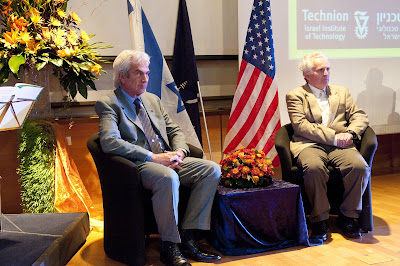
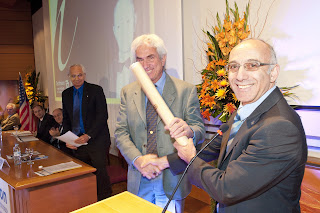
Prof. Michael Karin and Prof. Alexander Polyakov, Harvey Prize 2010 Laureates, with Technion President Prof. Peretz Lavie


Prof. Michael Karin and Prof. Alexander Polyakov are the winners of the Technion’s 2010 Harvey Prize. The festive ceremony took place on March 15th, 2011.


“The road to discovery is not an easy one,” said Technion President Prof. Peretz Lavie.  “It is time-consuming and at times can come at great personal and professional costs.  However, discovery is the engine which drives the human race.  Without it, we would not be able to survive.  Furthermore, it is the greatest and most wondrous feat of our nature.”  


Prof. Karin, from the University of California, San Diego, received the prize in the field of human health. He discovered the strong link between obesity, inflammation and cancer. The judges decided to award the prize to Prof. Karin for “his pioneering contribution that led to deciphering the molecular mechanism through which mammalian cells react to cytokines which cause inflammation, to adverse environmental conditions and also to various pathogens. His research laid the foundations for our understanding of the control mechanisms of transcription factor activities influenced by external stimulations, especially the transcription factors of the AP-1 family and NF-B. These discoveries led to the identification of new target protein cells that have recently been used to develop new medications for preventing and treating various malignant tumors.”


Prof. Polyakov, from Princeton University, received the prize in the field of science and technology. “He developed revolutionary theories that shaped our contemporary understanding of elementary particles in nature. In addition, he significantly contributed to condensed matter physics, statistical mechanics and mathematics. Among the ideas credited to him are topological structures (such as magnetic monopoles) in gauge field theories, which are important in understanding the confinement of quarks in the nucleus. Polyakov also contributed to the foundations of string theory, the unification of quantum mechanics and gravity, and to the idea of duality between string theory and gauge field theory.”


The Technion’s prestigious Harvey Prize foresaw the winning of the Nobel Prize for two of the latest Nobel laureates – Elizabeth Blackburn (Medicine) and Ada Yonath of the Weizmann Institute of Science (Chemistry). To date, 13 Harvey Prize winners have gone on to win the Nobel Prize.


The Harvey Prize was first awarded in 1972 from a fund established by the late Leo M. Harvey of Los Angeles in order to recognize those who have made great contributions to advancing humanity in science and technology and in human health, as well as advancing peace in the Middle East. Every year, prizes totaling $75,000 per winner are awarded from the fund’s income.


Among the winners of the prestigious Harvey Prize are scientists from the US, Great Britain, Russia, Sweden, France and Israel. These include Nobel Prize laureate Mikhail Gorbachev, former leader of the USSR, who was awarded the prize for his activities aimed at reducing regional tensions; Prof. Bert Sakmann who won the Nobel Prize in Medicine; Prof. Pierre-Gilles de Gennes who won the Nobel Prize in Physics; Prof. Edward Teller for his discoveries in solid state physics, atomic physics and nuclear physics; and Prof. William J. Kolff for his invention of the artificial kidney.


Proposals for candidates for the Harvey Prize are received from leading scientists and personalities in Israel and the world. The prize laureates are chosen by the Harvey Prize committee in a stringent process at the Technion.

Prof. Karin (left) and Prof. Polyakov (right)


Description: Description: Description: TechnionLive - Technion’s e-newsletter Description: Description: Description: Technion Live on FaceBook Description: Description: Description: Technion’s YouTube Channel Description: Description: Description: Subscribe to RSS News Feeds
   

Technion Research into ALS

Technion graduates change the world. Avi Kremer, was set to do that anyway, but on the cataclysmic day he was diagnosed with ALS, he began to do it in the area of medicine. He innovated a revolutionzary fund-raising system that recruited money to target research to find solutions for future victims of the same, presently incurable disease. Watch the invcredibly inspiring movie on Prize 4 Life, to get a sense of the soul which is Technion ~

Israeli by birth, Kremer is a graduate of the Technion- Israel Institute of Technology where he earned a bachelors degree in computer science. He was also a captain in the Israel Defense Forces.

Harvard Business School recognized Kremer with its prestigious Dean’s Award for an outstanding contribution to the university and to society.

Avichai (Avi) Kremer was diagnosed with ALS in 2004 while a student at Harvard Business School. As CEO of IsrALS and Prize4Life (as well as its co-founder), Kremer has raised over $5 million in the fight for the cure.

Israel and ALS

IsrALS was formed in 2004 by David Cohen, a businessman from Haifa who became sick with ALS one year prior. David identified with Galia Ness, a patient’s daughter, who wrote about her helplessness and frustration.

He, like Galia, concluded that ALS is only incurable because research funding was lacking, and decided to create a foundation to raise funds for the purpose of researching ALS in Israel. David surrounded himself with friends and family members to form IsrALS. Among the first to join were Prof. Peretz Lavie (President of the Technion as of October 2009); former MK Amram Mitzna; David Kahan; Ofer Ness, Shmulik Levi (who helped create the website) and many others. Among those who have joined was Nir Tzoran, who passed away at the beginning of April 2009. He became active in the foundation and, at the beginning of 2005, walked throughout Israel to raise awareness for the disease.

In 2005, Avihai Kramer joined the foundation. Avihai, just 29 years old, was diagnosed with ALS while a student at Harvard University. He enlisted his friends to create three teams: funding, awareness and research. The teams began to raise funds, recruit researchers to research ALS and campaigns raising awareness to the disease.

Since the foundation grew significantly, organizational changes were made: Avihai was appointed CEO, David – Chairman. In January 2006, Nir Tzoran replaced Avihai, and was CEO until his untimely and sudden death. At the time, Dov Lautman, also diagnosed with ALS, joined the foundation and was appointed president.

IsrALS‘ primary goal is to advance research of ALS in Israel. Indeed, since formed, it succeeded in dramatically transforming the research map. There was no ALS research in Israel prior to the formation of IsrALS; currently, more than 20 studies, funded by the foundation, are taking place in various academic institutions (The Technion, Weizmann Institute, Tel Aviv University, Ben Gurion University, Hebrew University) and medical centers (Tel Aviv and Hadassah Ein Carem). Israel hosts an annual scientific conference on ALS.

In addition to enhancing research and finding a cure, the foundation realizes and understands the needs of patients and their family members. With the realistic understanding of the difficulties brought about by the disease, the Foundation, at the beginning of 2008, established a support department headed by Moran Weiss, a social worker. Its goal is to assist patients with the challenges accompanying the disease. The support department specializes in utilizing rights; organizes support meetings and conferences; manages a cluster of paramedical services; provides communications services, enables easy access to computers, and more.

The foundation has an office in Haifa. Its staff includes Deputy CEO, Efrat Carmi, and Administration and Bookkeeping Manager, Dalia Ligati. The support department is located in Herzliya.

Moussa Youdim and ALS Research

Prof. Moussa Youdim

Researchers at the Technion-Israel Institute of Technology have developed three drugs to remove excess iron from the brains of patients with neurodegenerative diseases. The presence of too much iron in the brain is a hallmark of such diseases. The drugs, VK-28, HLA-20 and M30, mop up the iron before it can trigger a “brain rust” chemical reaction where highly active oxygen particles destroy brain cells. 
Professor Moussa Youdim of the Faculty of Medicine and his colleagues – Prof. Avraham Warshawsky (now deceased), Prof. Mati Fridkin and Ph.D. student Hailin Zheng from China – have received U.S. and worldwide patents on VK-28, HLA-20 and M30. Youdim says the three drugs could treat and perhaps prevent a range of diseases including Parkinson’s, Alzheimer’s, Huntington’s and amyotrophic lateral sclerosis (ALS)
.


You can read the full story of the work of Prof. Youdim in this story from the Jerusalem Post.


Prof. Youdim was recently made a Fellow at the American College of Neuropsychopharmacology. You can read more about it at Technion’s FOCUS.

A Technion Century – the Celebration Opens….

1912-2012
Events marking Technion’s Centennial Have Begun

An Exhibition of the Founding of the Technion and the resulting “War of the Languages”  has opened at the Haifa City Museum.

Cornerstone laying ceremony: Technion, 1912

In a ceremony attended by Brigadier-General (Ret.) Hedva Almog, acting and deputy mayor of the city of Haifa, and the president of the Technion, Professor Peretz Lavie, and with the participation of the Technion administration, deans, the directors of Haifa’s museums and many guests, the unique exhibition “The War of the Languages: Technikum vs. Technion” opened in the Haifa City Museum. The opening marked the start of the events celebrating the Technion’s centennial. The cornerstone of both the country’s first academic institution and the Middle East’s first technological-scientific university was laid on April 11th, 1912. The original name of the Technion was “Technikum”.

The founding of the Technion was a defining cultural event for the Jewish settlement in the Land of Israel at that time, hugely important for the city of Haifa and later on – made an inestimable contribution to the state of Israel in all fields, and especially in the area of infrastructure, defense and economics.

The exhibition’s curator, Sventlana Reingold, said that she is coming to tell the story of the Technion’s founding, which took more than fifteen years, from 1908-1924. During this period, a battle over the teaching language in the institution, dubbed the “War of the Languages,” raged.

The “war” finished with the victory of the Hebrew language. This was a “war” of the people that shaped the national identity of the Hebrew settlement and was one of the milestones in the process of creating a new Hebrew culture.

The exhibition presents an important and significant part of the process of building Israeli culture, by showing the different positions driving the processes that produced the victory of the Hebrew language: formulization of the idea for establishing a technological-scientific institution in the land of Israel by the “Aid Association of German Jews” in Berlin; the Zionist educational perspective; selecting the site of the “Technikum”; the viewpoint of Alexander Baerwald – the architect who translated the vision into architectural language and designed the magnificent building on the slopes of the Carmel; the “War of the Languages” and its implications for the teaching language of the Reali School and of the “Technikum”; the move of the “Technikum” to nearby the Zionist Agency and the opening of its doors in 1924.

The exhibition has hundreds of photographs, films, books, models, documents, letters and rare collection items that are being shown to the public for the first time.

At the opening ceremony Nisim Tal, general manager of the Haifa museums, said that the exhibition was also inaugurating a new hall in the Templar school, which had been added to the Templar Assembly Hall, as part of the Haifa City Museums. He stressed that in all of the Ottoman Empire of that period, when the Technion was founded, there was not even one technological university worthy of its name.

Ms. Hedva Almog said that the exhibition brings to light a fundamental and valuable subject of concern for us in Israel – the subject of the Hebrew language. “Happily for us, the ‘battle’ about the Technion’s teaching language was decided a hundred years ago, but the war of the Hebrew language continues to this very day,” she added. “The language of today sounds like gibberish – a mixture of sounds that sometimes, for someone listening from the side, seems to be sounds that have no connection to each other.”

Technion president, Prof. Peretz Lavie, said that even the giants that envisioned the founding of the Technion more than a hundred years ago, did not dare dream that the Technion would be a world leading technological-scientific university, from which two Noble prize winners for chemistry, Professors Avraham Hershko and Aaron Ciechanower, would emerge, in which the anti-Parkinson drug Azilect would be developed by Professors Moussa Youdim and John Fineberg, whose researchers would make decisive contributions to such important fields and whose graduates would contribute so much to the defense and economic resilience of the state of Israel.

(from right to left): The curator, Svetlana Reingold, Hedva Almog, Prof. Peretz Lavie and Nisim Tal. Photograph: Yossi Carasso.