
 PRESIDENT’S REPORT 2015


Prof. Ehud Behar, Head of ASRI Space Research, Technion – Israel Institute of Technology, explains the science behind the earth’s shift on its axis that resulted from the catastrophic earthquake in Japan in March 2011.
Q: Since the earthquake in Japan, we are told the earth shifted on its axis? What does that mean?
A: When the ground moves and reassembles itself closer to Earth’s rotation axis, Earth spins a little bit faster.
This is just like an ice skater pulling its arms in to accelerate its spin and is based on what in physics we call the conservation of angular momentum: a reduced radius of motion causes a faster angular speed.
As opposed to the skater, the effect here is minuscule as the amount of ground shifting compared to Earth’s total mass is very small. The change in the duration of the day amounts to a few millionths of a second out of 24 hours – didn’t you feel you have less time for everything?
As far as I can tell, the rotation axis-shift is a misconception. The same law of physics – conservation of angular momentum – does not allow the change of the rotation axis without external intervention, such as an impact of a meteor, or a passing by of a heavy planet. What happens with internal motions, as in an earthquake, is that the distribution of matter on Earth changes, so its axis of symmetry (around which mass is symmetrically distributed) might change, but not it rotational axis.
Category Archives: News
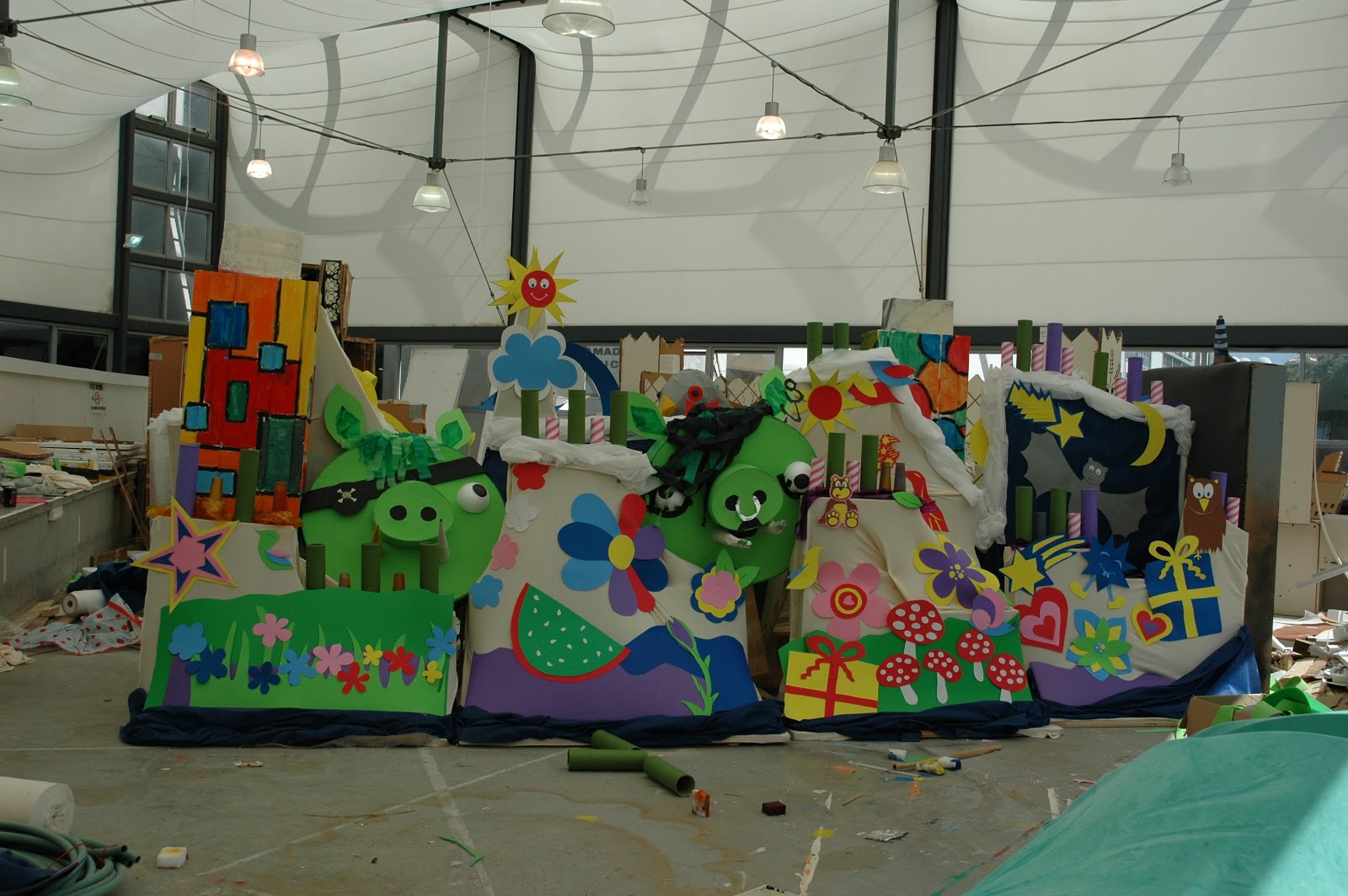
CARNIVAL! Technion applies Purim~:-) Students engineer the party of 2moro.
PURIM 2011
~ ArchiParhiTura Revival~
Earlier that week….
Ingenuity, applied cutting edge skills, advanced engineering combined with a creative flair and an innate ability to anticipate the needs of the future. Here, Technion architecture students take it to the wild side as they prepare for the Jewish festival of Purim. No skills are spared in creating the giant floats that will form a festive procession on Monday 21st March 2011, from Technion City, through Haifa and down to the Technion’s historic building in Hadar, where the Technion’s first cornerstone was laid nearly 100 years ago. Watch the preparations! (Video courtesy of Technion architecture student Guy Shahar).


Governor Patrick & “Israel’s MIT”.
By Barbara Frank
“Technion graduates are famously innovative and creative…”

Massachusetts Governor Deval L. Patrick Holds Innovation Town Hall Meeting at Technion
Massachusetts Governor Deval Patrick brought the Massachusetts-Israel Innovation Economy Partnership Mission to Technion on March 9, 2011. With over 40 participants in this Commonwealth of Massachusetts mission and numerous meetings with Israeli industry, education and government leaders including Prime Minister Netanyahu, Patrick chose Technion to hold a special Town Hall meeting focusing on the Innovation Economy.
“Technion graduates are famously innovative and creative,” said Massachusetts Governor Deval Patrick, as he questioned Yael Avital, head of the Technion Student Union on how he could bring more Technion students to study in Massachusetts universities.
Before the meeting members of the delegation divided into groups and met with different Technion professors and Deans spanning a number of faculties, vice presidents Paul Feigin and Oded Shmueli and the Technion Liaison Office and Technology Transfer Office.
Technion professors and students as well as representatives of industry and Israeli venture capital funds attended the meeting to hear about how Massachusetts is working at creating innovation and stimulating the state economy as well as the commonwealth’s support for Israel and plans for collaboration and friendship.


Technion Entrepreneur in Residence Program (EIR)
Reposted from T3 – the Technion Technology Transfer office


The Technion Entrepreneur in Residence (EIR) program introduces entrepreneurs into the Technion research environment, identifying promising technologies in order to launch start-up companies. By engaging experienced entrepreneurs to transfer technology to the global marketplace, the Technion enables researchers to concentrate on their academic endeavors, while ensuring commercialization of new technologies.
As a part of the program, each entrepreneur has up to six months to discover a business opportunity and launch a startup. While entrepreneurs are not paid for their participation in the EIR program, they receive equity in the newly formed startups. Preference is given to entrepreneurs that are willing to establish their operations in the Haifa area, near the Technion, thus facilitating close dialogue with faculty members, Technion laboratories, and the business unit.
The EIR’s Board of Directors guides entrepreneurs through the commercialization process. During an up-to-three-month ‘opportunity discovery’ period, the entrepreneurs work within a designated Technion department. They have access to other departments to identify and stimulate multi-disciplinary opportunities. While entrepreneurs are expected to point out several opportunities, they ultimately focus on a single option.
Having identified their startup opportunity, entrepreneurs work with the Technion Entrepreneurship and Innovation Center for an additional three months to develop a detailed business strategy. These plans are then submitted to the EIR Board of Directors, for final acceptance or rejection.
Upon a ‘thumbs up’ decision by the Board, a newly minted startup company is formed. Entrepreneurs are responsible for implementing the business plan, raising capital, achieving milestones, and reporting progress to the EIR Board on a quarterly basis. The startup receives broad Technion support, which includes access to Institute laboratories for ongoing research, as well as administrative and legal services.
For further information contact: t3info@technion.ac.il
Smart Power Choices
“With global warming, even the cool European countries may become concerned with the warmer summers. They could learn from knowledge we develop in Israel.”
Interview by Amanda Jaffe-Katz, Technion FOCUS
Smart energy solutions means saving money and smart lighting and cooling can reduce indoor energy consumption, according to GTEP scientists: it doesn’t cost more to be energy smart, and eventually it will cost less. The sustainable choice is in our hands. “There is always a conflict between initial costs and the end saving,” says Prof. Rachel Becker‘s at the Faculty of Civil and Environmental Engineering. “When the smart systems are used more, then the initial costs will drop too.”

Prof. Rachel Becker with a sample of phase
change materials (PCM) that function as
energy buffers in building infrastructure
and furniture
change materials (PCM) that function as
energy buffers in building infrastructure
and furniture
Prof. Rachel Becker‘s research at the Faculty of Civil and Environmental Engineering and National Building Research Institute leads her to energy-efficient buildings. She is researching methods to improve the energy performance of buildings, enhance thermal and visual comfort, and ensure indoor air quality.
“Optimal energy consumption in buildings is something we have been researching at Technion for more than 30 years,” says Becker. “We are researching the behavior of buildings under summer conditions with an emphasis on reducing “cooling” energy demand. With global warming, even the cool European countries may become concerned with the warmer summers. They could learn from knowledge we develop in Israel.”
Modern urban buildings – particularly in densely populated countries like Israel – are taller, and for speedy construction, light industrialized components are used. Moreover, to gain architectural flexibility, internal partitions are lightweight, false ceilings hide electromechanic systems, and in some cases raised floors are installed. All these result in very little internal thermal mass. An alternative strategy for reducing cooling energy and peak loads is paramount,
Before air-conditioning was widespread, we resigned ourselves to suffer the heat. “Our research premise is that it is necessary to balance between the strategies for improving building performance under heating and cooling conditions, and that we should take a more holistic approach regarding all the seasons. We emphasize an integration of different means for the summer and winter periods,” says Becker.
In 1995, Becker and colleagues published research on night ventilation as a low-energy strategy for cooling the thermal mass of buildings in order to improve thermal comfort next morning, conserve cooling energy, and reduce peak cooling loads. The internal thermal mass of office or school buildings heats up considerably during the daytime, due to people and activity that emit heat. The aim is twofold: to lower peak energy demand and to reduce total energy consumption used for cooling by up to 50 percent. The most effective way to do this is to design the buildings with means for natural ventilation at night.

Smart energy choices in home-building can cost less, not more.
“In recent years, the industry has developed building materials and products that include phase change materials (PCM) that function as energy buffers according to a simple physical principle. With PCM, heat storage and release are gained through change of phase: during the day it absorbs heat from the internal heat sources and melts, and during the night it releases the heat and changes from liquid back to solid. The latter process can be effective only if extensive night ventilation takes place. The advantage is that, with a sufficient amount of PCM, a constant temperature can be maintained throughout the entire cyclic process,” Becker says. “One can plan buildings that contain PCMs or add them to existing structures behind thin wall coverings. Even furniture can be made using PCMs.“
Regarding the relationship between energy savings and indoor air quality, according to Becker, there is a gross misconception: “Air conditioning systems do provide proper-quality, clean air,” she says. However, the air handling systems are designed for the worst case and not for continuous energy-saving. Amit Gitterman, who is Becker’s and Dr Raphael Linker’s PhD student working towards candidacy, is looking at optimal automatic dynamic control to bridge between the conflicting demands for continuous indoor air quality and energy conservation.
Another energy-saving device concerns lighting control. Current practice does not take into consideration the quantity of natural light that penetrates the building, resulting in superfluous artificial lighting. A smart system that incorporates occupancy sensors, automatic dimmers, and proper design of the electrical lighting system, can achieve up to 80 percent energy saving of the electricity spent on daytime lighting in classrooms and in offices that have external windows. This does not work for internal rooms or open-space offices, Becker says.
Appropriate shading and smart glazing are additional considerations. To allow day-lighting, window glazing should not be tinted dark, but should comprise what is known as a low-e (low emissivity) coating. The glazing should have selective features that reduce solar radiation in summer but allow natural light during the entire year. It is more costly than regular double glazing, but can save a great deal of energy consumption and is suitable for windows facing in any direction. Furthermore, windows facing north, south, east and west should be of different size to maximize daylight and optimize between winter positive and summer negative heat gains. Glass-faced curtain-walls act as solar collectors. Becker says, “What works just fine in a Chicago skyscraper is not suitable for our hot country.”
Vision for Space
| http://www.focus.technion.ac.il/Feb11/spaceStory2.htm | |
 Chicago native Joel S. Rothman, National President of the American Technion Society  (l-r) Prof. Ehud Behar, Michael, Joel, Jeri
and Ben Rothman, and Prof. Peretz Lavie at
Technion’s Asher Space Research Institute
|
|
Technion Book of Faces


A Technion Book of Faces
In 2012, Technion celebrates 100 years since the laying of its 1st cornerstone.
This century has seen many miracles – the miraculous birth of Israel as a nation; the awesome transformation of our world into a global village where technology and science bring the keys to the future of health, communication, the environment, energy, security and global communion.
From 1912, until today, Technion – Israel Institute of Technology, has been part of this miracle.
Within every nation, there are citizens that have lived the story of its suffering and its success. Behind every scientific and high-tech innovation there is a scientist with a story. Within the mind of each scientist there are sparks of curiosity and inspiration – the inspiration behind the Start-up Nation.
Here are just some of the living stories of innovation, human integrity and achievement from Technion ~ Israel Institute of Technology.
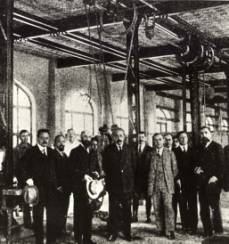
Technion founding father Prof. Albert Einstein at Technion.
The Brainstormer
“What is important are the many e-mails I receive from grateful patients helped by Rasagiline.” Prof. Moussa Youdim
It was his father’s struggle with deep depression over business troubles in 1957 that changed the course of Prof. Moussa Youdim’s life, from studying medicine to going into pharmacology. He sought a more refined, and merciful understanding of brain chemistry that would help bring treatment and relief to millions.
Prof. Youdim is today internationally renowned for his brain research and drug development in depressive illness and Parkinson’s and Alzheimer’s diseases. He has established the importance of monoamine oxidase and brain iron metabolism for brain function that can lead to cognitive impairments and neurodegenerative diseases.
Where internet began.
“They unequivocally bear the stamp of the present century.” BBVA Foundation President, Francisco Gonzále, at the Frontiers of Knowledge Awards, 2009.
The Lempel-Ziv algorithm – the mathematical formula for compressing vast amounts of information – is the thought power that enabled the high-tech communications revolution of our generation.
From the birth of the internet, through to the global broadcasting of live images from Mars, we are indebted to the science behind compression and decompression made possible by the legendary Technion algorithm in 1983.
Tiberius-born Prof. Jacob Ziv and Poland-born Prof. Abraham Lempel changed the direction of mankind by bringing the best compression ratio ever. This became the standard utility in unix systems, the gif image format, tiff, pdf and adobe acrobat software.
Generations of Technion graduates mentored by the two pioneering professors, adopted not only the knowledge, but also the spirit of innovation, empowering the high-tech revolution, in Israel and across the globe.
Light Man 2020
“Technion is the place I chose to do this research.” Distinguished Prof. Moti Segev
What is light? How is it composed? How to unravel the secrets of a soliton – a single wave packet of light? What wonders of technology and science can be achieved when we master its power?
Distinguished Prof.Mordechai (Moti) Segev was raised in Haifa to a poor immigrant family of shoemakers. But little Moti had a secret – the secret of what happens when you excel beyond all frontiers.
Years later – as the first Israeli to be offered a tenured position in Princeton in 1998 – Segev chose to return to Technion and to create there a focus of optics research alluring excellent students and faculty from across the world. Some proofs of his global success include the world’s first observation of 2D lattice solitons, and the first experimental demonstration of Anderson localization in a disordered periodic system.
A Matter of Class
“If you believe in your research then fight for it. Fight for the truth.” Distinguished Prof. Dan Shechtman.
Since 1912, matter – the miracle of everything in our world – was defined by scientists with a strict paradigm: crystals are ordered and periodic – with no exception. That was before Israeli-born Distinguished Prof. Dan Shechtman reached for the electron microsope in 1982 – the year humanity’s perception of matter was changed forever.
Shechtman broke all the rules when he revealed a new class of matter – “Shechtmanite” – crystals with 5-fold rotation symmetry. “I was alone. I was ridiculed by my colleagues and my peers,” tells Shechtman, who stood by his revolutionary research into quasi-periodic crystals despite the disgrace it brought him among international scientists.
The new strength of material made available through quasi-periodic crystals has today converted the world, opening a range of applications in super-strong steel – especially where it contacts the human body, such as in surgical equipment.
Multi-tasking Stem Cells
“Everyone knows about the Technion…” Prof. Shulamit Levenberg
One of seven sisters in a religious family, no-one could foresee that Prof. Shulamit Levenberg would change the course of global science. Yet, when she revealed a breakthrough process to create living human tissue in the lab – she opened a new dimension of promise in medical research – that could eventually culminate in a medical ability to cultivate and replace damaged organs in the body.
Prof. Levenberg conducts interdisciplinary research in the subjects of tissue engineering from human embryonic stem cells using biodegradable polymers. She is recognized as a world leader in the field. Her research proved that it is possible to create complex muscle tissue including blood vessels (as well as beating heart muscle) in a laboratory. She has been named among the world’s top 50 science leaders by the prestigious magazine Scientific American.
The Imagineer
“Technion is a holistic experience.” Technion Alum Shai Agassi
Proud Technion alum Shai Agassi wants to put you behind the wheel of an electric car — but he doesn’t want you to sacrifice convenience (or cash) to do it.
When horrific climate-change scenarios elicit little but endless chatter from governments and entrenched special interests, the difference between talk and action represent an embarrassing gulf. Meet exemplary Technion alum Shai Agassi, who has stepped fearlessly into that gap. His approach to solving the puzzle of electric automobiles could spark nothing short of an automotive revolution.
Agassi stunned the software industry in 2007 by resigning from SAP to focus on his vision for breaking the world’s fossil-fuel habit, through his global start-up Project Better Place. Recently he signed up to make San Francisco the EV capital of the US – with a revolutionary switchable battery electric taxi program.
The Kiss of Life
“Mentorship is as important as science.” Nobel Laureate Avram Hershko
Ubiquitin: so called, because it is a protein present in all living cells. No-one knew why it was there, and no-one dared to wonder: it was just boring – “ubiquitous”.
But no living secrets are untouched by Technion scientists. Throughout the ‘70s and ‘80s, Distinguished Professors Avram Hershko and Aaron Ciechanover unveiled the mysteries of the ubiquitin system, revealing the masterkeys of human health. The ubiquitous protein ubiquitin, they showed, is the key factor in deciding when and how a cell should regenerate. Imbalance in ubiquitin reveals itself in some of the world’s most incurable afflictions – such as cancer and neuro-degenerative disorders.
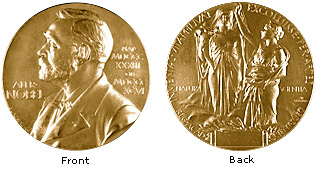
By 2004, the Technion research was already revolutionizing medical understanding and opening the way to innovative cures and treatments. No wonder that, in that year, the two Technion Professors became Israel’s first Nobel Laureates in science.
Sniffing Out Cancer
“I am where I feel that I contribute the most.” Dr. Hossam Haick
When Dr. Hossam Haick was studying for his doctorate, a friend of his was diagnosed with leukemia. “It was very painful for me. I saw his suffering. That was the first time I began to think about diagnosing cancer by means of oxygenating substances that are excreted in a photocatalytic procedure (accelerated by light ) and come into contact with cancer cells. Nazareth-born Haick has since amazed the world with an ingenious system for detecting cancer via breath tests.
Haick’s patented “electronic nose” promises to detect several types of cancer in their early stages. His goal is to detect cancer early enough to give the human body a better chance of beating the disease.
9/11 Never again
“At critical moments in an emergency, there is no time.” Security expert Prof. Avi Kirschenbaum.
A decate later and the trauma is fresh. And the global threat is still there. Post 9/11, everyone wants to know they are safe on a plane.
High-tech security innovation has always been quietly high on the scientific agenda of Israel’s top institute of technology, but recently world headlines showed another aspect of Technion expertise – people management in a crisis.
“At critical moments in an emergency, there is no time to consult a supervisor or read the manual,” says Prof. Avi Kirschenbaum, whose decades of expertise in home-front security recently won his team a $5 million grant by the European Union to ensure airport against hostile threats. “In order to prevent disasters and deal with them properly, we have to ensure that all the teams, and not just security teams, will be trained and highly motivated.”
Upwardly Motile
“For interdisciplinary science, Technion is an excellent place.” Prof. Kinneret Keren
Named one of the 100 top young innovators by MIT’s Technology Review Magazine, Dr. Kinneret Keren is researching nature’s genius in self-assembly. On one hand this can be used in the creation of nano-scale electronics; on the other, it brings a wealth of understanding to medical science – understanding a cell’s motility – or how it moves through space and time can provide the master-keys for healing such diseases as cancer or heart disease.
Keren integrates physics and cell biology in her research, moving between real and artificial cells. “The biophysical aspects of cell biology have been neglected in many areas,” she explains: “Basic cellular processes are highly relevant to understanding normal processes and diseases, for example, understanding how and why cells move faster brings a chance to better understand how cancer spreads.”
Think Global
Think Technion

“Israel can win the battle for survival only by developing expert knowledge in technology.”
Prof. Albert Einstein (President of the first Technion Society)
“Technion has a great contribution to make to Israel’s future prosperity, and Israel’s prosperity cannot but be of great benefit to other countries, as well.”
Winston Churchill (The late Prime Minister of Great Britain)
“You – the people of the Technion – have led the way in technology, science and engineering.”
Yitzhak Rabin (The late Prime Minister of Israel)
“The Technion has been a beacon of learning in our region.”
The late King Hussein of Jordan
And no-one should ignore the most amazing part of Technion….
THE STUDENTS!
Technion & Intel’s ‘Sandy Bridge’ Chip Revolution.
“The Haifa development center would not exist without the excellent human capital provided by Technion.”
“Sandy Bridge is revolutionary – it is the biggest step change in Intel . . . it will be a cornerstone of computer revolution…”
Sandy Bridge, formerly Gesher, (Insiders clue: “Gesher” is Hebrew for “Bridge”) is the codename for the processor microarchitecture developed by Intel as the successor to Nehalem. Based on the 32 nm process, development began in 2005 at Intel’s Israel Development Center (IDC) in Haifa.
Processors based on this architecture are marketed as the second generation of Core i processors and were announced on January 3, 2011. Mainstream processors became available on January 9, 2011.
Intel’s revolutionary ‘Sandy Bridge’ microprocessor recently generated great excitement in the digital world following its release at the Consumer Electronics Show (CES) in January in Las Vegas, reports Israel21C. The new chip is also a source of pride for Israeli engineers as it was developed at Intel’s R&D facility in Haifa, by Technion graduates.
.
“Sandy Bridge is revolutionary – it is the biggest step change in Intel . . . it will be a cornerstone of computer revolution,” said Shmuel “Mooly” Eden, vice president and general manager of the PC Client Group at Intel. “The new Second Generation Intel Core processors represent the biggest advance in computing performance and capabilities over any other previous generation.”
Speaking to reporters in Las Vegas, Eden, who is one of the leaders of Intel’s Israeli operation, said that ‘Sandy Bridge’ is 69 percent faster than older Intel chips. Intel chief executive officer Paul Otellini told reporters that the new processor is the first 32 nanometer-based chip in the industry. The microprocessor also features 3-D graphics and media engine capabilities. Otellini said that translates to higher performance, reduced power consumption for better battery life, and lower manufacturing costs.
Intel was established in Santa Clara, California, in 1968 by semiconductor pioneers Gordon Moore and Robert Noyce. In 1971, they released the microprocessor that would change the world. Intel set up its Israel center in 1974 – the multinational’s first outside the United States. Established by Technion graduate Dov Frohman, the center pioneered VLSI in Israel. Very-large-scale integration is the process of creating integrated circuits by combining thousands of transistor-based circuits into a single chip.
Yossi Schenkler, General Manager, Intel Israel Design Center, who holds two degrees from the Technion’s Faculty of Electrical Engineering, sees Technion as “Home.” He stated that the Haifa location was chosen due to the Technion, and that Technion is the primary source for Intel’s success here. “We are the leading center in microprocessor design in the world,” says Schenkler. “The Haifa development center would not exist without the excellent human capital provided by Technion. Here in Haifa, with Technion recruits, we have designed the most complex chip available.”
Prof. Uri Weiser spent 18-plus years at Intel, reaching the prestigious rank of Intel Fellow. Back at the Faculty of Electrical Engineering where he is now a Visiting Scientist, he discussed the symbiotic relationship between Technion and Intel. Technion trains engineers for Intel worldwide, and Intel creates a research environment at Technion, as well as providing grants, labs and directions for research into new technologies.

(l-r) Technion alumnus Yossi Schenkler, General
Manager, Intel Israel Design Center, presents then
Technion President, Prof. Yitzhak Apeloig, with
the Intel Emblem
http://www.israel21c.org/201101068703/briefs/israeli-made-intel-sandy-bridge-chip-all-the-hype
http://www.focus.technion.ac.il/Feb10/innovationStory3.htm
World-Class Hydrology: Jacob Bear Honored by American Geophysical Union
Jacob Bear Receives 2010 Robert E. Horton Medal
Jacob Bear was awarded the 2010 Robert E. Horton Medal at the AGU Fall Meeting Honors Ceremony, held on 15 December 2010 in San Francisco, Calif. The medal is for “outstanding contributions to hydrology.”
“Jacob lists a lifetime of unique accomplishments, and his influence on the field is unparalleled”

Citation
It is a pleasure and an honor to introduce Jacob Bear, professor emeritus at the Technion–Israel Institute of Technology, as the 2010 Robert E. Horton medalist. Jacob has had a prime influence on the hydrological sciences and on virtually every scientist who has studied hydrogeology during the past 40 years.
Jacob lists a lifetime of unique accomplishments, and his influence on the field is unparalleled. Jacob has made pioneering, diverse contributions to basic and applied scientific aspects of groundwater hydrology. He began his career in the 1960s acutely concerned by the paucity of tools for quantitative modeling and by the huge gaps in fundamental understanding of the physics of flow and transport in porous media. Jacob has devoted his career to remedying this situation by working to combine basic physical principles, mathematical analysis, and practical applications to produce a coherent and systematic methodology for formulating and quantifying problems in subsurface hydrology. The impact of Jacob’s work has so significantly influenced the field, in so many ways, that it is difficult to enumerate them.
Jacob has had an immeasurable impact through his books, which remain key reference sources to this day. His first book, Physical Principles of Water Percolation and Seepage, in 1968 with S. Irmay and D. Zaslavsky, introduced a comprehensive approach based on mathematical modeling and included among many subjects both saturated and unsaturated (multiphase) flow and solute transport in porous media. This was the beginning of Jacob’s implementation of his concept of “transport phenomena in porous media” as opposed to “movement of water in aquifers.” Indeed, in 1967 and 1969 Jacob organized two international symposia that brought together scientists from many disciplines—hydrologists, soil physicists, reservoir engineers—who had not been communicating previously. As an outgrowth, Jacob’s later books, particularly the 1972 Dynamics of Fluids in Porous Media (which has since been reissued by Dover and has more than 8000 citations), have had a huge impact on the field, and virtually every student and researcher in hydrogeology has studied from Dynamics or referred to it on some occasion. This book changed both theory and practice on a global level. Jacob has also mentored a long list of outstanding young researchers and practicing engineers throughout North America, Europe, and Asia.
Jacob has made benchmark research contributions, notably, to the theory of volume averaging, to quantification of dispersion in solute transport, and to modeling of seawater intrusion (combined with management of coastal aquifers). The latter work dictated management of the coastal aquifer of Israel from the early 1960s and has led to practical improvements in exploitation of coastal aquifers around the world.
As a consequence, Jacob has fundamentally influenced the thinking of at least two generations of hydrologists. Jacob’s conceptual thinking and quantitative approaches have revolutionized the field of groundwater hydrology. Quite simply, Jacob Bear is a legend in his own time. Jacob Bear is a credit to AGU, richly deserving of this highest distinction for outstanding contributions to the geophysical aspects of hydrology.
—BRIAN BERKOWITZ, Weizmann Institute of Science, Rehovot, Israel
“I cannot close without thanking my many students who helped me, sometimes pushed me, to move ahead, eventually reaching this point.”
Response
I would like to begin by expressing my thanks to those who nominated me for this prestigious award, to those who supported the nomination, to those who selected me, and to Brian Berkowitz for his warm citation.
Many of you, who know me mainly from my books, have no doubt noticed that I am working in two, albeit interconnected, directions: groundwater hydrology and modeling phenomena of transport in porous media. Knowledge of the latter is essential for the former. In addition, this knowledge constitutes the basis for many other engineering disciplines, like geochemistry, petroleum reservoir engineering, chemical engineering, and biomedical engineering. Common to these disciplines is the fact that phenomena of transport of mass, momentum, and energy occur in the special multiphase domain called “porous medium.” The starting point is the use of a magnifying glass to observe and understand what happens at points within the phases and on interphase boundaries and then, by employing homogenization of one kind or another, obtain mathematical models that describe these phenomena in terms of measurable quantities in a domain regarded as a continuum.
An exciting aspect of this area is that it is interdisciplinary. It requires knowledge (and cooperation with experts) in physics, chemistry, continuum mechanics, thermodynamics, and more. All of this knowledge is used to solve societal problems of water resources, energy, and the environment.
Traditionally, groundwater hydrologists have been dealing with extracting groundwater from aquifers while ensuring good quality water and aquifer sustainability. Nowadays, geologists, geochemists, hydrologists, and reservoir engineers join forces to solve environmental problems. An example is carbon dioxide sequestration in deep geological formations, often saturated with brines. Currently, a lot of research and implementation activities are taking place on this exciting subject around the world.
Altogether, I feel lucky to work in the field of hydrology, in which I can combine theory and application, research, and teaching around the world and cooperate with colleagues of many disciplines in contributing to the solution of societal problems—ensuring a sufficient quantity of clean water to the population and ensuring a clean environment.
I cannot close without thanking my many students who helped me, sometimes pushed me, to move ahead, eventually reaching this point.
Finally, I would like to thank my wife, Siona, and my children and grandchildren for being patient when I have been spending with them much less time than they deserve.
Thank you.
Thank you.
—JACOB BEAR, Technion-Israel Institute of Technology, Haifa
Solar Balloons ~ Technion Architecture + Aerospace = Energy Innovation

Technion graduate Dr. Joseph Cory is floating an intriguing idea: small lightweight balloons with a thin coating of photovoltaic cells.
The balloons are tethered to the ground via one line to send helium up and another to pass the gathered solar power down. One or two of these floating disks might meet a household’s complete electric needs, while larger buildings or municipal facilities could float numerous vertical cables with balloons stacked every few feet.
Cory and Technion aerospace engineering research partner Dr. Pini Gurfil of the Asher Space Research Institute (ASRI) also envision bringing much-needed power to impoverished regions far from power lines.
“They have no negative effect on the environment at all,” says Cory, a professional architect. Prototypes of various sizes are now being tested. Two models have been constructed – one in the city of Haifa and one in the desert. The balloons are expected to overcome surface area issues such as in cities and crowded countries where large solar cell panels are not feasible.
