Tag Archives: science

Technion Harvey Prize, 2011

Technion’s 2010 Harvey Prize 

“The two brilliant men of science we honor today epitomize the same spirit which is honored by the Harvey Prize.  Each, in his own field, has made ground-breaking discoveries and has reached the peaks of scientific excellence.”
President Peretz Lavie

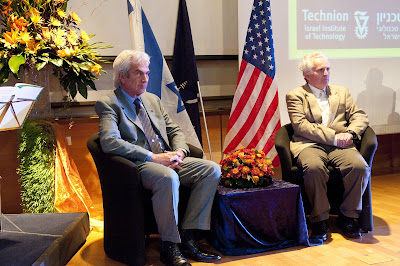
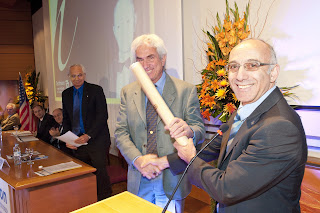
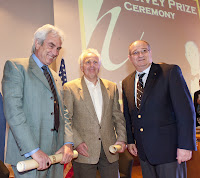
Prof. Michael Karin and Prof. Alexander Polyakov, Harvey Prize 2010 Laureates, with Technion President Prof. Peretz Lavie


Prof. Michael Karin and Prof. Alexander Polyakov are the winners of the Technion’s 2010 Harvey Prize. The festive ceremony took place on March 15th, 2011.


“The road to discovery is not an easy one,” said Technion President Prof. Peretz Lavie.  “It is time-consuming and at times can come at great personal and professional costs.  However, discovery is the engine which drives the human race.  Without it, we would not be able to survive.  Furthermore, it is the greatest and most wondrous feat of our nature.”  


Prof. Karin, from the University of California, San Diego, received the prize in the field of human health. He discovered the strong link between obesity, inflammation and cancer. The judges decided to award the prize to Prof. Karin for “his pioneering contribution that led to deciphering the molecular mechanism through which mammalian cells react to cytokines which cause inflammation, to adverse environmental conditions and also to various pathogens. His research laid the foundations for our understanding of the control mechanisms of transcription factor activities influenced by external stimulations, especially the transcription factors of the AP-1 family and NF-B. These discoveries led to the identification of new target protein cells that have recently been used to develop new medications for preventing and treating various malignant tumors.”


Prof. Polyakov, from Princeton University, received the prize in the field of science and technology. “He developed revolutionary theories that shaped our contemporary understanding of elementary particles in nature. In addition, he significantly contributed to condensed matter physics, statistical mechanics and mathematics. Among the ideas credited to him are topological structures (such as magnetic monopoles) in gauge field theories, which are important in understanding the confinement of quarks in the nucleus. Polyakov also contributed to the foundations of string theory, the unification of quantum mechanics and gravity, and to the idea of duality between string theory and gauge field theory.”


The Technion’s prestigious Harvey Prize foresaw the winning of the Nobel Prize for two of the latest Nobel laureates – Elizabeth Blackburn (Medicine) and Ada Yonath of the Weizmann Institute of Science (Chemistry). To date, 13 Harvey Prize winners have gone on to win the Nobel Prize.


The Harvey Prize was first awarded in 1972 from a fund established by the late Leo M. Harvey of Los Angeles in order to recognize those who have made great contributions to advancing humanity in science and technology and in human health, as well as advancing peace in the Middle East. Every year, prizes totaling $75,000 per winner are awarded from the fund’s income.


Among the winners of the prestigious Harvey Prize are scientists from the US, Great Britain, Russia, Sweden, France and Israel. These include Nobel Prize laureate Mikhail Gorbachev, former leader of the USSR, who was awarded the prize for his activities aimed at reducing regional tensions; Prof. Bert Sakmann who won the Nobel Prize in Medicine; Prof. Pierre-Gilles de Gennes who won the Nobel Prize in Physics; Prof. Edward Teller for his discoveries in solid state physics, atomic physics and nuclear physics; and Prof. William J. Kolff for his invention of the artificial kidney.


Proposals for candidates for the Harvey Prize are received from leading scientists and personalities in Israel and the world. The prize laureates are chosen by the Harvey Prize committee in a stringent process at the Technion.

Prof. Karin (left) and Prof. Polyakov (right)


Description: Description: Description: TechnionLive - Technion’s e-newsletter Description: Description: Description: Technion Live on FaceBook Description: Description: Description: Technion’s YouTube Channel Description: Description: Description: Subscribe to RSS News Feeds
   

F.I.R.S.T. Robotics Competition ~ Technion


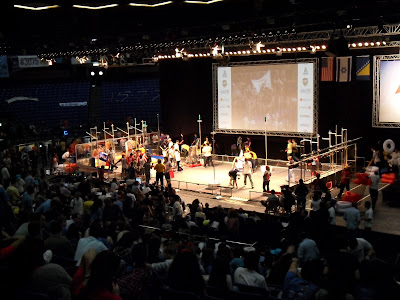
FIRST 2011 competition

The Nokia Arena, Tel aviv, 15-16th March 2011: 48 groups of students from Israel, a group from California and a group from Bosnia and Herzegovina participated in the finals of the seventh season of FIRST competitions – titled Logo Motion.

The FIRST competition has been active in Israel since 2005, integrating about 3000 children and youth from across the country. This unique competition combines the excitement from the world of sports with the challenge for science and technology. The competition challenges participants to demonstrate excellence in design, team spirit, professionalism, maturity and problem-solving.

Technion has been involved with the competitions since they began in Israel ~ transferring funds through Technion Societies and the National Center for Robotics Center at the Faculty of Mechanical Engineering.

Beyond inspiring and motivating generations of future scientists and engineers,  FIRST creates interaction and dialog between participants from all walks of Israeli life.


To read about the kind of things these kids get up to when they’re older, check Israel21C’s Surgery? Border patrol? Israeli robots can do that.


Technion Graduate from Japan Talks of “Nightmare”

Technion graduate of Physics Shumon Mori spent five “wonderful” years at Technion before returning to Japan. “I was 18 when I decided to study at Technion,” says Mori. “I learned about Technion for the first time over Internet and I noticed that Technion is one of the best institutes of technology in the world. Of course, I had fears of leaving my home country but my strong will to living in Israel enabled me to overcome these fears.”

In the aftermath of the terrible earthquake, tsunami and nuclear crisis unfolding in Japan this month, Technion reached out to find out how Mori, one of many graduates from Japan is doing.

“Thanks for your care,” said Mori, “Your consideration from Technion keeps us strong. Myself, my family and colleagues are fine. But the damage to the North of Japan is like a nightmare. It is unbelievable. We, and all Japanese are trying to be strong to overcome this crisis.”

“In Japan, nature has shown us how truly powerful it is, unfortunately, with devastating effects,” said Technion President Prof. Peretz Lavie, at the Technion’s Harvey Prize Ceremony. “I send my sincere hopes that recovery will come swiftly and as painlessly as possible.”

“When I studied at Technion, everyone asked me “Shumon, B’seder? Tzarich Ezra? (Are you O.K? Do you need help?) They constantly encouraged me. Without this kind of help, I wouldn’t have succeeded in graduating from Technion. I know that the Israeli people want to help somebody who is having difficulty.


A poem from Dr. Ada Aharoni, a retired Senior Lecturer from the Technion, and the Founder – President of IFLAC.

CHERRY BLOSSOMS WILL BLOOM AGAIN IN JAPAN

By Ada Aharoni (20 March 2010)

My dear Japanese friends
Cherry Blossoms will soon
Bloom again
In Japan
After the cruel horrific earthquake
Followed by the overwhelmingly
Savage tsunami
Pouncing on you with its deathly claws
In the midst of your lives –
Now comes the nightmare of
Creeping radiation
And horrendous deathly plutonium leaks
May it indeed only be a passing nightmare –
May the ultimate radiation red-light danger
Only be a fleeting dark nightmare –
May you wake up my friends to a bright
And healthy new day
Full of energy to rebuild
Your beautiful world again
Poor wounded Japan
I want to bandage your wounds
With Cherry Blossoms.

Smart Power Choices

“With global warming, even the cool European countries may become concerned with the warmer summers. They could learn from knowledge we develop in Israel.”

Interview by Amanda Jaffe-Katz, Technion FOCUS

Smart energy solutions means saving money and smart lighting and cooling can reduce indoor energy consumption, according to GTEP scientists: it doesn’t cost more to be energy smart, and eventually it will cost less. The sustainable choice is in our hands. “There is always a conflict between initial costs and the end saving,” says Prof. Rachel Becker‘s at the Faculty of Civil and Environmental Engineering. “When the smart systems are used more, then the initial costs will drop too.”
Prof. Rachel Becker with a sample of phase
change materials (PCM) that function as
energy buffers in building infrastructure
and furniture

Prof. Rachel Becker‘s research at the Faculty of Civil and Environmental Engineering and National Building Research Institute leads her to energy-efficient buildings. She is researching methods to improve the energy performance of buildings, enhance thermal and visual comfort, and ensure indoor air quality.

“Optimal energy consumption in buildings is something we have been researching at Technion for more than 30 years,” says Becker. “We are researching the behavior of buildings under summer conditions with an emphasis on reducing “cooling” energy demand. With global warming, even the cool European countries may become concerned with the warmer summers. They could learn from knowledge we develop in Israel.”

Modern urban buildings – particularly in densely populated countries like Israel – are taller, and for speedy construction, light industrialized components are used. Moreover, to gain architectural flexibility, internal partitions are lightweight, false ceilings hide electromechanic systems, and in some cases raised floors are installed. All these result in very little internal thermal mass. An alternative strategy for reducing cooling energy and peak loads is paramount,

Before air-conditioning was widespread, we resigned ourselves to suffer the heat. “Our research premise is that it is necessary to balance between the strategies for improving building performance under heating and cooling conditions, and that we should take a more holistic approach regarding all the seasons. We emphasize an integration of different means for the summer and winter periods,” says Becker.

In 1995, Becker and colleagues published research on night ventilation as a low-energy strategy for cooling the thermal mass of buildings in order to improve thermal comfort next morning, conserve cooling energy, and reduce peak cooling loads. The internal thermal mass of office or school buildings heats up considerably during the daytime, due to people and activity that emit heat. The aim is twofold: to lower peak energy demand and to reduce total energy consumption used for cooling by up to 50 percent. The most effective way to do this is to design the buildings with means for natural ventilation at night.

Smart energy choices in home-building can cost less, not more.

“In recent years, the industry has developed building materials and products that include phase change materials (PCM) that function as energy buffers according to a simple physical principle. With PCM, heat storage and release are gained through change of phase: during the day it absorbs heat from the internal heat sources and melts, and during the night it releases the heat and changes from liquid back to solid. The latter process can be effective only if extensive night ventilation takes place. The advantage is that, with a sufficient amount of PCM, a constant temperature can be maintained throughout the entire cyclic process,” Becker says. “One can plan buildings that contain PCMs or add them to existing structures behind thin wall coverings. Even furniture can be made using PCMs.“

Regarding the relationship between energy savings and indoor air quality, according to Becker, there is a gross misconception: “Air conditioning systems do provide proper-quality, clean air,” she says. However, the air handling systems are designed for the worst case and not for continuous energy-saving. Amit Gitterman, who is Becker’s and Dr Raphael Linker’s PhD student working towards candidacy, is looking at optimal automatic dynamic control to bridge between the conflicting demands for continuous indoor air quality and energy conservation.

Another energy-saving device concerns lighting control. Current practice does not take into consideration the quantity of natural light that penetrates the building, resulting in superfluous artificial lighting. A smart system that incorporates occupancy sensors, automatic dimmers, and proper design of the electrical lighting system, can achieve up to 80 percent energy saving of the electricity spent on daytime lighting in classrooms and in offices that have external windows. This does not work for internal rooms or open-space offices, Becker says.

Appropriate shading and smart glazing are additional considerations. To allow day-lighting, window glazing should not be tinted dark, but should comprise what is known as a low-e (low emissivity) coating. The glazing should have selective features that reduce solar radiation in summer but allow natural light during the entire year. It is more costly than regular double glazing, but can save a great deal of energy consumption and is suitable for windows facing in any direction. Furthermore, windows facing north, south, east and west should be of different size to maximize daylight and optimize between winter positive and summer negative heat gains. Glass-faced curtain-walls act as solar collectors. Becker says, “What works just fine in a Chicago skyscraper is not suitable for our hot country.”

Technion Book of Faces

A Technion Book of Faces

In 2012, Technion celebrates 100 years since the laying of its 1st cornerstone.

This century has seen many miracles – the miraculous birth of Israel as a nation; the awesome transformation of our world into a global village where technology and science bring the keys to the future of health, communication, the environment, energy, security and global communion.

From 1912, until today, Technion – Israel Institute of Technology, has been part of this miracle.

Within every nation, there are citizens that have lived the story of its suffering and its success. Behind every scientific and high-tech innovation there is a scientist with a story. Within the mind of each scientist there are sparks of curiosity and inspiration – the inspiration behind the Start-up Nation.

Here are just some of the living stories of innovation, human integrity and achievement from Technion ~ Israel Institute of Technology.

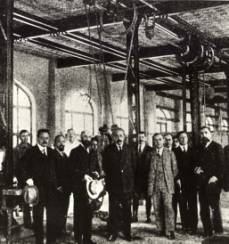
Technion founding father Prof. Albert Einstein at Technion.


The Brainstormer

“What is important are the many e-mails I receive from grateful patients helped by Rasagiline.” Prof. Moussa Youdim


It was his father’s struggle with deep depression over business troubles in 1957 that changed the course of Prof. Moussa Youdim’s life, from studying medicine to going into pharmacology. He sought a more refined, and merciful understanding of brain chemistry that would help bring treatment and relief to millions.
Prof. Youdim is today internationally renowned for his brain research and drug development in depressive illness and Parkinson’s and Alzheimer’s diseases. He has established the importance of monoamine oxidase and brain iron metabolism for brain function that can lead to cognitive impairments and neurodegenerative diseases.


Where internet began.

“They unequivocally bear the stamp of the present century.” BBVA Foundation President, Francisco Gonzále, at the Frontiers of Knowledge Awards, 2009.

The Lempel-Ziv algorithm – the mathematical formula for compressing vast amounts of information – is the thought power that enabled the high-tech communications revolution of our generation.
From the birth of the internet, through to the global broadcasting of live images from Mars, we are indebted to the science behind compression and decompression made possible by the legendary Technion algorithm in 1983.
Tiberius-born Prof. Jacob Ziv and Poland-born Prof. Abraham Lempel changed the direction of mankind by bringing the best compression ratio ever. This became the standard utility in unix systems, the gif image format, tiff, pdf and adobe acrobat software.
Generations of Technion graduates mentored by the two pioneering professors, adopted not only the knowledge, but also the spirit of innovation, empowering the high-tech revolution, in Israel and across the globe.


Light Man 2020

“Technion is the place I chose to do this research.” Distinguished Prof. Moti Segev

What is light? How is it composed? How to unravel the secrets of a soliton – a single wave packet of light? What wonders of technology and science can be achieved when we master its power?
Distinguished Prof.Mordechai (Moti) Segev was raised in Haifa to a poor immigrant family of shoemakers. But little Moti had a secret – the secret of what happens when you excel beyond all frontiers.
Years later – as the first Israeli to be offered a tenured position in Princeton in 1998 – Segev chose to return to Technion and to create there a focus of optics research alluring excellent students and faculty from across the world. Some proofs of his global success include  the world’s first observation of 2D lattice solitons, and the first experimental demonstration of Anderson localization in a disordered periodic system.


A Matter of Class

“If you believe in your research then fight for it. Fight for the truth.” Distinguished Prof. Dan Shechtman.

Since 1912, matter – the miracle of everything in our world – was defined by scientists with a strict paradigm: crystals are ordered and periodic  – with no exception. That was before Israeli-born Distinguished Prof. Dan Shechtman reached for the electron microsope in 1982 – the year humanity’s perception of matter was changed forever.
Shechtman broke all the rules when he revealed a new class of matter – “Shechtmanite” – crystals with 5-fold rotation symmetry. “I was alone. I was ridiculed by my colleagues and my peers,” tells Shechtman, who stood by his revolutionary research into quasi-periodic crystals despite the disgrace it brought him among international scientists.
The new strength of material made available through quasi-periodic crystals has today converted the world,  opening a range of applications in super-strong steel – especially where it contacts the human body, such as in surgical equipment.


Multi-tasking Stem Cells

“Everyone knows about the Technion…” Prof. Shulamit Levenberg

One of seven sisters in a religious family, no-one could foresee that Prof. Shulamit Levenberg would change the course of global science. Yet, when she revealed a breakthrough process to create living human tissue in the lab – she opened a new dimension of promise in medical research – that could eventually culminate in a medical ability to cultivate and replace damaged organs in the body.

Prof. Levenberg conducts interdisciplinary research in the subjects of tissue engineering from human embryonic stem cells using biodegradable polymers. She is recognized as a world leader in the field. Her research proved that it is possible to create complex muscle tissue including blood vessels (as well as beating heart muscle) in a laboratory. She has been named among the world’s top 50 science leaders by the prestigious magazine Scientific American.


The Imagineer

“Technion is a holistic experience.” Technion Alum Shai Agassi

Proud Technion alum Shai Agassi wants to put you behind the wheel of an electric car — but he doesn’t want you to sacrifice convenience (or cash) to do it.
When horrific climate-change scenarios elicit little but endless chatter from governments and entrenched special interests, the difference between talk and action represent an embarrassing gulf. Meet exemplary Technion alum Shai Agassi, who has stepped fearlessly into that gap. His approach to solving the puzzle of electric automobiles could spark nothing short of an automotive revolution.
Agassi stunned the software industry in 2007 by resigning from SAP to focus on his vision for breaking the world’s fossil-fuel habit, through his global start-up Project Better Place. Recently he signed up to make San Francisco the EV capital of the US – with a revolutionary switchable battery electric taxi program.


The Kiss of Life

“Mentorship is as important as science.” Nobel Laureate Avram Hershko


Ubiquitin: so called, because it is a protein present in all living cells. No-one knew why it was there, and no-one dared to wonder: it was just boring – “ubiquitous”.
But no living secrets are untouched by Technion scientists. Throughout the ‘70s and ‘80s, Distinguished Professors Avram Hershko and Aaron Ciechanover unveiled the mysteries of  the ubiquitin system, revealing the masterkeys of human health. The ubiquitous protein ubiquitin, they showed, is the key factor in deciding when and how a cell should regenerate. Imbalance in ubiquitin reveals itself in some of the world’s most incurable afflictions – such as cancer and neuro-degenerative disorders.
By 2004, the Technion research was already revolutionizing medical understanding and opening the way to innovative cures and treatments. No wonder that, in that year, the two Technion Professors became Israel’s first Nobel Laureates in science.


Sniffing Out Cancer

“I am where I feel that I contribute the most.” Dr. Hossam Haick


When Dr. Hossam Haick was studying for his doctorate, a friend of his was diagnosed with leukemia. “It was very painful for me. I saw his suffering. That was the first time I began to think about diagnosing cancer by means of oxygenating substances that are excreted in a photocatalytic procedure (accelerated by light ) and come into contact with cancer cells. Nazareth-born Haick has since amazed the world with an ingenious system for detecting cancer via breath tests.
Haick’s patented “electronic nose” promises to detect several types of cancer in their early stages. His goal is to detect cancer early enough  to give the human body a better chance of beating the disease.


9/11 Never again

“At critical moments in an emergency, there is no time.” Security expert Prof. Avi Kirschenbaum.

A decate later and the trauma is fresh. And the global threat is still there. Post 9/11, everyone wants to know they are safe on a plane.  
High-tech security innovation has always been quietly high on the scientific agenda of Israel’s top institute of technology, but recently world headlines showed another aspect of Technion expertise – people management in a crisis.
“At critical moments in an emergency, there is no time to consult a supervisor or read the manual,” says Prof. Avi Kirschenbaum, whose decades of expertise in home-front security recently won his team a $5 million grant by the European Union to ensure airport against hostile threats. “In order to prevent disasters and deal with them properly, we have to ensure that all the teams, and not just security teams, will be trained and highly motivated.”


Upwardly Motile

“For interdisciplinary science, Technion is an excellent place.”  Prof. Kinneret Keren

Named one of the 100 top young innovators by MIT’s Technology Review Magazine, Dr. Kinneret Keren is researching nature’s genius in self-assembly. On one hand this can be used  in the creation of nano-scale electronics; on the other, it brings a  wealth of understanding to  medical science – understanding  a cell’s motility – or how it  moves through space and time can provide the master-keys for healing such diseases as cancer or heart disease.
Keren integrates physics and cell biology in her research, moving between real and artificial cells. “The biophysical aspects of cell biology have been neglected in many areas,” she explains: “Basic cellular processes are highly relevant to understanding normal processes and diseases, for example, understanding how and why cells move faster brings a chance to better understand how cancer spreads.”


Think Global
Think Technion

“Israel can win the battle for survival only by developing expert knowledge in technology.”
Prof. Albert Einstein (President of the first Technion Society)

“Technion has a great contribution to make to Israel’s future prosperity, and Israel’s prosperity cannot but be of great benefit to other countries, as well.”
Winston Churchill (The late Prime Minister of Great Britain)

“You – the people of the Technion – have led the way in technology, science and engineering.”
Yitzhak Rabin (The late Prime Minister of Israel)

“The Technion has been a beacon of learning in our region.”
The late King Hussein of Jordan

And no-one should ignore the most amazing part of Technion….

THE STUDENTS!

World-Class Hydrology: Jacob Bear Honored by American Geophysical Union

Jacob Bear Receives 2010 Robert E. Horton Medal

Jacob Bear was awarded the 2010 Robert E. Horton Medal at the AGU Fall Meeting Honors Ceremony, held on 15 December 2010 in San Francisco, Calif. The medal is for “outstanding contributions to hydrology.”

“Jacob lists a lifetime of unique accomplishments, and his influence on the field is unparalleled”

Citation

It is a pleasure and an honor to introduce Jacob Bear, professor emeritus at the Technion–Israel Institute of Technology, as the 2010 Robert E. Horton medalist. Jacob has had a prime influence on the hydrological sciences and on virtually every scientist who has studied hydrogeology during the past 40 years.
Jacob lists a lifetime of unique accomplishments, and his influence on the field is unparalleled. Jacob has made pioneering, diverse contributions to basic and applied scientific aspects of groundwater hydrology. He began his career in the 1960s acutely concerned by the paucity of tools for quantitative modeling and by the huge gaps in fundamental understanding of the physics of flow and transport in porous media. Jacob has devoted his career to remedying this situation by working to combine basic physical principles, mathematical analysis, and practical applications to produce a coherent and systematic methodology for formulating and quantifying problems in subsurface hydrology. The impact of Jacob’s work has so significantly influenced the field, in so many ways, that it is difficult to enumerate them.
Jacob has had an immeasurable impact through his books, which remain key reference sources to this day. His first book, Physical Principles of Water Percolation and Seepage, in 1968 with S. Irmay and D. Zaslavsky, introduced a comprehensive approach based on mathematical modeling and included among many subjects both saturated and unsaturated (multiphase) flow and solute transport in porous media. This was the beginning of Jacob’s implementation of his concept of “transport phenomena in porous media” as opposed to “movement of water in aquifers.” Indeed, in 1967 and 1969 Jacob organized two international symposia that brought together scientists from many disciplines—hydrologists, soil physicists, reservoir engineers—who had not been communicating previously. As an outgrowth, Jacob’s later books, particularly the 1972 Dynamics of Fluids in Porous Media (which has since been reissued by Dover and has more than 8000 citations), have had a huge impact on the field, and virtually every student and researcher in hydrogeology has studied from Dynamics or referred to it on some occasion. This book changed both theory and practice on a global level. Jacob has also mentored a long list of outstanding young researchers and practicing engineers throughout North America, Europe, and Asia.
Jacob has made benchmark research contributions, notably, to the theory of volume averaging, to quantification of dispersion in solute transport, and to modeling of seawater intrusion (combined with management of coastal aquifers). The latter work dictated management of the coastal aquifer of Israel from the early 1960s and has led to practical improvements in exploitation of coastal aquifers around the world.
As a consequence, Jacob has fundamentally influenced the thinking of at least two generations of hydrologists. Jacob’s conceptual thinking and quantitative approaches have revolutionized the field of groundwater hydrology. Quite simply, Jacob Bear is a legend in his own time. Jacob Bear is a credit to AGU, richly deserving of this highest distinction for outstanding contributions to the geophysical aspects of hydrology.
—BRIAN BERKOWITZ, Weizmann Institute of Science, Rehovot, Israel

“I cannot close without thanking my many students who helped me, sometimes pushed me, to move ahead, eventually reaching this point.”

Response

I would like to begin by expressing my thanks to those who nominated me for this prestigious award, to those who supported the nomination, to those who selected me, and to Brian Berkowitz for his warm citation.
Many of you, who know me mainly from my books, have no doubt noticed that I am working in two, albeit interconnected, directions: groundwater hydrology and modeling phenomena of transport in porous media. Knowledge of the latter is essential for the former. In addition, this knowledge constitutes the basis for many other engineering disciplines, like geochemistry, petroleum reservoir engineering, chemical engineering, and biomedical engineering. Common to these disciplines is the fact that phenomena of transport of mass, momentum, and energy occur in the special multiphase domain called “porous medium.” The starting point is the use of a magnifying glass to observe and understand what happens at points within the phases and on interphase boundaries and then, by employing homogenization of one kind or another, obtain mathematical models that describe these phenomena in terms of measurable quantities in a domain regarded as a continuum.
An exciting aspect of this area is that it is interdisciplinary. It requires knowledge (and cooperation with experts) in physics, chemistry, continuum mechanics, thermodynamics, and more. All of this knowledge is used to solve societal problems of water resources, energy, and the environment.
Traditionally, groundwater hydrologists have been dealing with extracting groundwater from aquifers while ensuring good quality water and aquifer sustainability. Nowadays, geologists, geochemists, hydrologists, and reservoir engineers join forces to solve environmental problems. An example is carbon dioxide sequestration in deep geological formations, often saturated with brines. Currently, a lot of research and implementation activities are taking place on this exciting subject around the world.
Altogether, I feel lucky to work in the field of hydrology, in which I can combine theory and application, research, and teaching around the world and cooperate with colleagues of many disciplines in contributing to the solution of societal problems—ensuring a sufficient quantity of clean water to the population and ensuring a clean environment.
I cannot close without thanking my many students who helped me, sometimes pushed me, to move ahead, eventually reaching this point.
Finally, I would like to thank my wife, Siona, and my children and grandchildren for being patient when I have been spending with them much less time than they deserve.
Thank you.
—JACOB BEAR, Technion-­Israel Institute of Technology, Haifa

Making armor for the brain (The story of Moussa Youdim)

[Jerusalem Post: 11/13/2010]

Iranian-born Technion pharmacologist Moussa Youdim has worked for decades on drugs for Parkinson’s and Alzheimer’s disease and even ALS. Judy Siegel-Itzkovich interviews him.


PROF. MOUSSA YOUDIM and his wife Fruma. ‘The Nobel


His father’s struggle with deep depression over business troubles in 1957 changed the course of Moussa Youdim’s life, from studying in medical school to going into pharmacology and discovering a cure for that psychiatric disorder. Many patients with Parkinson’s and other diseases are grateful for that shift in the life of this 70-year-old Jew, who as a very active emeritus professor at the Technion-Israel Institute of Technology will next week share with seven others the $1 million EMET Prize for Art, Science and Culture.

The EMET Prize, awarded annually since 2002 for excellence in academic and professional achievements that have far-reaching influence, is sponsored by the A.M.N. Foundation for the Advancement of Science, Art and Culture in Israel, under the auspices of the prime minister. Youdim will receive his prize for brain science in the category of life sciences.

With a surname that comes from the Hebrew word yod’im (know) as his family for over 400 years in Persia were known for their intellectual pursuits, Youdim was given the name Moussa after an official in Teheran’s American Hospital who mistook her for Muslim and told his mother that she must call him Ali. When she protested that she was Jewish, he instructed her to name him Moussa. Since then, even though he is sometimes mistaken for being a Muslim (especially by airport security personnel), he has refused to change it to Moshe.

Warm, outgoing, polite and a man of the world, Youdim holds more than 100 international patents in neuropsychiatric drug development and cardiovascular drugs. He acts as a consultant for several major international pharmaceutical companies, and serves on many national and international scientific and grant-giving committees.

Not only have the contributions of the leading pharmacology researcher been included in many standard text books, but he has published a stupendous 800 scientific articles, edited 45 books, served on the editorial boards of 44 international scientific journals, lectured around the globe and received many national and international awards and several honorary doctorates – most recently the European College of Neuropsychopharmacology LifeTime Achievement Award and election to the Leopoldina Germany Academy of Sciences.

HE GOT used to traveling and managing on his own from a young age. Around his 12th birthday, he was sent to a boarding school in the English city of Brighton, and from there left for Canada to study medicine at McGill University – until his businessman father took sick – when there were no safe medications for depression, Youdim recalls in an interview with The Jerusalem Post. His father was given electroshock treatments in England and felt better, but he had recurrent attacks and was never the same.

Youdim’s mother became the family breadwinner.

In 1960, the only existing antidepressant medication, iproniazid, had been meant for treating tuberculosis, but it was found to make people who took it happier. Yet, it killed some people who took it along with cheese or wine, launching a race to find a safe antidepressant.

After taking courses in bio- and neuro-chemistry, he became enthralled with the idea of understanding how the brain works, and wondered how to fix it. Graduating with a BSc and MSc and then his doctoral degree in biochemistry at McGill’s Allan Memorial Psychiatry Institute, he returned to England for post-graduate work at the University of London and taught at Oxford and at the College de France in Paris.

YOUDIM RECALLED that nearly 40 years ago, he heard a lecture by Holocaust survivor Joseph Knoll about work on an antidepressant called deprenyl. Unfortunately, it wasn’t effective, but it also was not harmful to people who drank wine or ate cheese. A few years later, Youdim and Prof. Peter Reiderer of Austria thought and demonstrated that deprenyl was effective in treating Parkinson’s, the degenerative disorder of the central nervous system that impairs motor skills, cognitive processes and other functions, and whose symptoms include tremor, rigidity and unstable posture, along with cognitive and neurobehavioral problems, dementia and sensory and sleep difficulties.

Deprenyl, later named selegiline in the US, became the first monoamine oxidase B inhibitor for the treatment of Parkinson’s disease. But they found that deprenyl may indeed have side effects; Youdim searched for a deprenyl-like drug that would be more effective. He finally stumbled upon a candidate drug that was in his possession; he developed it into rasagiline (now patented as Azilect and sold by the Israeli company Teva Pharmaceuticals).

Margaret Thatcher’s anti-Socialist tenure as British prime minister annoyed Youdim and other scientists no end – “she was called a ‘milk snatcher’ when she took away free milk supplies for schoolchildren – and though he was happy at Oxford, he became alienated from England.

Simultaneously, Youdim visited Israel (although most of his family ended up in Los Angeles) and was invited to see the Technion’s new medical school, where the dean offered him a job to establish and head a pharmacology department; the only one in Israel then was at the Hebrew University in Jerusalem. “I liked Europe, but I thought Israel would be exciting – and indeed it has been.”

ALTHOUGH ACADEMIC pharmacology is necessary to build the pharmaceutical industry, Israel had few prominent people in the field, and the Weizmann Institute of Science in Rehovot never set up its own pharmacology department because it didn’t regard it as pure but rather applied science. It is ironical that many people at Weizmann now consider themselves drug developers, he adds.

Although he had received enticing offers from the US and Iran, Youdim agreed to come to Haifa to live in 1977. “I had to recruit people for the department and was asked to go to ulpan to learn Hebrew, but I taught in English; I didn’t have the time to learn Hebrew. I was given five years, but I still don’t really speak it,” he admits with some amusement.

He and his first wife had three children – Shai, Tal and Avigail, none of whom went into science – and they later divorced. On a blind date 15 years ago, he met Fruma, a high-school English teacher and mother of two whose Holocaust-survivor parents moved from Austria to Israel when she was two years old. Moussa and Fruma married a decade ago, and – speaking Hebrew like a native and feeling “totally Israeli” – she makes up for his lack of fluency in the language. When not flying around the world together, they live in a penthouse on a hill in Haifa that overlooks much of the city and the sea. After chairing the pharmacology department at the Technion’s Rappaport Faculty of Medicine until 1994, he went on to direct the Technion’s Eve Topf and US National Parkinson Foundation Centers of Excellence for Neurodegenerative Diseases Research and Teaching.

ALTHOUGH HE says he has has never regretted becoming an Israeli, Youdim encountered roadblocks in the bureaucracy and the academic establishment.

“It’s a small country, with one pie, and everybody wants a piece of it. If you didn’t grow up here, you may have difficulty. Politics is important and intertwined with other things.” But, he says, all this can be overcome, and his own success story proves it.

Two years after his arrival, he suggested to Teva – then a small generic medicine producer – that they offer a deal for rasagiline, but officials turned him down. But in 1987, as Teva was beginning to develop original drugs such as Copaxone for multiple sclerosis, Youdim got a call, this time to invite him to establish a unit to work on his Parkinson’s drug along with Technion colleague Prof. John Finberg.

Today, approved by the US Food and Drug Administration, it offers hope to millions of Parkinson’s patients (1.5 million Americans and four million Chinese alone). With annual sales worth $400 million and royalties earned by the Technion and the scientists, Azilect is now being marketed worldwide; it is considered the first neuroprotectivedisease modifying drug for Parkinson’s.

Azilect does not cure the disease, says Youdim, but it has been shown to slow the degenerative process in the brain and has been found in lab studies to actually improve damaged neurons. “The jury is still out. I have nothing to do with clinical studies, but all reports show it helps and has no more side effects than a placebo. There are patients who have been taking it for six or seven years and still benefit from it.”

There are also signs, he says, that a derivative of rasagiline named Cardiamit would help patients suffering from cardiovascular disease, and this is about 20 times more common than Parkinson’s; he has conducted research in this with Technion physiologist Prof. Ofer Binah. This drug is being developed at the Technion’s Alfred Mann Institute.

Asked about implants of electrodes in the brain to alleviate tremors, Youdim says those are not the solution for the large numbers of Parkinson’s patients. A drug is their only hope, as you can’t perform such operations on everyone, he adds.

Youdim has an even bigger target – Alzheimer’s disease. Working with Hebrew University pharmacology Prof. Marta Weinstock-Rosin and Teva, he has developed a new type of drug called Ladostigil (TV 3326), which is now entering Phase II clinical trials in Europe. It integrates rasagiline’s anti-Parkinson benefits with the anti-Alzheimer effects of Weinstock- Rosin’s drug rivastigmine. This is natural, he says, as many Parkinson’s patients also suffer from this dementia disease. The exclusive commercial rights for Ladostigil, which is already the first multi-functional anti-Alzheimer’s drug to reach clinical trials, have been granted to Avraham Pharmaceuticals by the technology transfer arms of the Technion and HU. If everything works out, he believes that Ladostigil will be his second original drug to be put on the market.

Youdim has established the importance of monoamine oxidase and brain iron metabolism for brain function that can lead to cognitive impairments and neurodegenerative diseases. Excessive iron produces oxygen free radicals, which cause degeneration and aging, including brain damage.

Alzheimer’s, he notes, is a very complex, multifactorial disease. “It is not purely neurological; there are probably also some psychiatric aspects, as many patients also have a predisposition to depression.”

More recently he has developed with Prof. Mati Fridkin of Weizmann Institute novel multifunctional iron chelators with monoamine oxidase and cholinesterase inhibitory activity for treatment of amyotrophic lateral sclerosis (ALS or Lou Gehrig disease, a form of which afflicts British theoretical physicist Prof. Stephen Hawking and many others around the world) as well as Lewy Body disease and Type 2 diabetes. “We’ve already published a paper on it, and are working on Huntington’s as well – the familial [genetic] degenerative neurological disease that is even more terrible. I work harder than ever before, even though officially I am retired.” He has been invited twice to Beit Hanassi to see President Shimon Peres, who has asked a group of Israeli neuroscientists to advise him on the establishment of a virtual neuroscience institute linking via Internet a number of research institutions that would collaborate on developing novel approaches to treat neuropsychiatric disorders and benefit the Israeli economy.

As for his native country of Persia, Youdim recalls that in 1978, when he was in Israel, the Shah of Iran invited him to Teheran, decorated Youdim on the monarch’s birthday and gave him a royal medal. “The Soviet Union fell, so fundamentalist Iran could as well. If I were one day invited back, I would visit. It’s a beautiful country.”

Youdim says he hasn’t even asked how much money his share of the EMET Prize will be, but “I don’t care about money; we have enough. I have received so many honors in Israel and abroad that a Nobel Prize is not my goal. There are so many brilliant scientists who have not become Nobel laureates. What is important to me are the many e-mails and phone calls I receive from grateful patients who have been helped by rasagiline. One example was a woman who called at 4 a.m. from Dallas to thank me because her husband had responded to the drug.”

But he will be excited and moved at the EMET Prize ceremony, he concludes. “I will surely think of my father and mother, who meant so much to me. They would certainly be proud.”

A Message from Technion President Prof. Peretz Lavie


Technion President Prof. Peretz Lavie


Where once there were separate faculties and individual research scientists or groups, today Technion is home to a dynamic multidisciplinary community, where science and technology are daily being recreated across the thresholds of former limitations. Of course, in a country the size of Israel, the intense and highly prolific activity at RBNI rapidly gained a status of national importance, as the institute became the nerve center of Israel’s flourishing nano community.

In the past five years, 111 projects were launched in cooperation with industry and through RBNI’s active role in the government MAGNET consortia. By 2009, 104 patent applications were made with a myriad of success stories leading to the transfer of intellectual property rights to multinational companies or to hot Israeli start-up firms.

But first and foremost, Technion is a university committed to education. The need for an excellent program to bring students the highest skills and knowledge today, is paramount to being at the frontiers of nano-industry, education and research tomorrow. The Norman Seiden Multidisciplinary Program for Nanoscience and Nanotechnology was the first of its kind in Israel to grant advanced degrees in nanoscience and nanotechnology. As a result of its success, two similar programs have now been launched at other universities in Israel.

In addition to its top graduate program, RBNI uses its powerful research base to widen its circles of influence in Israel and beyond. The Winter Schools gather world-class international researchers with hundreds of students. The 58 “Nevet” research projects involve in-depth collaborations between Technion and scientists in Europe, Asia and other institutes in Israel. These collaborations generate joint workshops, joint funding of research projects, and vital student exchange.

With each semester RBNI expands. To date thirteen dynamic new faculty members have been recruited from the world’s top universities. Eight infrastructure centers were established or upgraded; 43 research labs, and five student labs were modernized and reequipped.

These key facilities are put to work with wisdom and vision, serving not only projects from across the Technion faculties, but also dozens of research groups from other universities and from industry.

Indeed, the birth of RBNI initiated a cultural transformation at Technion City. Whether in the Calatrava Obelisk signaling technological marvel and scientific discovery at the heart of campus, or in the stateliness of the Russell Berrie Promenade, or in the many upgrades and new laboratories creating academic synergy on campus, it is a transformation underway that no visitor – young or old – could miss.

The transformative impact of RBNI has been a direct result of the wisdom, vision and application of its leadership. Considering the vast sea of potential and promise that each new nano-scale discovery reveals, clear foresight and  organization are critical for progress. At present, RBNI has targeted three key focus areas for nano research: tissue engineering, photovoltaic cells (at the key junction of energy research and nanoscience), and NanoMed – which is creating and empowering the incredible medical potential found in the synergy of RBNI researchers with the excellent scientists at the Lorry I. Lokey Interdisciplinary Center for Life Sciences and Engineering.

I congratulate RBNI and its leadership on the successful formulation of one of Israel’s most dynamic and transformational structures for scientific and technological progress. I look forward to overseeing and witnessing the ramifications of RBNI in the discoveries, collaborations, applications, start-ups, and excellent students of the future.

Proud 2B Technion ~ Awards and Prize

Who recently brought home two Krill prizes, the Lifetime Achievement Award, the Emet Prize, the US Medal of Science, The France-Israel Foundation Prize and seven European Research Grants?
The Krill Prize
Dr. Oren Cohen.


Dr. Oren Cohen, a senior lecturer at the Faculty of Physics, and Dr. Yuval Shaked, a senior lecturer at the Rappaport Faculty of Medicine, have received the Krill Prize for Excellence in Scientific Research for 2011.

Dr. Yuval Shaked.

The Krill Prize is awarded annually by the Wolf Foundation to excelling faculty members at Israel’s universities who have not yet been granted tenure. This year two of the eight winners of the Krill prize are from Technion.


Both Cohen and Shaked joined Technion in 2008; Cohen as a Horev Fellow and Shaked as a Landau Fellow in the Leaders in Science and Technology Program. Cohen’s research interests are in non-linear and ultra-fast optics, optical imaging and nonlinear dynamics. Shaked’s research interests are in tumor angiogenesis and tumor biomarkers.

France-Israel Foundation Prize
Prof. Ori Lahav

Held in Paris at INRA (National Institute of Agronomic Research), the France-Israel Foundation presented its annual bilateral prize of the scientific commission presided over by Edith Cresson, former Prime Minister of France.

This year’s theme was Water Engineering and Technion‘s Prof. Ori Lahav received the award along with Moshe Herzberg from Ben-Gurion University and a French researcher from CNRS. Lahav is an associate professor at the Faculty of Civil and Environmental Engineering and a member of the Grand Water Research Institute at Technion.

Lifetime Achievement Award

Prof. Emeritus Reuven Rubinstein


Prof. Emeritus Reuven Rubinstein from the Davidson Faculty of Industrial Engineering and Management has received the Lifetime Professional Achievement Award, the highest honor given by INFORMS Simulation Society. The award recognizes major contributions to the field of simulation that are sustained over most of a professional career, with the critical consideration being the total impact of those contributions on the field.


Prof. Rubinstein has been a pivotal figure in the theory and practice of simulation as we know it today. His career reflects a high level of creativity and contribution, with a willingness to explore new areas and an amazing ability to suggest surprising new avenues of research and to influence subsequent work.


U.S. National Medals of Science


Two Israeli physicists—both Technion graduates—were among the top 10 scientists awarded the U.S. National Medal of Science by President Barack Obama in November 2010.

Technion alum Prof. Yakir Aharonov


Prof. Yakir Aharonov, a professor at the Chapman University in California, was honored for his work in quantum physics. Prof. Amnon Yariv, of the California Institute of Technology (CalTech), was noted for his work in photonics and quantum electronics that has helped developments in optics and light wave communications.
Technion alum Prof. Amnon Yariv.


European Research Grants x7

Prof. Ron Kimmel

This year, seven Technion faculty members receive research grants from the European Research Council (ERC). These accumulated grants amount to more than €11.5 m.

Advanced Grants are awarded to Prof. Ron Kimmel from the Faculty of Computer Science for Non-Rigid Shape Reconstruction and Deformation Analysis, and to Prof. Benjamin Podbilewicz from the Faculty of Biology for Mechanisms of Cell Fusion in Eukaryotes.


Prof. Benjamin Podbilewicz 


Starting Grants – awarded to researchers who have obtained their PhD more than two but less than 12 years prior to the call for proposals – go to Assoc. Prof. Yuval Ishai and to Assoc. Prof. Amir Shpilka, both of the Faculty of Computer Science; to Prof. Lior Gepstein and to Dr Yuval Shaked, both of the Rappaport Faculty of Medicine; and to Dr Hossam Haick of the Wolfson Faculty of Chemical Engineering.


The ERC is the first European funding body set up to support investigator-driven frontier research. Its main aim is to stimulate scientific excellence by supporting and encouraging the very best, truly creative scientists to be adventurous and take risks in their research, going beyond established frontiers of knowledge and the boundaries of disciplines. 


The Emet Prize

Prof. Emeritus Moussa Youdim

Prof. Emeritus Moussa Youdim was awarded the 2010 EMET Prize for Brain Science in the category of Life Sciences. The EMET Prize is an annual award given for excellence in academic and professional achievements that have far reaching influence and significant contribution to society.


Prof. Youdim is internationally renowned for his brain research and drug development in depressive illness and Parkinson’s and Alzheimer’s diseases. He has established the importance of monoamine oxidase and brain iron metabolism for brain function that can lead to cognitive impairments and neurodegenerative diseases. Research together with 


Technion colleague Prof. John Finberg has led to the development – in conjunction with Teva Pharmaceuticals – of the second generation of monoamine oxidase inhibitor anti-Parkinson drug, Rasagiline (Azilect®).


Youdim holds more than 100 international patents in the field of neuropsychiatric drug development and cardiovascular drugs. He acts as a consultant for several major international pharmaceutical companies and he serves on many national and international scientific and grant giving committees.


Recently Moussa Youdim was awarded The European College of Neuropsychopharmacology (ECNP) LifeTime Achievement Award for contribution to the field and drug development and was elected to the Leopoldina Germany Academy of Sciences (the world’s oldest Academy).

The Energy Challenge


“I am one of those that believe that we need to do something now, and quickly.”

Prof. Harry L. Tuller, MIT


Global warming, desertification, vastly accelerating levels of CO2 in the atmosphere, rapidly depleting fossil fuel reserves, the disaster of war triggered by energy scarcity, hunger, drought, rising petrol prices… there is no wonder that the word “sustainability” has become one of the most frequently-heard political buzz words in the western world.

It was in anticipation of the variety of future threats to Israel and to the planet that Technion took the initiative in 2007 to set up the Grand Technion Energy Program (GTEP). Under its auspices, Israel’s top minds from a variety of science and engineering faculties are given the facilities and opportunity to think together on how to meet the challenge of escalating global energy demand, and to do the science to turn a crisis into an opportunity.

“I am one of those that believe that we need to do something now, and quickly,” says Harry L. Tuller, Professor of Ceramics and Electronic Materials at MIT. Prof. Tuller was hosted at the Technion by his former post-doc student, Dr. Avner Rothschild of the Faculty of Materials Engineering and an active member of GTEP, and was speaking in the framework of the Israel Pollack Distinguished Lecture Series at Technion’s Faculty of Material Engineering in December 2010.

Prof. Tuller’s research team at MIT focuses on defects, transport and electronic structure of metal oxides and their integration into sensors; fuel cells; solar cells, and MEMS devices.

“We need an astronomical increase in sources of energy,” says Tuller, in the first of two lectures: Electroceramics – strategic materials in the quest to solve the energy crisis. “Energy is a crisis, but it is also a big opportunity. It stimulates you to do things… to do something great for humanity but also for the economy – and for the economic stimulation of Israel. The answers are in the materials. Scientists need to work fast to solve the energy crisis to create clean, affordable energy, to improve living standards and to diminish environmental impact.”

Beyond the rapid depletion of fossil fuels, which before vanishing completely, will involve an escalating price for power, Tuller showed a shocking map to the crowded lecture room of faculty and students. Highlighting the users, the map showed the western world lit up with massive consumption of energy, while the developing world is aiming to reach the same standard of living. As it stand, explains Tuller, we are in trouble as population increases, but given the developing world’s right to also have the luxuries of heat and light, the demand for global energy is going to escalate astronomically. China, for example, is adding an extra coal station each week, says Tuller.

With massive energy use comes a responsibility in first world nations for technological development. “The US are the heavyweights in using energy,” says Tuller, “If developing nations use energy like the US, we will need 6-7 times the power we use today – around 100 terawatts (100 terawatts is equivalent to 100,000 nuclear reactors).

In addition, says Tuller, the environmental and strategic implications of accelerating use of finite fossil fuels can be catastrophic, as seen by the Gulf of Mexico oil spill, and the cumulative effect of rising CO2 levels in the earth’s atmosphere over the past 40 years. “On 22nd December, 2003, the power grid around New York failed,” says Tuller, showing a slide of the Manhattan skyline in total darkness. “Amazingly, there was a 90% decrease in 24 hours of CO2 in the atmosphere – a dramatic correlation.”

Solar power could supply 600 TW of world energy needs, says Tuller, but the question is how fast scientists, industry and government can develop and implement it. Energy from biomass could supply 102 TW; hydroelectric 9 TW; geothermal 11.6 TW; and wind 2-3 TW.

It is therefore necessary, said Tuller to think in both short and long term. In the short term, to do the science to make the use of fossil fuels cleaner and more efficient, and to invest in processes such as thermoelectrics to capture wasted heat. In the long term, says Tuller, solar photovoltaics and hydrogen could give a tremendous alternative energy source.

According to the state-of-the-art right now, about 750,000 km2 (about the size of the state of Arizona) is the land mass needed to satisfy the energy needs of the US through solar power. To give perspective, this is about the same area presently used by highways, says Tuller. Thus at centers of research such as Tuller’s lab at MIT and Rothschild’s lab at the Technion, research is being done to meet the grand energy challenge through improved electroceramic materials for fuels cells and solar energy conversion.

Should Israel relax about the energy crisis, blessed as it is with its new found reserves of natural gas off its Mediterranean coast? “Gas may solve the strategic part of the problem for now,” says Tuller: “It is clean compared to coal or petroleum and is good for everything.” But in the long-term there is no option but to invest in the science to increase efficiency, transport and maximize the methods to harness the power of the sun

For a country this size, Israel has a large visibility in technology and innovation, says Tuller. “There is a high density of highly educated, very clever people. Technion – like MIT – plays a pivotal role as a meeting place for ideas in science and engineering. Other places can lack the insight as to how knowledge can be used and applied. Visible programs like The Grand Technion Energy Program are very useful to create new generations of people who are sensitive to core problem and focused on the challenge.

Tuller, who today has co-authored 40 books and published over 300 papers, spent his post-doc years at Technion – Israel Institute of Technology at the Faculty of Physics. “It was a changing experience,” he says. “There were a lot of possibilities to interact with different groups across the physics department and it broadened my perspective tremendously and extended my vision of things. It is a pleasure to come back home: a great honor.”