Tag Archives: science

Fulfilling the promise of the sun

Technion GTEP pioneers national and global research collaboration into new solar fuels through I-CORE.

Our global future will be affected by our ability to create scientific and technological solutions to unlock new sources and methods of renewable energy. In Israel, regional instability is threatening energy sources and the cost of conventional fuels is multiplied.

At the Solar Fuels I-CORE, top Israeli scientists from Ben Gurion University of the Negev, Technion – Israel Institute of Technology and the Weizmann Institute of Science have joined forces to create a synergy of expertise in order to generate clean, efficient energy from renewable sources. In addition, the Solar Fuels I-CORE is an Israeli multidisciplinary task force attracting returning Israeli energy scientists from across the world.

Through intense research, world-class facilities, a dynamic agenda of educational and outreach programs and global collaboration, the Solar FueIs I-CORE team is passionate about fulfilling the promise of paving the road towards a sustainable future for all humanity. Read More…

Supported by the I-CORE Program of the Planning and Budgeting Committee and The Israel Science Foundation


Technology Transfer All the Way.

File:Rasagiline-3D-balls-B.png
A flagship example of T3 Technology Transfer: Rasagiline – a discovery by Prof. Moussa Youdim now marketed as a drug for Parkinsons disease Azilect(TM) by Teva Pharmaceuticals, also demonstrates the powerful Technion process of technology transfer – from the lab. to the marketplace. Image: Wikicommons.

The company Mazor Robotics won FDA approval to apply its robotic surgical system to neurosurgery in July 2012. In the same month, the flagship company Corindus won FDA approval for its CorPath 200 System to be used in performing percutaneous coronary interventions (PCI). The technology is now approved in the United States to assist interventional cardiologists in performing PCI, a procedure to restore blood flow to blocked arteries in patients with coronary artery disease (CAD).Recent global headlines have evidenced the ongoing miracle of Israel’s ability to translate new discoveries into patented innovations that become applicable on world markets. In the past two months, two flagship companies created through the dynamic activities of the T3 – the Technion office of Technology Transfer, passed the key milestone and significant hurdle in the process of effective technology transfer, with the reception of approval from the US Food and Drug Administration (FDA).

The mission of T3 – the technology transfer arm of the Technion, is to transform scientific discoveries and innovative technologies into real-life, applied solutions for the advancement of humanity, the State of Israel, and the Technion. By creating optimal alliances between scientists, industry and investors, T3 facilitates the smooth transfer of technologies to the commercial sector. This is accomplished through the licensing of intellectual property and the establishment of start-up companies. Occasionally, T3 also plays an active role as an entrepreneur by building teams, preparing business plans and providing the capital necessary to bring the technologies developed by Technion researchers to maturity.

The Technion – Israel Institute of Technology is Israel’s first university and home to three Nobel Laureates. The Technion is credited worldwide for its ability to generate start-ups, its remarkable ability to innovate and its powerful connections to industry. Known as “Israel’s MIT,” the Technion has made a significant impact across the range of applied science and technology including electronics, information technology, water management, nanotechnology, life sciences & chemistry, clean-tech, materials engineering and aerospace engineering.

During the past years, T3 has enjoyed a robust and marked increase both in the number of patent families originating from Technion research as well as in the number of commercialization successes. With 80-100 new patent filings every year, over 400 granted patents and over 900 pending patents, Technion now has approximately 400 patent families available for commercialization.


 oraclead

Technion Supercomputing & the Octopus

Image courtesy of SGI

An SGI computer which has been nicknamed the ‘Octopus’ and which is currently the largest civil server cluster in Israel has been installed at the Technion computer labs.

The computer will mainly serve researchers at the Minerva Center for Cognitive Processes and the Russell Berrie Nanotechnology Institute (RBNI) but researchers from a variety of fields that demand high performance computing will also have access.


Continue reading Technion Supercomputing & the Octopus

Technion Supercomputing & the Octopus

Image courtesy of SGI

An SGI computer which has been nicknamed the ‘Octopus’ and which is currently the largest civil server cluster in Israel has been installed at the Technion computer labs.

The computer will mainly serve researchers at the Minerva Center for Cognitive Processes and the Russell Berrie Nanotechnology Institute (RBNI) but researchers from a variety of fields that demand high performance computing will also have access.


Continue reading Technion Supercomputing & the Octopus

New Life – The Healing Promise of Stem Cells

Diseases and conditions where stem cell treatment is promising or emerging. Source: Wikipedia

Since the late 1990s, the Technion has been at the forefront of stem-cell research. Stem cells are the master keys because they can be converted into many different kinds of cells, opening many different doors to potential cures and treatments. Beating heart tissue is one of the major stem cell achievements from the Technion.

Healing the Heart

Technion scientists showed this year that they can turn skin tissue from heart attack patients into fresh, beating heart cells in a first step towards a new therapy for the condition. The procedure may eventually help scores of people who survive heart attacks but are severely debilitated by damage to the organ.
By creating new heart cells from a patient’s own tissues, doctors avoid the risk of the cells being rejected by the immune system once they are transplanted.Though the cells were not considered safe enough to put back into patients, they appeared healthy in the laboratory and beat in time with other cells in animal models.
“We have shown that it’s possible to take skin cells from an elderly patient with advanced heart failure and end up with his own beating cells in a laboratory dish that are healthy and young – the equivalent to the stage his heart cells were in when he was just born,” Prof. Lior Gepstein told the British national paper The Guardian.

Pancreatic Tissue for Diabetes

Prof. Shulamit Levenberg of the Technion, who has spent many years trying to create replacement human organs by building them up on a “scaffold,” has created tissue from the insulin-producing islets of Langerhans in the pancreas surrounded by a three-dimensional network of blood vessels.The tissue she and her team created has significant advantages over traditional transplant material that has been harvested from healthy pancreatic tissue.

“We have shown that the three-dimensional environment and the engineered blood vessels support the islets – and this support is important for the survival of the islets and for their insulin secretion activity”, says Prof. Levenberg of the Department of Biomedical Engineering.


In the Bones

BonusBio - Health News - Israel


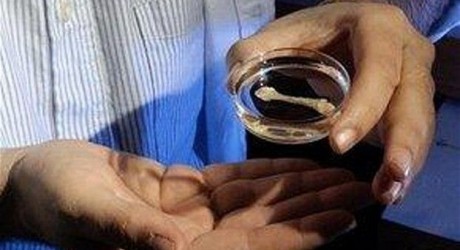
In collaboration with industry and global research partners, Technion scientists have grown human bone from stem cells in a laboratory. The development opens the way for patients to have broken bones repaired or even replaced with entire new ones grown outside the body from a patient’s own cells. The researchers started with stem cells taken from fat tissue. It took around a month to grow them into sections of fully-formed living human bone up to a couple of inches long. The success was reported by the UK national paper The Telegraph.


Stem Cell Proliferation

““These are our next generation of scientists and Nobel Laureates,” says Prof. Dror Seliktar, of the Department of Biomedical Engineering. “The future of the Technion relies on that.”

Seliktar and his research team at the Lokey Center for Biomaterials and Tissue Regeneration at Technion is working on a new material for the mass production of stem cells to make their commercial use viable on an industrial scale.

“In the biotechnology industries, there is an inherent need for expanding populations of stem cells for therapeutic purposes,” says Seliktar, who has published over 50 papers in the field, won over 14 awards and launched one of Israel’s promising biotech startups, Regentis Biomaterials.

Read more.

Prof. Joseph Itskovitz-Eldor of the Faculty of Medicine was on the international team that in 1998 first discovered the potential of stem cells to form any kind of tissue and pioneered stem-cell technology. The breakthrough garnered headlines around the world. He is the Director of the Technion Stem Cell Center.

New Life – The Healing Promise of Stem Cells

Diseases and conditions where stem cell treatment is promising or emerging. Source: Wikipedia

Since the late 1990s, the Technion has been at the forefront of stem-cell research. Stem cells are the master keys because they can be converted into many different kinds of cells, opening many different doors to potential cures and treatments. Beating heart tissue is one of the major stem cell achievements from the Technion.

Healing the Heart

Technion scientists showed this year that they can turn skin tissue from heart attack patients into fresh, beating heart cells in a first step towards a new therapy for the condition. The procedure may eventually help scores of people who survive heart attacks but are severely debilitated by damage to the organ.
By creating new heart cells from a patient’s own tissues, doctors avoid the risk of the cells being rejected by the immune system once they are transplanted.Though the cells were not considered safe enough to put back into patients, they appeared healthy in the laboratory and beat in time with other cells in animal models.
“We have shown that it’s possible to take skin cells from an elderly patient with advanced heart failure and end up with his own beating cells in a laboratory dish that are healthy and young – the equivalent to the stage his heart cells were in when he was just born,” Prof. Lior Gepstein told the British national paper The Guardian.

Pancreatic Tissue for Diabetes

Prof. Shulamit Levenberg of the Technion, who has spent many years trying to create replacement human organs by building them up on a “scaffold,” has created tissue from the insulin-producing islets of Langerhans in the pancreas surrounded by a three-dimensional network of blood vessels.The tissue she and her team created has significant advantages over traditional transplant material that has been harvested from healthy pancreatic tissue.

“We have shown that the three-dimensional environment and the engineered blood vessels support the islets – and this support is important for the survival of the islets and for their insulin secretion activity”, says Prof. Levenberg of the Department of Biomedical Engineering.


In the Bones

BonusBio - Health News - Israel


In collaboration with industry and global research partners, Technion scientists have grown human bone from stem cells in a laboratory. The development opens the way for patients to have broken bones repaired or even replaced with entire new ones grown outside the body from a patient’s own cells. The researchers started with stem cells taken from fat tissue. It took around a month to grow them into sections of fully-formed living human bone up to a couple of inches long. The success was reported by the UK national paper The Telegraph.


Stem Cell Proliferation

““These are our next generation of scientists and Nobel Laureates,” says Prof. Dror Seliktar, of the Department of Biomedical Engineering. “The future of the Technion relies on that.”

Seliktar and his research team at the Lokey Center for Biomaterials and Tissue Regeneration at Technion is working on a new material for the mass production of stem cells to make their commercial use viable on an industrial scale.

“In the biotechnology industries, there is an inherent need for expanding populations of stem cells for therapeutic purposes,” says Seliktar, who has published over 50 papers in the field, won over 14 awards and launched one of Israel’s promising biotech startups, Regentis Biomaterials.

Read more.

Prof. Joseph Itskovitz-Eldor of the Faculty of Medicine was on the international team that in 1998 first discovered the potential of stem cells to form any kind of tissue and pioneered stem-cell technology. The breakthrough garnered headlines around the world. He is the Director of the Technion Stem Cell Center.

Diabetes Research and Vascular Networks

Technion Researchers Construct a Polymeric Scaffold Array with Pancreatic Islets Surrounded by a Vascular Network. This heralds the potential for the fabrication of transplantable “islets”


The scientific journal PLoS ONE reports that Technion researchers have succeeded in constructing a three-dimensional polymeric scaffold array with pancreatic islets surrounded by a vascular network.
“We have shown that the three-dimensional environment and the engineered blood vessels support the islets – and this support is important for the survival of the islets and for their insulin secretion activity”, says Prof. Shulamit Levenberg of the Department of Biomedical Engineering. “We have shown that these laboratory-made polymeric scaffolds can be transplanted subcutaneously and can heal a diabetic mouse. The ability to increase the islets’ vasculature and to support their post-transplant survival could allow the transplant of four times less islets than is customary in transplants in mice, while still achieving decreased blood sugar levels and diabetes relief”. 
The mechanism which causes the failure of pancreatic islet transplants is as yet not entirely clear, but the prevailing opinion is that it has to do with ischemic damage – and a delay in the creation of new blood vessels.
The Technion researchers hypothesize that blood vessels also have an active role in inter-cellular communication that supports the survival and function of pancreatic islets. To test this hypothesis, the researchers developed a three-dimensional network of endothelial blood vessels in engineered pancreatic tissues produced from islets, fibroblasts and endothelial cells. This triple array, which was seeded on highly porous polymeric scaffolds, mimics the natural anatomical context of pancreatic vasculature.
“We have shown that the increase in islet survival is correlated with creation of surrounding endothelial tubes”, says Prof. Levenberg. “Adding fibroblasts to pancreatic islet and endothelial cell cultures encouraged the creation of the vascular network, which supported islet survival as well as insulin secretion. Significant differences were seen in many variables – gene expressions, profiles of the growth factors of endothelial cells, ECM, morphogens and screening markers – between two-dimensional culture systems and three-dimensional culture systems that allow an endothelial network, and such differences were even greater after fibroblasts were added that support the creation of the engineered blood vessels.”
Transplanting the vascularized engineered islet tissue has improved the survival and acceptance of such islets in diabetic mice, and has even improved their function in decreasing blood glucose. The Technion researchers hope that these findings herald potential strategies for the fabrication of transplantable islets with improved survivability.
The work was done by research student Keren Francis in Prof. Levenberg’s laboratory and in cooperation with Yuval Dor from the Hebrew university, under a joint research grant provided by Juvenile Diabetes Research Foundation International.
The laboratory is now researching the effect of the vascular network and the three-dimensional growth on human islets, under joint finance of the Juvenile Diabetes Research Foundation International and the Israel Science Foundation.  

Diabetes Research and Vascular Networks

Technion Researchers Construct a Polymeric Scaffold Array with Pancreatic Islets Surrounded by a Vascular Network. This heralds the potential for the fabrication of transplantable “islets”


The scientific journal PLoS ONE reports that Technion researchers have succeeded in constructing a three-dimensional polymeric scaffold array with pancreatic islets surrounded by a vascular network.
“We have shown that the three-dimensional environment and the engineered blood vessels support the islets – and this support is important for the survival of the islets and for their insulin secretion activity”, says Prof. Shulamit Levenberg of the Department of Biomedical Engineering. “We have shown that these laboratory-made polymeric scaffolds can be transplanted subcutaneously and can heal a diabetic mouse. The ability to increase the islets’ vasculature and to support their post-transplant survival could allow the transplant of four times less islets than is customary in transplants in mice, while still achieving decreased blood sugar levels and diabetes relief”. 
The mechanism which causes the failure of pancreatic islet transplants is as yet not entirely clear, but the prevailing opinion is that it has to do with ischemic damage – and a delay in the creation of new blood vessels.
The Technion researchers hypothesize that blood vessels also have an active role in inter-cellular communication that supports the survival and function of pancreatic islets. To test this hypothesis, the researchers developed a three-dimensional network of endothelial blood vessels in engineered pancreatic tissues produced from islets, fibroblasts and endothelial cells. This triple array, which was seeded on highly porous polymeric scaffolds, mimics the natural anatomical context of pancreatic vasculature.
“We have shown that the increase in islet survival is correlated with creation of surrounding endothelial tubes”, says Prof. Levenberg. “Adding fibroblasts to pancreatic islet and endothelial cell cultures encouraged the creation of the vascular network, which supported islet survival as well as insulin secretion. Significant differences were seen in many variables – gene expressions, profiles of the growth factors of endothelial cells, ECM, morphogens and screening markers – between two-dimensional culture systems and three-dimensional culture systems that allow an endothelial network, and such differences were even greater after fibroblasts were added that support the creation of the engineered blood vessels.”
Transplanting the vascularized engineered islet tissue has improved the survival and acceptance of such islets in diabetic mice, and has even improved their function in decreasing blood glucose. The Technion researchers hope that these findings herald potential strategies for the fabrication of transplantable islets with improved survivability.
The work was done by research student Keren Francis in Prof. Levenberg’s laboratory and in cooperation with Yuval Dor from the Hebrew university, under a joint research grant provided by Juvenile Diabetes Research Foundation International.
The laboratory is now researching the effect of the vascular network and the three-dimensional growth on human islets, under joint finance of the Juvenile Diabetes Research Foundation International and the Israel Science Foundation.