Tag Archives: Technion

FDA Approved. Corindus – making heart surgery safer

FDA CLEARS FIRST ROBOTIC-ASSISTED SYSTEM FOR CORONARY ARTERY DISEASE STENT PROCEDURES

Corindus Vascular Robotics wins 510(k) clearance for CorPath® 200 System; Robotic-assisted percutaneous coronary interventions (PCI) enhances control and protects physicians from radiation


Continue reading FDA Approved. Corindus – making heart surgery safer

Diabetes Research and Vascular Networks

Technion Researchers Construct a Polymeric Scaffold Array with Pancreatic Islets Surrounded by a Vascular Network. This heralds the potential for the fabrication of transplantable “islets”


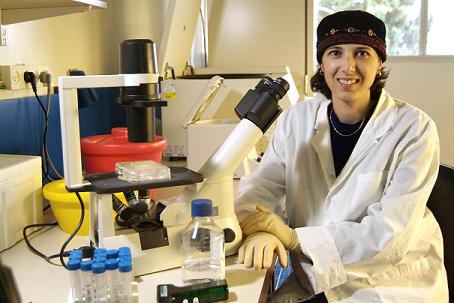
The scientific journal PLoS ONE reports that Technion researchers have succeeded in constructing a three-dimensional polymeric scaffold array with pancreatic islets surrounded by a vascular network.
“We have shown that the three-dimensional environment and the engineered blood vessels support the islets – and this support is important for the survival of the islets and for their insulin secretion activity”, says Prof. Shulamit Levenberg of the Department of Biomedical Engineering. “We have shown that these laboratory-made polymeric scaffolds can be transplanted subcutaneously and can heal a diabetic mouse. The ability to increase the islets’ vasculature and to support their post-transplant survival could allow the transplant of four times less islets than is customary in transplants in mice, while still achieving decreased blood sugar levels and diabetes relief”. 
The mechanism which causes the failure of pancreatic islet transplants is as yet not entirely clear, but the prevailing opinion is that it has to do with ischemic damage – and a delay in the creation of new blood vessels.
The Technion researchers hypothesize that blood vessels also have an active role in inter-cellular communication that supports the survival and function of pancreatic islets. To test this hypothesis, the researchers developed a three-dimensional network of endothelial blood vessels in engineered pancreatic tissues produced from islets, fibroblasts and endothelial cells. This triple array, which was seeded on highly porous polymeric scaffolds, mimics the natural anatomical context of pancreatic vasculature.
“We have shown that the increase in islet survival is correlated with creation of surrounding endothelial tubes”, says Prof. Levenberg. “Adding fibroblasts to pancreatic islet and endothelial cell cultures encouraged the creation of the vascular network, which supported islet survival as well as insulin secretion. Significant differences were seen in many variables – gene expressions, profiles of the growth factors of endothelial cells, ECM, morphogens and screening markers – between two-dimensional culture systems and three-dimensional culture systems that allow an endothelial network, and such differences were even greater after fibroblasts were added that support the creation of the engineered blood vessels.”
Transplanting the vascularized engineered islet tissue has improved the survival and acceptance of such islets in diabetic mice, and has even improved their function in decreasing blood glucose. The Technion researchers hope that these findings herald potential strategies for the fabrication of transplantable islets with improved survivability.
The work was done by research student Keren Francis in Prof. Levenberg’s laboratory and in cooperation with Yuval Dor from the Hebrew university, under a joint research grant provided by Juvenile Diabetes Research Foundation International.
The laboratory is now researching the effect of the vascular network and the three-dimensional growth on human islets, under joint finance of the Juvenile Diabetes Research Foundation International and the Israel Science Foundation.  

Diabetes Research and Vascular Networks

Technion Researchers Construct a Polymeric Scaffold Array with Pancreatic Islets Surrounded by a Vascular Network. This heralds the potential for the fabrication of transplantable “islets”


The scientific journal PLoS ONE reports that Technion researchers have succeeded in constructing a three-dimensional polymeric scaffold array with pancreatic islets surrounded by a vascular network.
“We have shown that the three-dimensional environment and the engineered blood vessels support the islets – and this support is important for the survival of the islets and for their insulin secretion activity”, says Prof. Shulamit Levenberg of the Department of Biomedical Engineering. “We have shown that these laboratory-made polymeric scaffolds can be transplanted subcutaneously and can heal a diabetic mouse. The ability to increase the islets’ vasculature and to support their post-transplant survival could allow the transplant of four times less islets than is customary in transplants in mice, while still achieving decreased blood sugar levels and diabetes relief”. 
The mechanism which causes the failure of pancreatic islet transplants is as yet not entirely clear, but the prevailing opinion is that it has to do with ischemic damage – and a delay in the creation of new blood vessels.
The Technion researchers hypothesize that blood vessels also have an active role in inter-cellular communication that supports the survival and function of pancreatic islets. To test this hypothesis, the researchers developed a three-dimensional network of endothelial blood vessels in engineered pancreatic tissues produced from islets, fibroblasts and endothelial cells. This triple array, which was seeded on highly porous polymeric scaffolds, mimics the natural anatomical context of pancreatic vasculature.
“We have shown that the increase in islet survival is correlated with creation of surrounding endothelial tubes”, says Prof. Levenberg. “Adding fibroblasts to pancreatic islet and endothelial cell cultures encouraged the creation of the vascular network, which supported islet survival as well as insulin secretion. Significant differences were seen in many variables – gene expressions, profiles of the growth factors of endothelial cells, ECM, morphogens and screening markers – between two-dimensional culture systems and three-dimensional culture systems that allow an endothelial network, and such differences were even greater after fibroblasts were added that support the creation of the engineered blood vessels.”
Transplanting the vascularized engineered islet tissue has improved the survival and acceptance of such islets in diabetic mice, and has even improved their function in decreasing blood glucose. The Technion researchers hope that these findings herald potential strategies for the fabrication of transplantable islets with improved survivability.
The work was done by research student Keren Francis in Prof. Levenberg’s laboratory and in cooperation with Yuval Dor from the Hebrew university, under a joint research grant provided by Juvenile Diabetes Research Foundation International.
The laboratory is now researching the effect of the vascular network and the three-dimensional growth on human islets, under joint finance of the Juvenile Diabetes Research Foundation International and the Israel Science Foundation.  

Technion graduate Mooly Eden

You might also like:

Technion graduate Mooly Eden named as among CNN’s top 10 Technological visionaries in June 2012. 

Shmuel (Mooly) Eden is vice president and general manager of the PC Client Group (PCCG). In this capacity, he is responsible for the platform planning, architecture, enabling and marketing of Intel’s PC solutions for the desktop and mobile computing segments. 
Eden joined Intel in 1982. He held numerous technical and management positions in microprocessor design for several Intel microprocessors, including the Intel® Pentium® processor with MMX™ technology. From 1999 – 2003 Eden was director and general manager of the Israel Development Center. He was responsible for the development of the mobile microprocessors and chipsets, including Intel® Centrino® Processor Technology and the Intel® Pentium® M processor, formerly codenamed Banias. 
In 2004 he served as vice president and director of marketing for the Mobile Platforms Group, responsible for driving growth in the notebook computing segment. In 2005 he was promoted to vice president and general manager of the Mobile Platforms Group, where he was responsible for ramping the notebook and later on the netbook categories. In 2009 he was promoted to the current position as the vice president and general manager of the PC client group. 
Prior to joining Intel in 1982, Eden was an engineer for Tadiran Communication, Ltd. Eden received a bachelor’s degree in electrical engineering from the Technion Institute of Technology in Israel in 1973 and a senior business management degree from Jerusalem University. He taught as an adjunct senior lecturer at the MBA program of the Technion Institute of Technology from 1999 – 2002.

Sustainable Engineering – Technion

Newly Created UNESCO Chair at Technion for Sustainable Engineering
Date: 13/06/2012
Prof. Mark Talesnick of the Faculty of Civil and Environmental Engineering is the incumbent of the newly established UNESCO Chair in Sustainable Engineering in Developing Communities.

The specific objectives of this Chair are to develop undergraduate and graduate teaching programs in engineering for developing communities, in cooperation with partners;  carry out research on engineering for developing communities and disseminate results widely;  design, test and apply, jointly with partners, ground-level projects to test and further refine the concept of sustainable engineering; and,  provide short-term theoretical and practical training, as well as facilitate visiting professorships.

Talesnick reports that the University of Colorado and Kathmandu Universities are also involved and that he will be travelling to Ghana, Ethiopia and Batswana soon to enlist their collaboration as well.

Talesnick also spearheads Engineers Without Borders – Technion (EWB).

Currently, 739 UNESCO Chairs and 70 UNITWIN Networks in 134 countries provide an innovative modality for international academic cooperation. They act as think-tanks and bridge- builders between research and policy-making, and between academia, civil society, local communities and the productive sector.

2012 Centennial Technion Board of Governors


Among the International Board of Governors June 2012 events in this cornerstone centennial year were dedications of new facilities, prizes for research and academic excellence, book launches celebrating Technion’s contributions to Israel and the world, and honorary awards to public figures.


Opening the week, Technion President Prof. Peretz Lavie described the Technion in 2012, as it is poised to meet the challenged of the next century. Read more.


100 years of Technion history was celebrated at the 2012 Board of Governors meeting at Technion City with the festive dedication of the 234-page history book: Together: the Story of the Century on June 10th.


An exhibition of handcrafted jewelry created by Nobel Laureate Dan Shechtman was opened at Technion City. Designed for his wife, Prof. Zipora Shechtman, the exhibition showcases 15 unique pieces ranging from earrings to bracelets with a single item – an Aztec-inspired silver belt buckle – which he made for himself.


In this year’s Dr. Bob’s TechnoBrain competition, supported by Dr. Robert Shillman in memory of Neev-Ya Durban, students met the challenge to recreate the laying of Technion’s cornerstone in new and original ways. As part of Technion’s 100th anniversary since the cornerstone was laid in 1912, TechnoBrain 2012 took place on June 13, 2012 – the last day of Technion’s annual International Board of Governors meeting.


Technion at 100.

You might also like: Together: the story of the century.


Speech for the Opening of the 2012 Board of Governors’ Annual Meeting, Technion President Prof. Peretz Lavie.
[Transcript]


One hundred years ago we started from scratch: no foundations, no buildings, no funding for salaries or equipment, no faculty members, almost no engineers, and no reason to believe that this grandiose vision would ever materialize. Stone by stone, the historical building of the Technion started to arise. A well was dug on site – a source of water to be used not only by the Technion’s laboratories and visitors, but by the local community of Haifa as well.


The Technion’s slow and torturous development took place during the era of the two world wars and the establishment of the State of Israel. During the decades since – and in the face of so many wars – the Technion stuck to its vision: striving for peace through scientific activities and collaborations, as well as caring for the advancement, health and security of the State of Israel and the whole of humanity.


What is the Technion today, one hundred years later? Those who look for the answer to this question would have to go around campus wearing a magic gown that would make them invisible, allowing them to enter classrooms, labs, offices and even hospital rooms, without disturbing the usual course of events.  


A good starting point would be the heart of campus, where you could join young students sitting on the grass and enjoying a sunny afternoon, holding laptops and talking, drinking coffee, and discussing the latest lecture on computer science, physics or mathematics. If you listen closely, you will hear a mixture of languages – Hebrew (as well as Hebrew with a Russian accent!), Arabic, English (as well as English with a Canadian accent!) – and see couples bent over their computers, speaking Chinese as though they were the only people in the world.
Sitting on the benches at the edges of the lawn, you could see a Frisbee flying from one end of the lawn to another in a skillful Californian style.


Later, you are welcome to tiptoe into the classrooms of the Ullmann building. There you can see hundreds of glittering eyes staring at the young lecturer in front of them, who is writing a complicated equation on the blackboard while students are trying to absorb each and every word. Not a long way from there are the smaller classrooms, where students are absorbed in heated discussions about the right design for an engineering model, or about the right location for a green belt in a new community.  


Now you’d be ready for a visit to the research labs, where you could immediately feel the excitement in the air, when a professor and his or her students are waiting anxiously for the results of an important experiment they had been planning for months. Their joyful calls echo throughout the building when the laser beam hits the target, just as they had predicted. You are welcome to join them when they celebrate the successful experiment at the Junta Bar, located in the new Zielony Student Union Building.


If no one is sitting in front of the gigantic Titan, and nobody is working in the cleanrooms at the Zisapel nanotechnology building, you could sneak a peak into the enormous microscope, and even pretend to be Nobel Prize winner Distinguished Professor Danny Shechtman and call out “Eureka”, when you see the atoms twirl and form into a scientific creation never seen before.  
But this is not all. If you could sneak into the workshops or the offices of the Technion’s faculties, or the offices at the Senate Building, you could meet our excellent technical and administrative staff members, whose contribution to the Technion’s everyday operation is priceless. On the eastern slopes of the campus hill, at the Center for Pre-University Education, hundreds of youngsters are getting a second chance to become Technion students. On the western slopes of the hill, in the late afternoons, you could join groups of toddlers playing in the sandboxes of the Zielony Graduate Student Village, while their mothers are sitting on a nearby bench, studying for tomorrow’s physics or chemistry test. Later, you could visit patients lying in their beds in Haifa’s hospitals and in other hospitals across the country, where students of the Rappaport Faculty of Medicine are taking their first cautious steps in medical diagnosis and treatment, or you could explore the Sohnis Family Research Laboratory for Cardiac Electrophysiology and Regenerative Medicine, where you could admire a process that re-programs a patient’s skin cells into heart cells, thus paving the way to a completely new field of medicine.
  
These are the many aspects of the Technion’s everyday life, its multifaceted reality.


Seventy thousand graduates and millions of scientists, students, entrepreneurs and civilians around the world  have been inspired by the Technion’s work. Since the engineering of that first well in Haifa, the minds of Technion graduates and faculty members have given forth a flow of inventions, new products and innovative services: portable memory devices; the Lempel-Ziv algorithm for information compression; Azilect – a medicine for treating early stages of Parkinson’s and other diseases; the deciphering of the ubiquitin mechanism, which is responsible for protein decomposition in cells; the fascinating world of quasiperiodic crystals; and more.


This year was one of the most wondrous years in the Technion’s history: The Technion has reached its hundredth anniversary with a new Nobel Prize winner – the third Technion scientist in seven years to receive this greatest of honors. At the end of 2011 we received the dramatic announcement that Mayor Michael Bloomberg chose the Technion and Cornell University to establish the new innovation institute in New York City. We could not have wished for better gifts for our 100th anniversary.  


All these wonderful achievements could not have been possible without the support of our dedicated and committed friends in Israel and abroad. This group of remarkable individuals, who we honor today with Honorary Fellowships, is a wonderful example of the worldwide Technion family of supporters. They come from Israel, the United States, Germany, Brazil and Britain. Each and every one of them deserves our deepest gratitude, for their long-lasting love and unwavering support of the Technion.


This year, I joined a group of Israeli students who visited the Auschwitz-Birkenau concentration camp. It was a touching experience that affected me more deeply. Together with those talented youngsters – brilliant minds of the future – we stood in that remote place, where thousands of other brilliant minds were annihilated, and we feel and say, “It’s all right. In the end, we won.. We triumphed by the power of justice.”


We, at the Technion, have had a significant role in that triumph.
 

Microsoft CEO Danny Yamin: New Chairman of Technion Council.

Danny Yamin with Technion President Peretz Lavie.

Microsoft CEO Appointed to Leading Technion Position

Danny Yamin, head of Microsoft Israel,
is new chairman of the Technion Council, succeeding Yoram Alster


Danny Yamin, CEO of Microsoft Israel, has been appointed chairman of the Technion Council.
He replaces Yoram Alster, who served in this position for nine years.


The Council serves as the guiding and deciding authority with regard to Technion matters, between meetings of the Board of Governors, which the highest authority of the Technion. Among its powers are supervision of administrative and financial matters, enactment of regulations and appointments, awarding of honorary degrees, and more.


Danny Yamin, who is a Technion graduate, has been serving as CEO of Microsoft Israel since 2004. In recent years he has also held various positions in the Technion, including member of the Council and Chairman of the Technion alumni’s ‘100 Club’.


Technion President Prof. Peretz Lavie: “Danny Yamin’s vast management experience in a global organization is essential at a time when the Technion itself is treading deeper into the global arena. The establishment of the Technion and Cornell research campus in New York is one type of the challenges we will be contending with in the coming years, as is the advancement of the Technion in Israel. I am looking forward to working with Danny in his new role, and believe that his vast experience will ccontribute greatly to the way we contend with the new local and global challenges”.


Danny Yamin: “I am pleased to expand my activity in the Technion, an institute which plays a major role in the State of Israel. The relationship between industry and academia is essential to both sides, and it is my hope that together with Technion President Peretz Lavie, the Technion’s management and its Council members, we will continue to realize the Technion’s great potential in Israel and worldwide”.

Microsoft CEO Danny Yamin: New Chairman of Technion Council.

Danny Yamin with Technion President Peretz Lavie.

Microsoft CEO Appointed to Leading Technion Position

Danny Yamin, head of Microsoft Israel,
is new chairman of the Technion Council, succeeding Yoram Alster


Danny Yamin, CEO of Microsoft Israel, has been appointed chairman of the Technion Council.
He replaces Yoram Alster, who served in this position for nine years.


The Council serves as the guiding and deciding authority with regard to Technion matters, between meetings of the Board of Governors, which the highest authority of the Technion. Among its powers are supervision of administrative and financial matters, enactment of regulations and appointments, awarding of honorary degrees, and more.


Danny Yamin, who is a Technion graduate, has been serving as CEO of Microsoft Israel since 2004. In recent years he has also held various positions in the Technion, including member of the Council and Chairman of the Technion alumni’s ‘100 Club’.


Technion President Prof. Peretz Lavie: “Danny Yamin’s vast management experience in a global organization is essential at a time when the Technion itself is treading deeper into the global arena. The establishment of the Technion and Cornell research campus in New York is one type of the challenges we will be contending with in the coming years, as is the advancement of the Technion in Israel. I am looking forward to working with Danny in his new role, and believe that his vast experience will ccontribute greatly to the way we contend with the new local and global challenges”.


Danny Yamin: “I am pleased to expand my activity in the Technion, an institute which plays a major role in the State of Israel. The relationship between industry and academia is essential to both sides, and it is my hope that together with Technion President Peretz Lavie, the Technion’s management and its Council members, we will continue to realize the Technion’s great potential in Israel and worldwide”.

The Pull of Light – optics innovation from Technion.

Distinguished Prof. Mordechai (Moti) Segev,
Technion Faculty of Physics.

Developing a real, working tractor beam has regularly been an exercise in frustration: it often relies on brute force attempts to induce a magnetic link or an air pressure gap, either of which falls a bit short of science fiction-level elegance.

The Technion-Israel Institute of Technology’s Mordechai Segev has a theory that would use the subtler (though not entirely movie-like) concept of negative radiation pressure in light to move objects. By using materials that have a negative refraction index, where the light photons and their overall wave shape move in opposite directions, Segev wants to create a sweet spot where negative radiation pressure exists and an object caught in the middle can be pushed around. His early approach would use extremely thin crystals stacked in layers to manipulate the refraction.

As it’s theorized, the technology won’t be pulling in the Millennium Falcon anytime soon — the millimeters-wide layer intervals dictate the size of what can be pulled. Nonetheless, even the surgery-level tractor beams that Segev hopes will ultimately stem from upcoming tests would bring us much closer to the future that we’ve always wanted.

Negative radiation pressure in light could make some tractor beams real, we're already sucked in
Source: Optics Express

Read more about Distinguished Prof. Motti Segev at the Technion Book of Faces.