
 PRESIDENT’S REPORT 2015


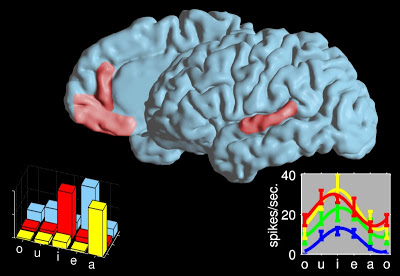
Technion and UCLA researchers have directly decoded vowels from the neural activity which leads to their articulation – a finding which could allow individuals who are paralyzed to “speak” to the people around them through a direct brain-computer interface.
Tag Archives: innovation
Oracle: $7.5 million to Mazor robotic spine & brain surgery
Oracle Investment invests $7.5m in Mazor RoboticsMazor will seek to list ADRs on Nasdaq or the NYSE.
12 August 12 11:05, Extracted from Globes
Mazor Robotics Ltd. (TASE:MZOR), a maker of robotic navigation systems for spinal surgeries, has signed an agreement with two funds of Oracle Investment Managements Inc., which will invest an initial $7.5 million in the company and up to an additional $7.5 million over 36 months, subject to certain conditions.
Mazor will allot 7,053,529 shares to Oracle Investment, reflecting a price of NIS 4.25 per share. It will also give Oracle Investment warrants convertible into the same number of shares at the same price, exercisable for 36 months from the closing of the deal. The strike price will be either NIS 6 or Mazor’s average price over the ten days preceding the exercise of the option, whichever is lower, but not less than NIS 4.25 per share.
Mazor also undertakes to register Class 2 American Depository Receipt (ADR) on either Nasdaq or the New York Stock Exchange within 240 days of the closing. When the registration is completed, the shares and warrants allotted to Oracle Investments will immediately be converted into ADR’s at Mazor’s expense.
Larry Feinberg founded Oracle Investments in 1993 to invest in the global health care and bioscience industries.
Editor’s note: Mazor Robotics was founded out of patented innovations from the lab. of Technion Prof. Moshe Shoham.
FDA Approved. Corindus – making heart surgery safer
FDA CLEARS FIRST ROBOTIC-ASSISTED SYSTEM FOR CORONARY ARTERY DISEASE STENT PROCEDURES
Corindus Vascular Robotics wins 510(k) clearance for CorPath® 200 System; Robotic-assisted percutaneous coronary interventions (PCI) enhances control and protects physicians from radiation
Continue reading FDA Approved. Corindus – making heart surgery safer
FDA Approved. Corindus – making heart surgery safer
FDA CLEARS FIRST ROBOTIC-ASSISTED SYSTEM FOR CORONARY ARTERY DISEASE STENT PROCEDURES
Corindus Vascular Robotics wins 510(k) clearance for CorPath® 200 System; Robotic-assisted percutaneous coronary interventions (PCI) enhances control and protects physicians from radiation
Continue reading FDA Approved. Corindus – making heart surgery safer
2012 Centennial Technion Board of Governors
Among the International Board of Governors June 2012 events in this cornerstone centennial year were dedications of new facilities, prizes for research and academic excellence, book launches celebrating Technion’s contributions to Israel and the world, and honorary awards to public figures.
Opening the week, Technion President Prof. Peretz Lavie described the Technion in 2012, as it is poised to meet the challenged of the next century. Read more.
100 years of Technion history was celebrated at the 2012 Board of Governors meeting at Technion City with the festive dedication of the 234-page history book: Together: the Story of the Century on June 10th.

An exhibition of handcrafted jewelry created by Nobel Laureate Dan Shechtman was opened at Technion City. Designed for his wife, Prof. Zipora Shechtman, the exhibition showcases 15 unique pieces ranging from earrings to bracelets with a single item – an Aztec-inspired silver belt buckle – which he made for himself.

In this year’s Dr. Bob’s TechnoBrain competition, supported by Dr. Robert Shillman in memory of Neev-Ya Durban, students met the challenge to recreate the laying of Technion’s cornerstone in new and original ways. As part of Technion’s 100th anniversary since the cornerstone was laid in 1912, TechnoBrain 2012 took place on June 13, 2012 – the last day of Technion’s annual International Board of Governors meeting.
The “Nobel Prize” of Computing
Technion Graduate Prof. Judea Pearl has won the Turing Award for a “contribution that transformed artificial intelligence”; he will receive the prestigious Technion Harvey Prize in 2012.
 |
| Prof. Judea Pearl, Harvey Prize Laureate 2011. |
Technion graduate Prof. Judea Pearl, who will receive at the end of this month the prestigious Harvey Prize at the Technion, has won the Turing Award, “the Nobel Prize of Computer Scientists.” The Harvey Prize is known to “predict” the wins of Nobel Prize Laureates (13 researches have won the Nobel Prize after receiving the Harvey Award), and it has now managed to “predict” also Prof. Pearl’s win of the Turing Award (he was told four months ago about the Technion’s decision to grant him the Harvey Prize).
The Tecnion’s announcement said that Prof. Pearl has “laid, through courageous and far-sighted research the theoretical foundations for the presentation of knowledge and reasoning in computer science. His theories of inference under uncertainty, and in particular the Bayesian Networks approach, have influenced varied disciplines, including artificial intelligence, statistics, philosophy, health, economics, social sciences and cerebral cognitive processes. The Harvey Prize in Science and Technology is awarded to Prof. Pearl in recognition of the breakthroughs that are embodied in his researches and their influence on multitudes of spheres of our life.”
ACM, the Association for Computing Machinery, announced last weekend that Prof. Judea Pearl of UCLA has won the 2011 ACM Turing Award, for innovations that enabled breakthroughs in the partnership between humans and machines that is the foundation of artificial intelligence. He has created the computational basis for processing information under uncertainty – a core problem faced by intelligent systems. “Prof. Pearl’s influence extends beyond artificial intelligence and even computer science – to human reasoning and the philosophy of science,“ said ACM’s announcement.
First and foremost, the Harvey Prize rewards excellence by recognizing breakthroughs in science and technology. The monetary Prize is a banner of recognition for men and women who have truly contributed to the progress of humanity. No less, however, the Prize is a source of inspiration. Serving as stimulus, the award urges scientists and scholars forward to further accomplishment.
The Harvey Prize was awarded for the first time in 1972, from a fund established by Leo M. Harvey, of Blessed Memory, of Los Angeles, in recognition of great contributions to the advancement of humanity in science and technology and human health, and to the advancement of peace in the Middle East. Every year, the fund awards $75,000 to each of the winners.
Among the recipients of the prestigious Harvey Prize are scientists from the USA, Britain, Russia, Sweden, France and Israel, such as Nobel Prize Laureate Mikhail Gorbachev, former leader of the USSR, who was awarded the Prize for his activity towards reducing regional tensions; Prof. Bert Sakmann, Nobel Laureate in Medicine; Prof. Pierre-Gilles de Gennes, Nobel Laureate in Physics; Prof. Edward Teller, for his discoveries in solid state physics, atomic physics and nuclear physics; and Prof. William J. Kolff, for the invention of the artificial kidney.
Candidates for the Harvey Prize are recommended by leading scientists and personages in Israel and the world. The prize laureates are selected by the Harvey Prize Council in a stringent process at the Technion.
Hot Technion FACTS on Startups, Innovation, Israel, Science & Technology
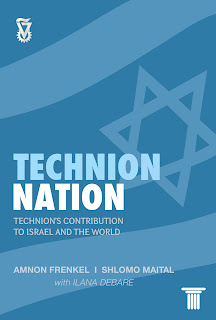
Film promo for the book “Technion Nation — Technion’s Contribution to Israel and the World.” Prof. Shlomo Maital takes you on a short journey through the book, written by Professors Amnon Frenkel and Maital, with Ms. Ilana DeBare that tells the story of how Technion’s graduates drove Israel’s transformation from an economy of Jaffa oranges to semiconductors, and of how Technion scientists have given the world new forms of matter, life-saving discoveries and countless innovations that enrich lives of people everywhere, winning Nobel Prizes along the way.
Data published by the Samuel Neaman Institute.
National researchers have found that investment in human capital, in Technion undergraduate science and engineering students – has generated exceptionally high (and risk free) social rates of return.
Investment in human capital at Technion generates a 76‐197% social rate of return, at least, or in absolute terms, some $35‐$60 billion for 50 graduating classes.
The annual output of Technion graduates in high‐tech industries and computer services, communications and Research & Development is estimated at a minimum of $21 billion.
The median income of Technion graduates is NIS 20‐25,000 (gross income) per month, and is substantially higher than both the average wage in the economy and than the average wage of those with higher education.
The cost of the 2010 undergraduate class was approximately $1 billion (for four years of education). The social return to Israel’s economy is estimated at between $1.76 and $2.97 billion.
These calculations show that public investment in Technion science and engineering education is highly profitable, with higher rates of return that almost any other conceivable risk‐free investment.
An overall estimate of Technion graduates’ GDP contribution to the Israeli economy, shows an annual output of Technion graduates in high‐tech industries and computer services, communications and Research & Development at an estimated $21 b., or some 20 per cent of the total annual output of these industries.
Technion engineers contribute to generating some 78,000 jobs that support high‐tech industries, jobs that pay relatively high wages.
Technion graduates’ contributions also find expression in the taxes they pay, some NIS 16.6 b. or about $4.4 b., in direct and indirect taxes, or some 13 per cent of the state revenue from direct and indirect taxes.
Findings in this research project show the unique contribution of Technion, through its graduates, to creation of human capital over a century of its operations.
Technion graduates participate in every facet of Israel’s economy, technology, education and management, especially in its high‐tech growth‐leading sectors.
Other findings in the research, based on a Web‐based survey of some 4,000 Technion graduates, indicate major contributions of individual Technion graduates to Israel and the world.
- Some 67,000 persons have graduated from Technion since its first graduating class, and some 90,000 degrees have been awarded. Of Israel’s 125 top business leaders, according to Dun & Bradstreet, 41 (one‐third) are Technion graduates. Of these, 28 head publicly‐listed firms, and 13 lead private companies.
- Technion graduates lead Israel’s 11 top exporters which account for $19.5 b. in exports out of a total of some $45 b., and employ 80,000 workers.
- Entrepreneurship: of the 298 NASDAQ‐listed companies listed with “non‐American origins”, fully 121 (41 per cent) are Israeli. Of those, half (59) are led by Technion graduates and/or were founded by Technion graduates. These Technion‐originating startup companies had a market value of $28.4 b. (as of Nov. 2010).
Technion Inventions
Among the widely‐used inventions or breakthroughs originating with Technion Faculty and/or Technion graduates:
- Memory sticks (Dov Moran, M‐systems);
- Ziv‐Lempel data compression algorithm (used in pdf);
- Rasagiline (Azilect), for treating early‐stage Parkinson’s, developed by Moussa Youdim;
- Instant messaging (Yossi Vardi, father3 of ICQ inventor Arik Vardi, was a key founder of Mirabilus);
- Better Place electric cars (Shai Agassi);
- Ubiquitin, the protein that causes cells to die, showing potential for new cancer treatments, discovered by Technion Nobel Laureates Ciechanover and Hershko;
- Shechtmanite (quasi‐crystalline matter, once thought impossible, discovered by Dan Shechtman);
- ‘NaNose’ that sniffs cancer (Hossam Haick);
- Non‐invasive destruction of tumors by ultrasound (Insightec, led by Technion graduate Yoav Medan);
- Cardiac imaging through PC‐based ultrasound (Alex Silberklang, who headed GE Ultrasound, based in Israel, for a decade), and a great many more.
Industry and Startups
Based on a web survey of graduates:
- Out of 59,100 Technion graduates (who are currently of work age), one‐fourth (24 per cent) are either CEO’s or VP’s. In addition, another 41 per cent fill management positions.
- 10,882 Technion graduates, or 18.4 per cent of all graduates, work currently, or worked at one time, in startup companies.
- Some 13,500 Technion graduates, nearly one‐fourth of all graduates, at one time initiated a business. Some 15 per cent of Technion’s female graduates also launched businesses at one time.
- Of all Technion graduates, 35 per cent work in industry, and 12 per cent work in R&D; thus nearly half of all graduates are employed in jobs that either directly produce goods and services or help design and create them Of all Technion graduates employed in industry, 75 per cent are employed in high‐tech industries.
Source:
Technion’s Contribution to the Israeli Economy through its Graduates, By Amnon
Frenkel and Shlomo Maital. S. Neaman Institute Working Paper, January 2012.
To order a copy of Technion Nation, click here.
 |
| T3 – Technion office for Technology Transfer |
Hot Technion FACTS on Startups, Innovation, Israel, Science & Technology
Film promo for the book “Technion Nation — Technion’s Contribution to Israel and the World.” Prof. Shlomo Maital takes you on a short journey through the book, written by Professors Amnon Frenkel and Maital, with Ms. Ilana DeBare that tells the story of how Technion’s graduates drove Israel’s transformation from an economy of Jaffa oranges to semiconductors, and of how Technion scientists have given the world new forms of matter, life-saving discoveries and countless innovations that enrich lives of people everywhere, winning Nobel Prizes along the way.
Data published by the Samuel Neaman Institute.
National researchers have found that investment in human capital, in Technion undergraduate science and engineering students – has generated exceptionally high (and risk free) social rates of return.
Investment in human capital at Technion generates a 76‐197% social rate of return, at least, or in absolute terms, some $35‐$60 billion for 50 graduating classes.
The annual output of Technion graduates in high‐tech industries and computer services, communications and Research & Development is estimated at a minimum of $21 billion.
The median income of Technion graduates is NIS 20‐25,000 (gross income) per month, and is substantially higher than both the average wage in the economy and than the average wage of those with higher education.
The cost of the 2010 undergraduate class was approximately $1 billion (for four years of education). The social return to Israel’s economy is estimated at between $1.76 and $2.97 billion.
These calculations show that public investment in Technion science and engineering education is highly profitable, with higher rates of return that almost any other conceivable risk‐free investment.
An overall estimate of Technion graduates’ GDP contribution to the Israeli economy, shows an annual output of Technion graduates in high‐tech industries and computer services, communications and Research & Development at an estimated $21 b., or some 20 per cent of the total annual output of these industries.
Technion engineers contribute to generating some 78,000 jobs that support high‐tech industries, jobs that pay relatively high wages.
Technion graduates’ contributions also find expression in the taxes they pay, some NIS 16.6 b. or about $4.4 b., in direct and indirect taxes, or some 13 per cent of the state revenue from direct and indirect taxes.
Findings in this research project show the unique contribution of Technion, through its graduates, to creation of human capital over a century of its operations.
Technion graduates participate in every facet of Israel’s economy, technology, education and management, especially in its high‐tech growth‐leading sectors.
Other findings in the research, based on a Web‐based survey of some 4,000 Technion graduates, indicate major contributions of individual Technion graduates to Israel and the world.
- Some 67,000 persons have graduated from Technion since its first graduating class, and some 90,000 degrees have been awarded. Of Israel’s 125 top business leaders, according to Dun & Bradstreet, 41 (one‐third) are Technion graduates. Of these, 28 head publicly‐listed firms, and 13 lead private companies.
- Technion graduates lead Israel’s 11 top exporters which account for $19.5 b. in exports out of a total of some $45 b., and employ 80,000 workers.
- Entrepreneurship: of the 298 NASDAQ‐listed companies listed with “non‐American origins”, fully 121 (41 per cent) are Israeli. Of those, half (59) are led by Technion graduates and/or were founded by Technion graduates. These Technion‐originating startup companies had a market value of $28.4 b. (as of Nov. 2010).
Technion Inventions
Among the widely‐used inventions or breakthroughs originating with Technion Faculty and/or Technion graduates:
- Memory sticks (Dov Moran, M‐systems);
- Ziv‐Lempel data compression algorithm (used in pdf);
- Rasagiline (Azilect), for treating early‐stage Parkinson’s, developed by Moussa Youdim;
- Instant messaging (Yossi Vardi, father3 of ICQ inventor Arik Vardi, was a key founder of Mirabilus);
- Better Place electric cars (Shai Agassi);
- Ubiquitin, the protein that causes cells to die, showing potential for new cancer treatments, discovered by Technion Nobel Laureates Ciechanover and Hershko;
- Shechtmanite (quasi‐crystalline matter, once thought impossible, discovered by Dan Shechtman);
- ‘NaNose’ that sniffs cancer (Hossam Haick);
- Non‐invasive destruction of tumors by ultrasound (Insightec, led by Technion graduate Yoav Medan);
- Cardiac imaging through PC‐based ultrasound (Alex Silberklang, who headed GE Ultrasound, based in Israel, for a decade), and a great many more.
Industry and Startups
Based on a web survey of graduates:
- Out of 59,100 Technion graduates (who are currently of work age), one‐fourth (24 per cent) are either CEO’s or VP’s. In addition, another 41 per cent fill management positions.
- 10,882 Technion graduates, or 18.4 per cent of all graduates, work currently, or worked at one time, in startup companies.
- Some 13,500 Technion graduates, nearly one‐fourth of all graduates, at one time initiated a business. Some 15 per cent of Technion’s female graduates also launched businesses at one time.
- Of all Technion graduates, 35 per cent work in industry, and 12 per cent work in R&D; thus nearly half of all graduates are employed in jobs that either directly produce goods and services or help design and create them Of all Technion graduates employed in industry, 75 per cent are employed in high‐tech industries.
Source:
Technion’s Contribution to the Israeli Economy through its Graduates, By Amnon
Frenkel and Shlomo Maital. S. Neaman Institute Working Paper, January 2012.
To order a copy of Technion Nation, click here.
|
| T3 – Technion office for Technology Transfer |
Christine Quinn at Technion City
 |
| Technion President Prof. Peretz Lavie with Christine Quinn of New York at Technion City, Feb. 2012. |
“The Technion-Cornell Initiative will make our City the Global High-Tech Capital”
“The residents of New York City and its government are very excited about the planned applied science and engineering campus which Cornell and the Technion are partnering to establish”, said Christine Quinn, New York City council speaker, in her visit today to the Technion. “We have no doubt that this important venture, which will make our city the global high-tech capital, will inject new blood into it and improve all municipal aspects – from affordable housing to cafés and restaurants”.
Quinn, who in 2007 was ranked by the New York Post third in the list of the most influential women in New York, is a member of the Democratic Party, and is considered a leading candidate in the mayoral election that will end next year. She invests substantial resources in improving health care and in promoting affordable housing in New York. “We, as a municipality, cannot create entrepreneurial ventures, but we can and are committed to creating a suitable envelope for them: an efficient transportation system, personal security, housing, quality education and employment – without these, entrepreneurs and high-tech companies cannot be attracted to the city”.
“Whenever I hear the slogan ‘Intel Inside’ I say: Haifa Inside.”
Technion President Professor Peretz Lavie said to the guest that the future is in the interdisciplinary realm, and that this is the rational behind the new campus that will be set-up on Roosevelt Island in New York. “It may be that Prof. Shechtman is the last scientist to be awarded the Nobel Prize for research conducted by one person working alone in one laboratory,” said Prof. Lavie. “Nowadays, achieving significant scientific and engineering breakthroughs requires tremendous knowledge that the single scientist does not possess. In light of this, the new campus will be structured as interdisciplinary centers that will intercommunicate and overlap, rather than in the well-known university model of programs and faculties. With time this center will be surrounded by startup companies and extensions of large high-tech companies, just as such companies and extensions historically developed near the Technion. Intel is an example of a giant company that chose to establish here its first research center outside the US, and so whenever I hear the slogan ‘Intel Inside’ I say: Haifa Inside. Our innovative venture will build a bridge of friendship and cooperation between New York and Haifa”.

Christine Quinn at Technion City
|
| Technion President Prof. Peretz Lavie with Christine Quinn of New York at Technion City, Feb. 2012. |
“The Technion-Cornell Initiative will make our City the Global High-Tech Capital”
“The residents of New York City and its government are very excited about the planned applied science and engineering campus which Cornell and the Technion are partnering to establish”, said Christine Quinn, New York City council speaker, in her visit today to the Technion. “We have no doubt that this important venture, which will make our city the global high-tech capital, will inject new blood into it and improve all municipal aspects – from affordable housing to cafés and restaurants”.
Quinn, who in 2007 was ranked by the New York Post third in the list of the most influential women in New York, is a member of the Democratic Party, and is considered a leading candidate in the mayoral election that will end next year. She invests substantial resources in improving health care and in promoting affordable housing in New York. “We, as a municipality, cannot create entrepreneurial ventures, but we can and are committed to creating a suitable envelope for them: an efficient transportation system, personal security, housing, quality education and employment – without these, entrepreneurs and high-tech companies cannot be attracted to the city”.
“Whenever I hear the slogan ‘Intel Inside’ I say: Haifa Inside.”
Technion President Professor Peretz Lavie said to the guest that the future is in the interdisciplinary realm, and that this is the rational behind the new campus that will be set-up on Roosevelt Island in New York. “It may be that Prof. Shechtman is the last scientist to be awarded the Nobel Prize for research conducted by one person working alone in one laboratory,” said Prof. Lavie. “Nowadays, achieving significant scientific and engineering breakthroughs requires tremendous knowledge that the single scientist does not possess. In light of this, the new campus will be structured as interdisciplinary centers that will intercommunicate and overlap, rather than in the well-known university model of programs and faculties. With time this center will be surrounded by startup companies and extensions of large high-tech companies, just as such companies and extensions historically developed near the Technion. Intel is an example of a giant company that chose to establish here its first research center outside the US, and so whenever I hear the slogan ‘Intel Inside’ I say: Haifa Inside. Our innovative venture will build a bridge of friendship and cooperation between New York and Haifa”.